Reclaiming Toyota Production System: My Lean TPM Basic Thinking
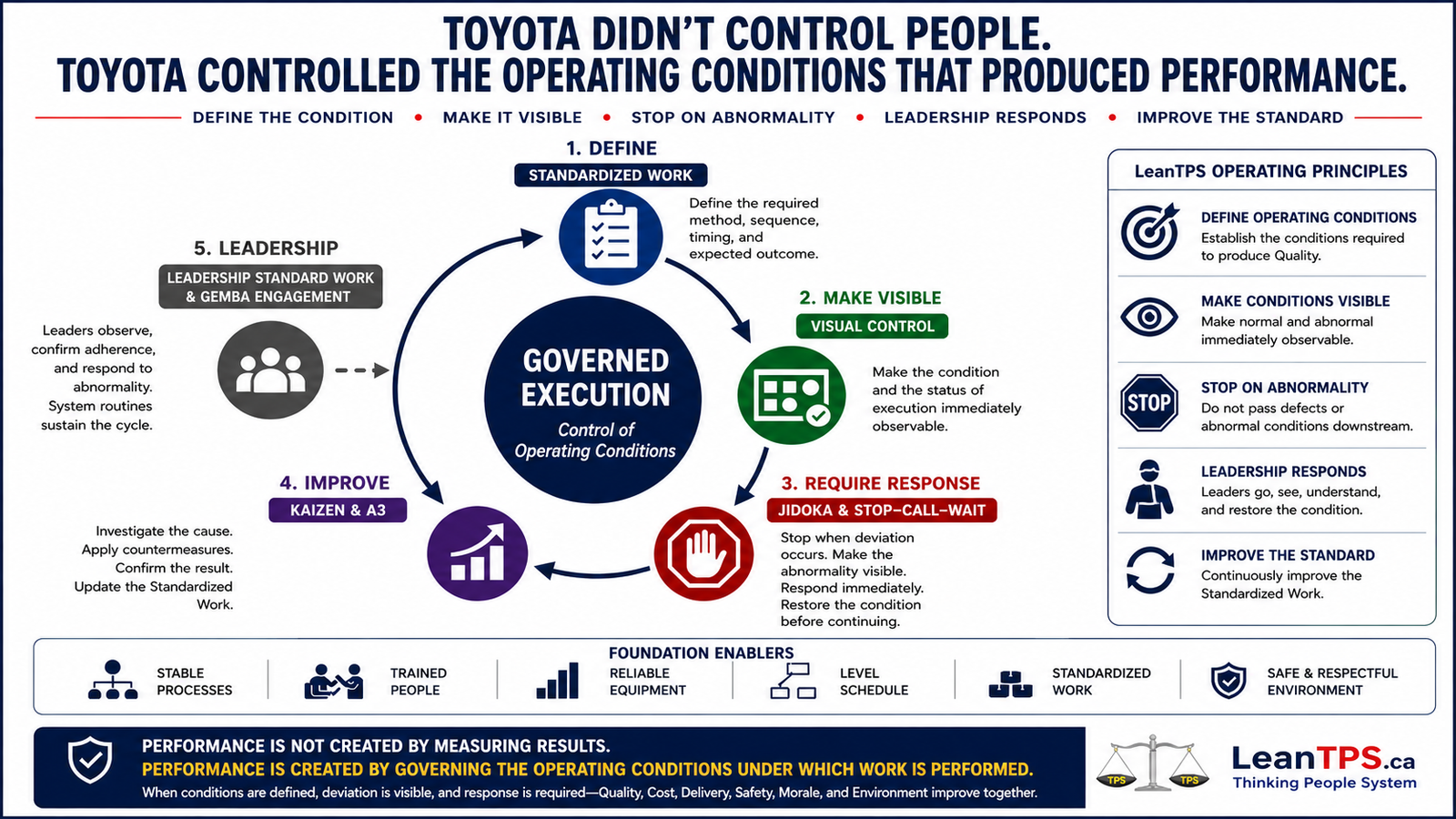
The Toyota Production System is not a toolbox or a cost-reduction program. It is a leadership-driven system that integrates Respect for People with continuous improvement. Many organizations outside Japan adopt TPS methods without understanding the cultural foundation that sustains them. The result is often partial implementation, where tools are applied but the leadership discipline and problem-solving culture are missing.
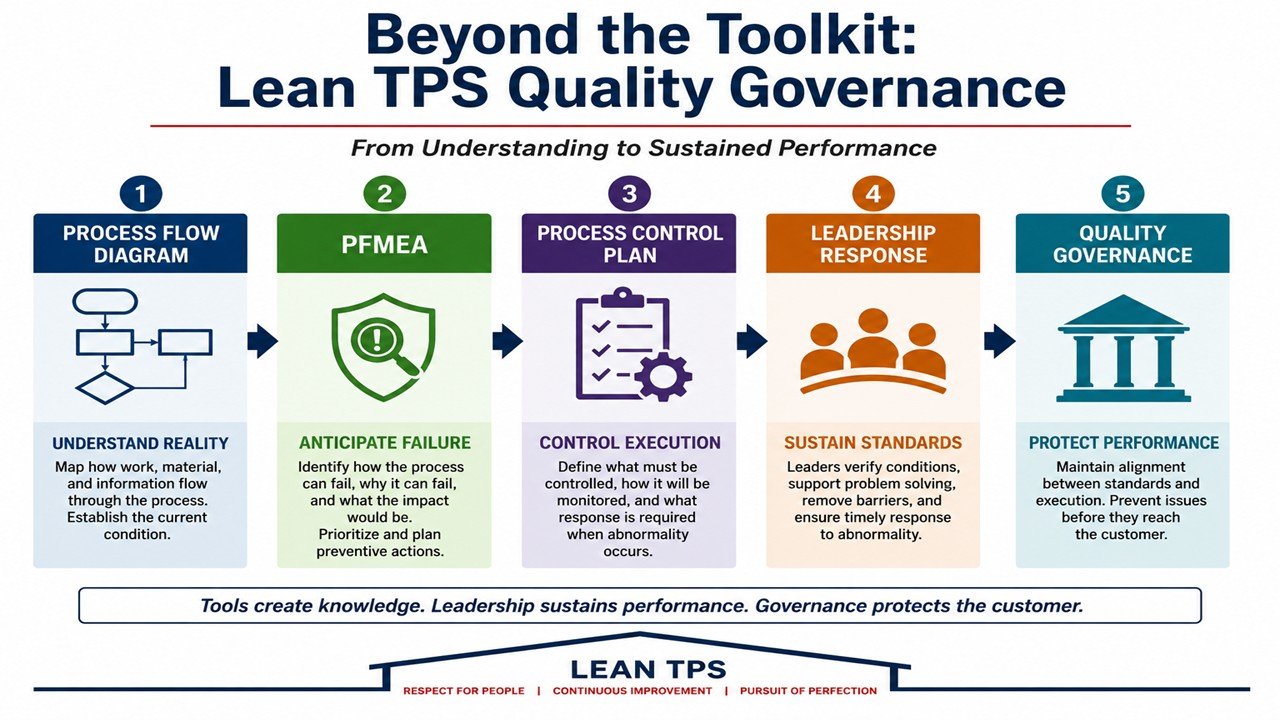
A dedicated Lean TPS department provides the structure needed to embed authentic TPS thinking into leadership, culture, and operations. It becomes the organization’s center for learning, reflection, and disciplined improvement.
Step 1: Define the Purpose
The purpose of a Lean TPS department is to teach and support the consistent application of Toyota principles while adapting to the local work culture. It must go beyond technical implementation to build capability and teamwork.
Objectives include:
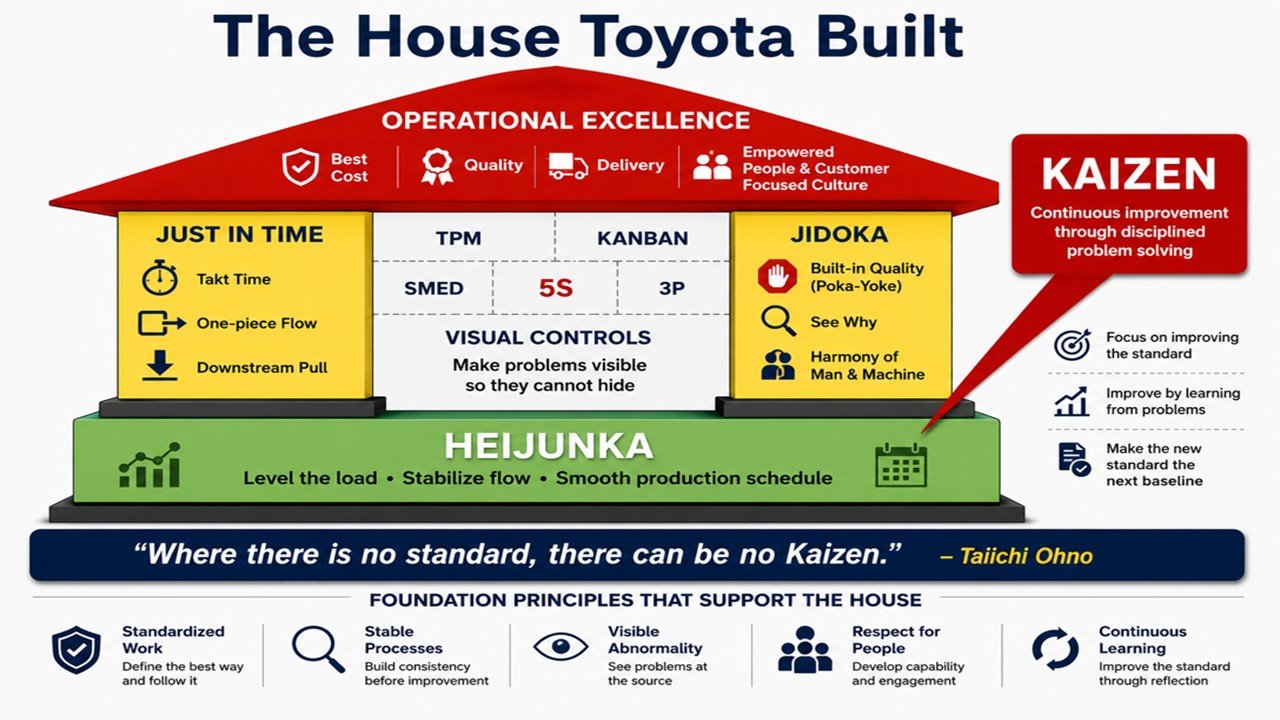
- Establishing Just-in-Time flow and Jidoka for built-in quality.
- Implementing 5S Thinking to create order and visual control.
- Developing Standardized Work to stabilize processes.
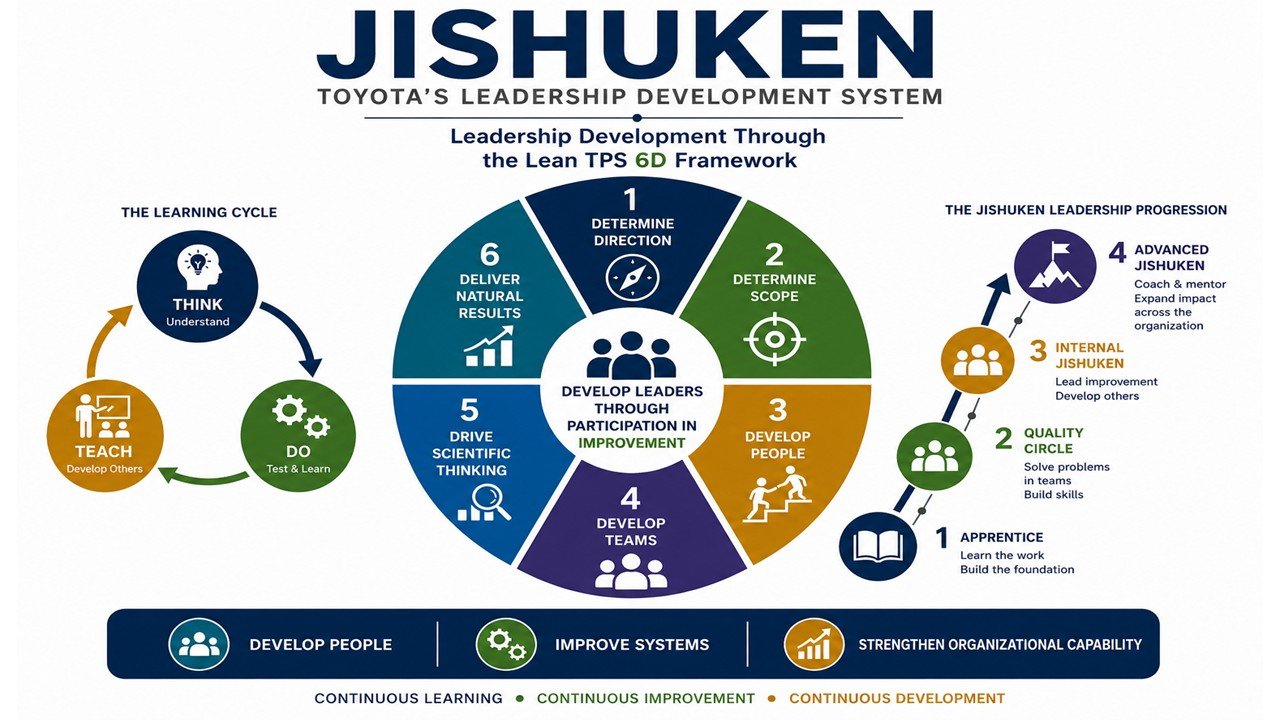
- Leading Kaizen and Jishuken activities to strengthen leadership and problem-solving.
Step 2: Establish the Scope
A Lean TPS department should serve as both a support function and a leadership development engine. It evaluates processes, trains leaders, and integrates improvement with daily management.
Key activities:
- Conduct video studies and time analysis to identify waste and imbalance.
- Develop Standardized Work and Yamazumi Charts for work balance.
- Facilitate layout redesigns to improve flow.
- Apply the Swiss Cheese Model of risk prevention to ensure system stability.
Step 3: Define Responsibilities
The department’s members must lead from the Gemba. Their credibility depends on their ability to observe, teach, and improve processes directly.
Core responsibilities:
- Perform Gemba walks to identify Muda and engage teams in countermeasures.
- Apply 5S Thinking to make standards visible and maintainable.
- Facilitate Kaizen and Jishuken workshops that build learning cycles.
- Train supervisors and team leaders to apply TPS logic in daily management.
Through this hands-on approach, the Lean TPS department bridges the cultural gap that often separates technical improvement from human development.
Step 4: Deliver Training and Implementation
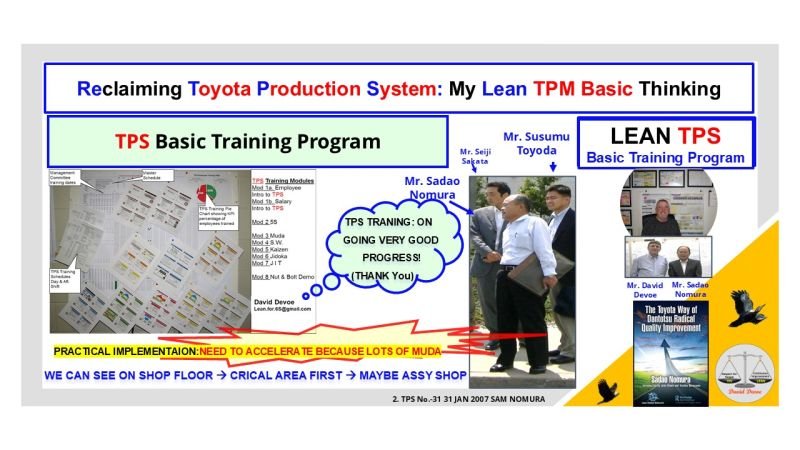
Training ensures a consistent foundation across all levels of the organization. A structured Lean TPS Basic Training program includes:
- Introduction to TPS – Leadership principles and system thinking.
- 5S and Red Tag – Workplace organization and visual control.
- Discovering Muda – Identifying the 8 wastes and their causes.
- Standardized Work – Takt time, work balance, and process stability.
- Kaizen – Structured problem solving and improvement cycles.
- Just-in-Time – Pull production, Kanban, and production leveling.
- Jidoka – Built-in quality and error prevention.
- TPS Simulation – Practical application through interactive exercises.
Implementation Sequence:
- Capture the current state through video and data analysis.
- Apply 5S Thinking to remove instability.
- Develop and document Standardized Work.
- Conduct Kaizen and Jishuken to address key problems.
- Train leaders to sustain improvements through daily management.
Restoring the True Intent of TPS
Lean TPS restores the original intent of Toyota’s system: to develop people who can see and solve problems. When leadership uses the system as a means of teaching, TPS becomes sustainable.
The goal is not to copy Toyota’s methods but to apply its principles with discipline. A Lean TPS department that combines technical understanding with cultural awareness ensures that TPS remains a living system that continuously adapts while staying true to its purpose.