Reclaiming Toyota Production System: My Lean TPS Basic Thinking
Organizations today operate in volatile markets where supply chains shift, demand fluctuates, and cost structures are unstable. In such conditions, traditional cost-plus pricing models fail to protect competitiveness. When costs rise, companies increase prices to maintain margins, often losing customers in the process.
The Toyota Production System takes a different approach. It treats cost not as a fixed element but as something to be improved. Lean TPS reduces waste at the source, designs flow to stabilize operations, and sustains profitability through continuous improvement rather than price inflation.
Understanding the Difference in Thinking
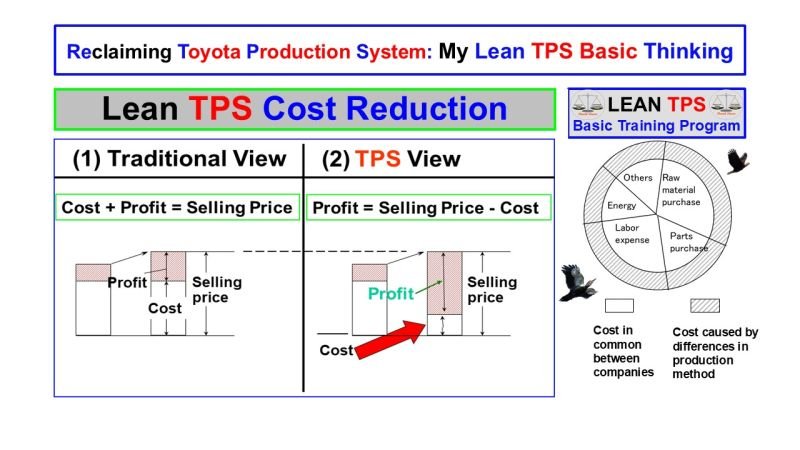
The traditional view follows the formula:
Cost + Profit = Selling Price.
This logic assumes costs are immovable, placing pressure on customers to absorb inefficiencies through higher prices.
The TPS view reverses the logic:
Profit = Selling Price − Cost.
Here, the market determines the selling price, and the company’s responsibility is to reduce cost through operational excellence. Profit is achieved by eliminating waste and building efficiency into every process.
The image comparison shows the difference clearly. The traditional model pushes cost forward. The TPS model pulls cost down.
The Structure of Cost
Every organization faces two broad cost categories:
- Common costs shared across industries, such as materials, labor, and energy. These are often difficult to change.
- Production method costs unique to each company, driven by how processes are designed, managed, and improved.
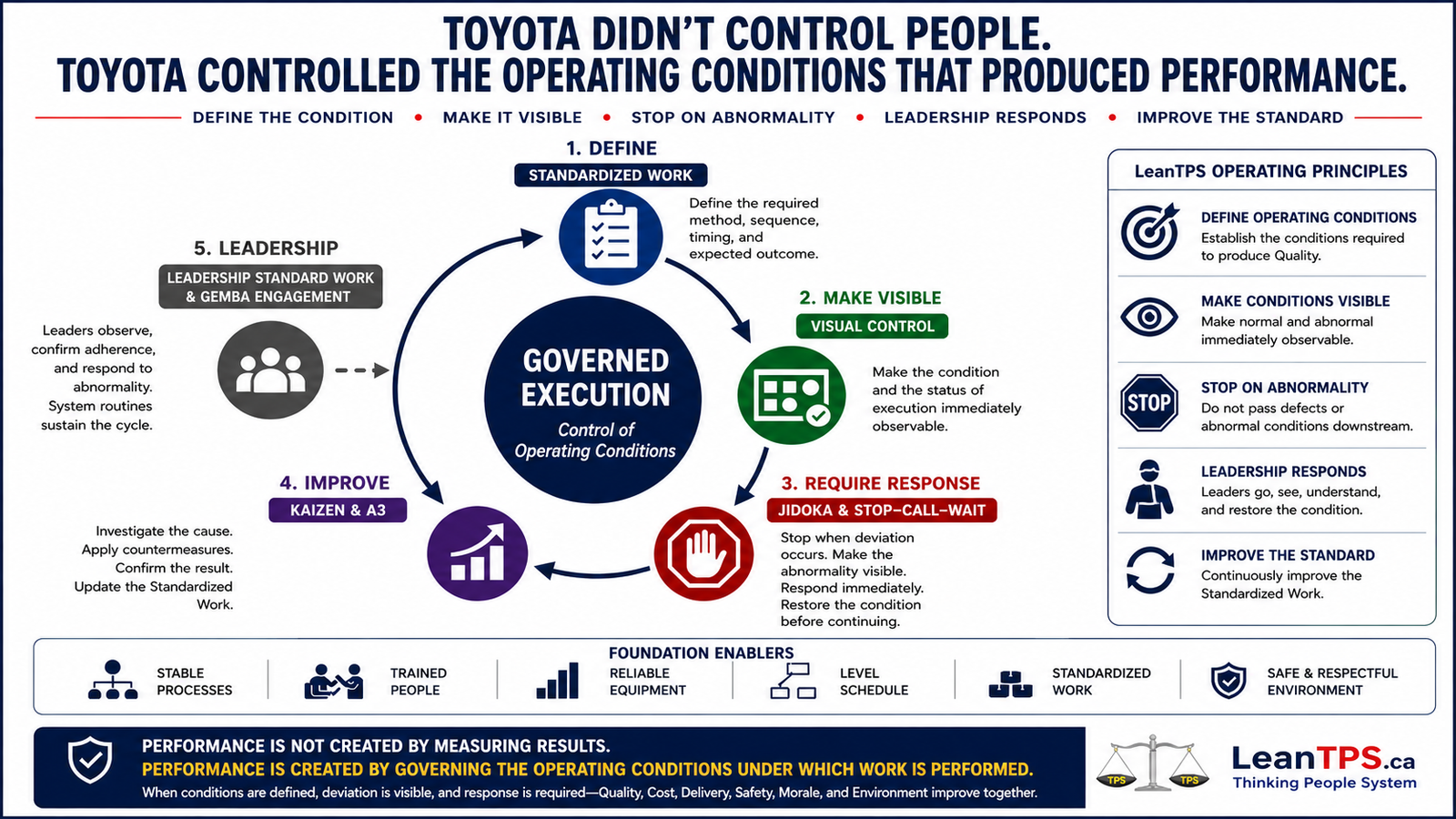
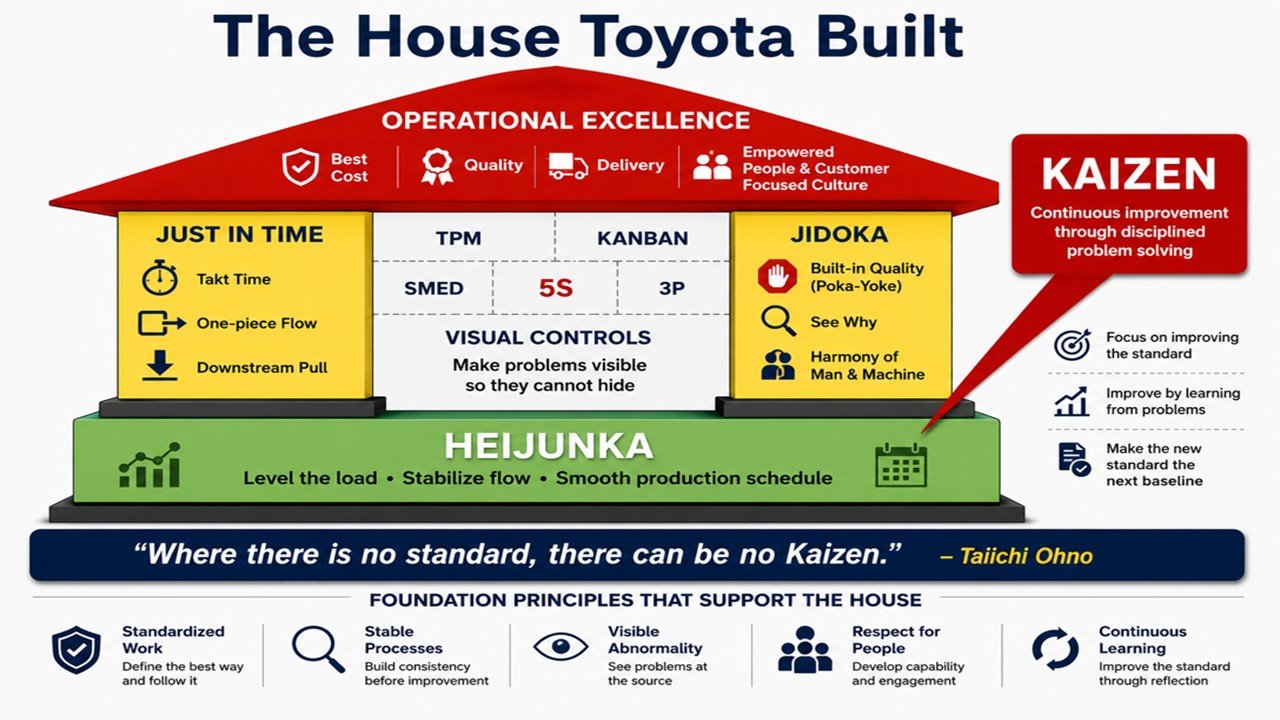
Lean TPS targets the second category. Through Standardized Work, Just-in-Time flow, and built-in quality, it continuously removes unnecessary motion, waiting, and rework. This systematic approach lowers the cost base without compromising quality or delivery.
Lean TPS Practices for Sustainable Cost Control
Toyota’s cost reduction is not a one-time initiative. It is a discipline built into daily management:
- Standardized Work: Stabilizes processes and ensures repeatable results.
- Jidoka: Detects and prevents defects, avoiding downstream waste.
- Just-in-Time: Aligns production to demand, preventing excess inventory and overproduction.
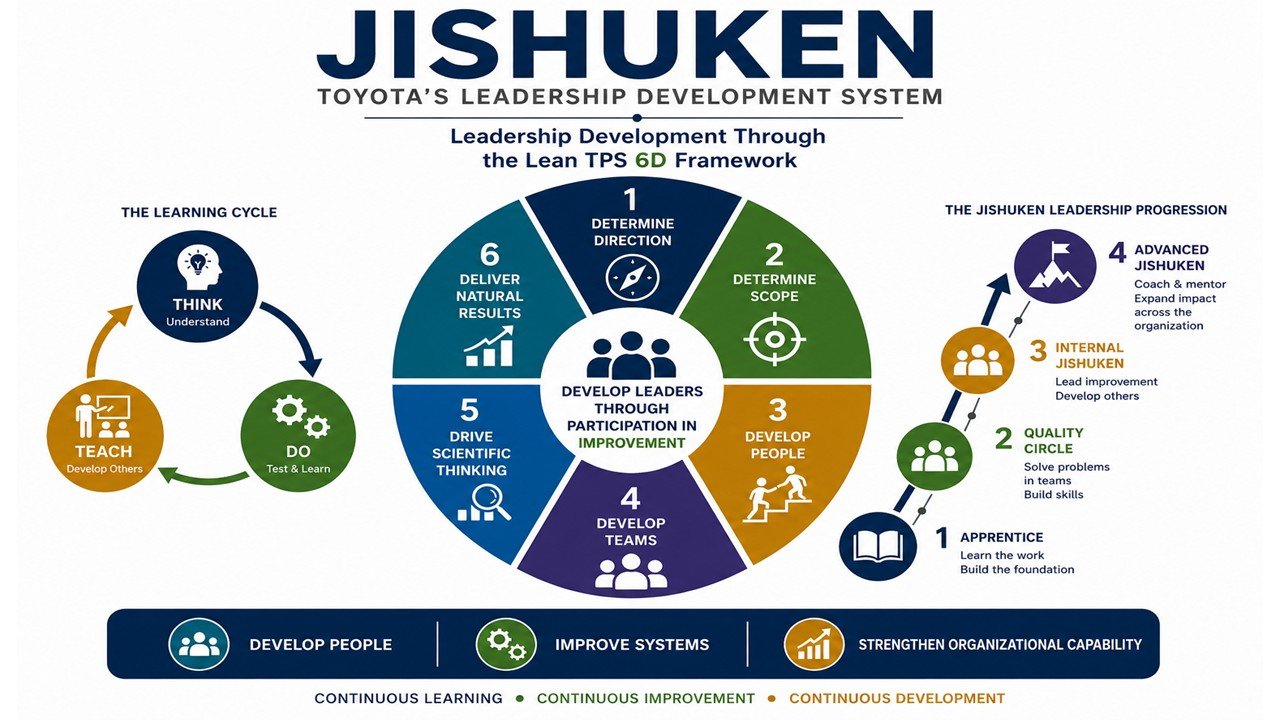
- Jishuken: Engages leaders directly in problem solving to identify improvement opportunities.
By focusing on controllable factors within production and management systems, Lean TPS builds resilience. It achieves profitability by design, not by reaction.
Lean TPS thinking reframes cost reduction from short-term cuts to long-term capability. The company that learns to improve its process structure gains a competitive edge that price increases can never match.