At Toyota, problem solving was never a reaction. It was a system.
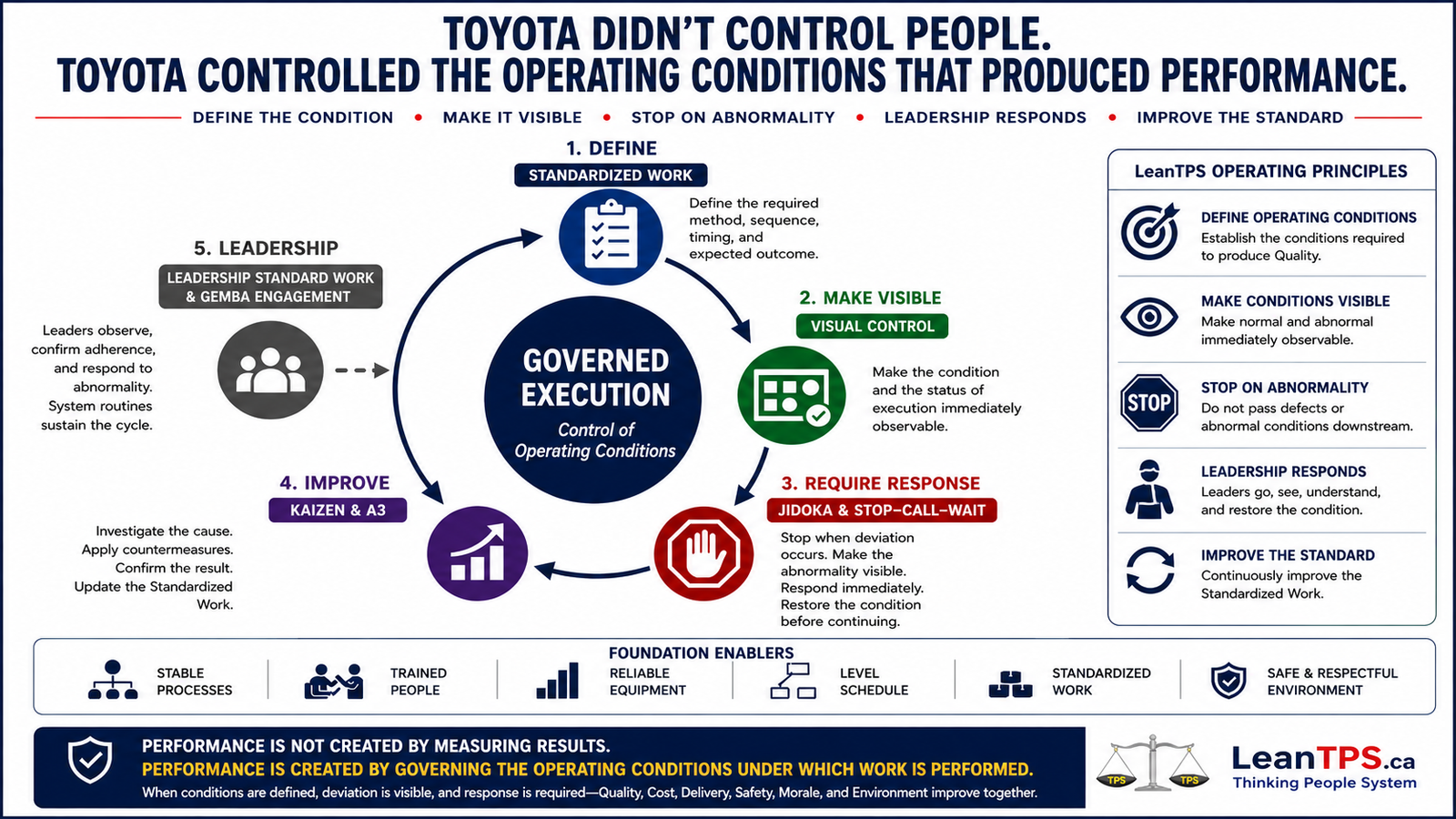
Jidoka was not a slogan or a quality banner. It was a structure that taught people how to act when something was wrong and it trained leaders how to respond. That is where real capability begins.
In Lean TPS, the goal is not to create perfect conditions. It is to build systems that surface problems in real time, allow people to stop work safely, and ensure structured learning from every abnormality. People are taught to own the process, not just follow instructions.
This is where Blame-Free Problem Solving begins. It is not a cultural aspiration or a facilitation technique. It is a system design that removes fear from the act of improvement. When someone pulls the Andon cord, the expectation is clear. Leaders respond. Action is taken. The process is stabilized, and the learning is shared. No shame. No politics. Only structure and support.
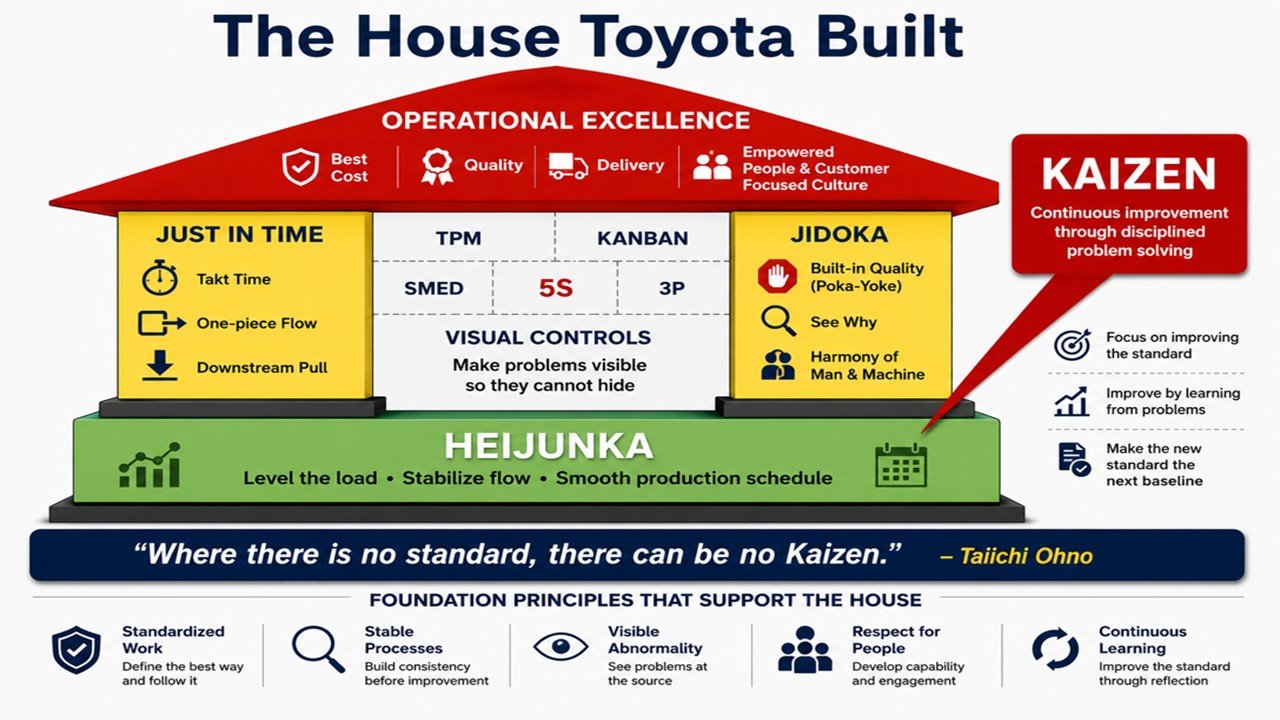
The Jidoka structure teaches that quality begins when problems are seen and solved at the source. The Andon system, the 5 Whys, A3 thinking, and Standardized Work form the discipline that allows this to happen. Each tool serves the process, and the process serves the people.
Inside Toyota, this behavior was reinforced daily. When a stop occurred, leaders went to the Gemba. They observed the condition, asked the right questions, and coached the next step. Each problem became a lesson. The result was not only better quality but also stronger people who could recognize, analyze, and improve the system they worked in.
Psychological safety was not a discussion topic inside Toyota. It was built through structure. Every stop had a reason. Every response had a follow-up. Every fix had a feedback loop. Clarity of role and response created confidence and trust. People acted because the system supported them.
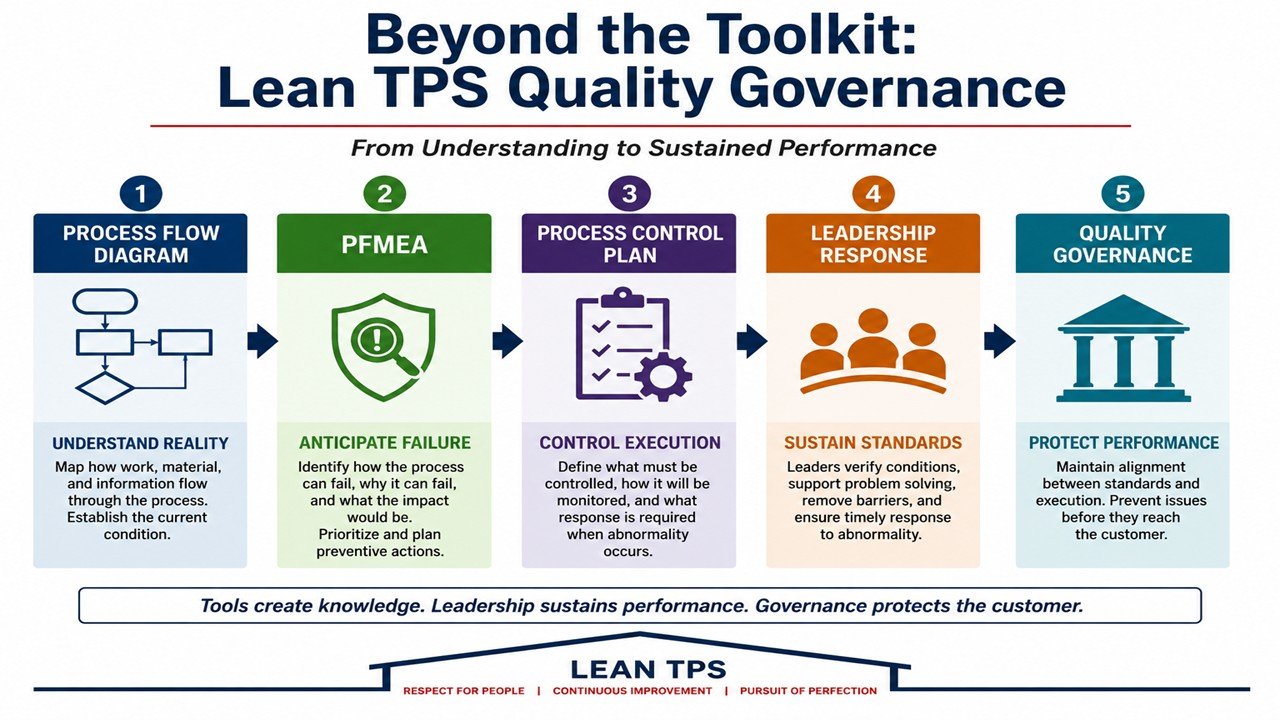
This is the foundation of what I now teach as Lean TPS. It is not tool-based Lean that separates improvement from daily work. It is the real Toyota Production System, where leadership behavior, structure, and discipline come together to prevent failure and build capability.
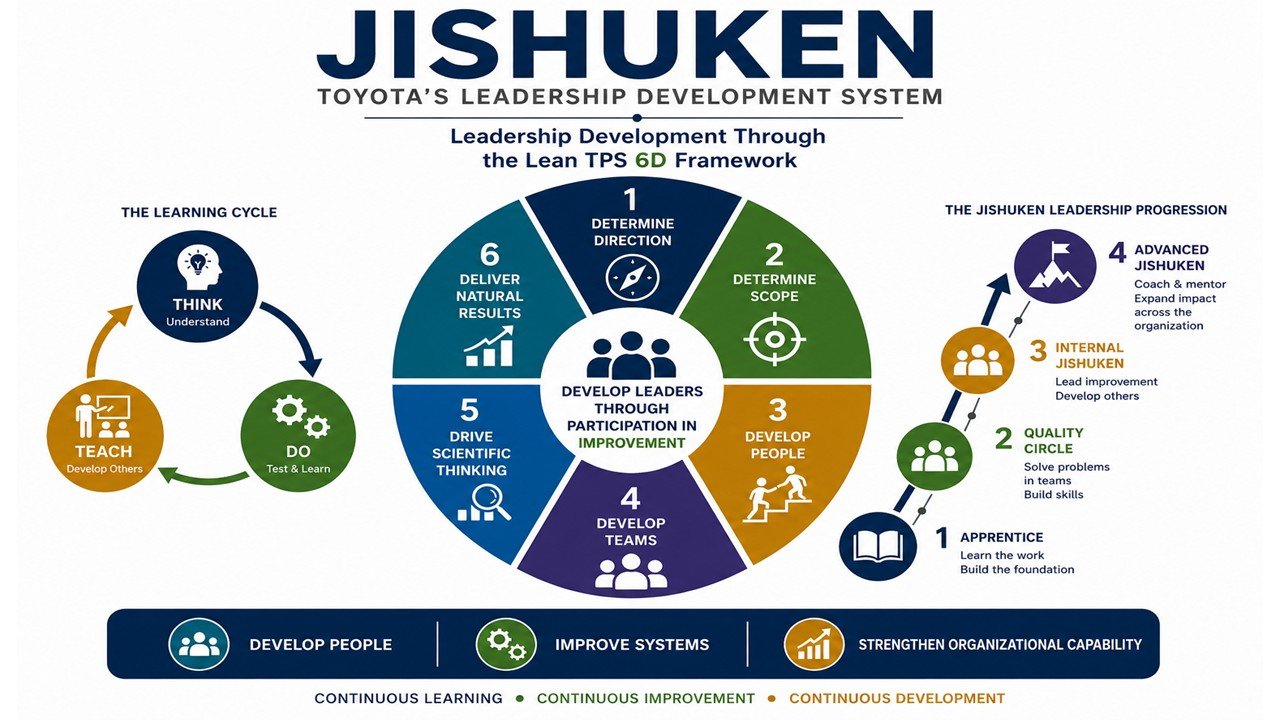
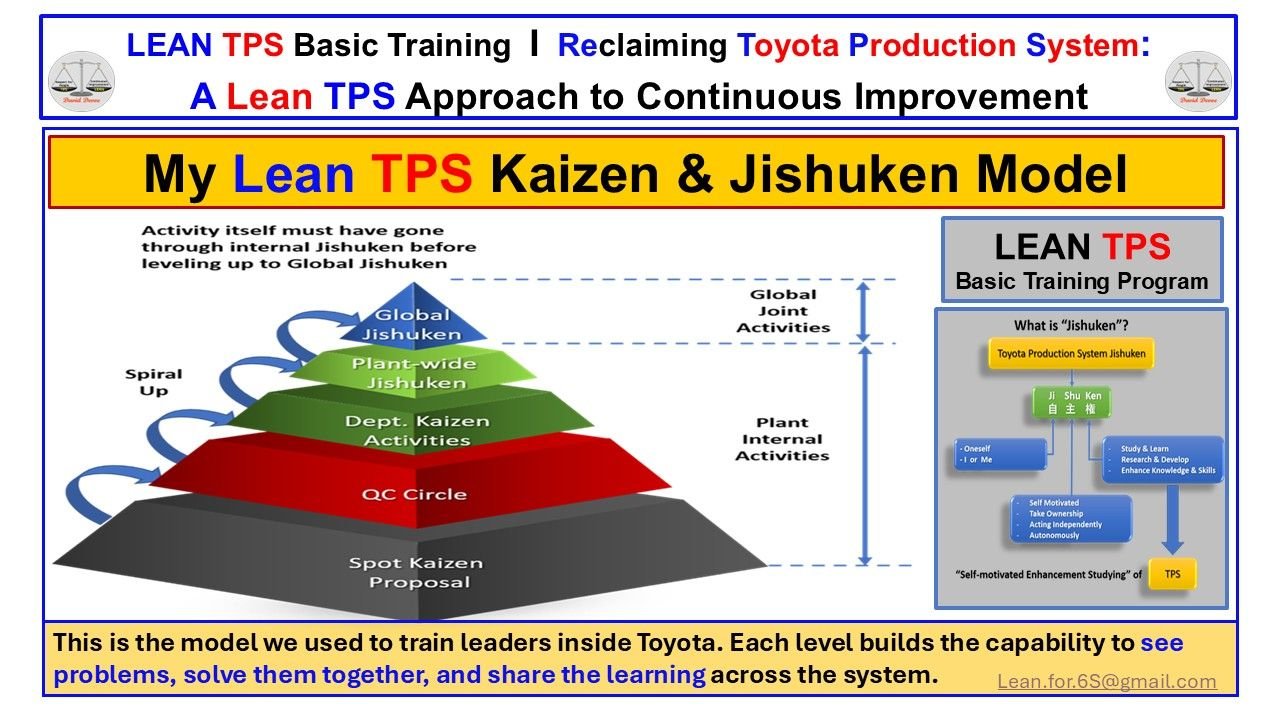
The image from Lean TPS Basic Training shows how quality and leadership development connect. Small, local improvement cycles such as Spot Kaizen and QC Circles grow into Department Kaizen and Plant-wide Jishuken. Each layer adds more accountability and visibility, building a system of shared learning across the organization.
Jidoka and Blame-Free Problem Solving together create a culture where people can act without hesitation and leaders can respond with purpose. It is not about slogans or programs. It is about building the structure that makes improvement safe, visible, and repeatable.
When problems are seen and solved at the source, quality becomes part of the process, not something inspected at the end.