At Toyota, learning was never built on slogans or conditioned responses. It was built on reflection, questioning, and learning from real experience. The phrase “Become a Learning Organization” is not a motivational slogan. It is a Toyota Way Management Principle that defines how capability is developed and sustained.
In recent years, many Lean frameworks have shifted away from reflection toward repetition. Standardized scripts, pre-defined coaching cues, and emotional conditioning have become substitutes for deep learning. This may create consistency in language, but it does not create capability in thinking.
In Toyota, the ability to reflect was considered the foundation of growth. Every improvement cycle began with understanding what was learned, what failed, and why. This approach required openness and honesty. People were encouraged to express their experience in their own words. The goal was never to produce identical responses. The goal was to develop understanding.
When people describe their learning journey, they often use strong or uncomfortable language. Phrases such as “I drank the Kool-Aid” appear in discussions about Lean and Six Sigma. Some argue that these should never be used in professional settings. But inside Toyota, learning meant confronting what was once believed, not avoiding it. Recognizing that a previous method or mindset no longer serves the system is not disrespectful. It is the start of real improvement.
Respect for People includes allowing individuals to describe their experience truthfully. Lean TPS recognizes that each person’s learning path is unique. What matters is not how they describe it, but what they do next. Do they reflect? Do they test their new understanding through practice? Do they help others learn? This is what defines a learning organization.
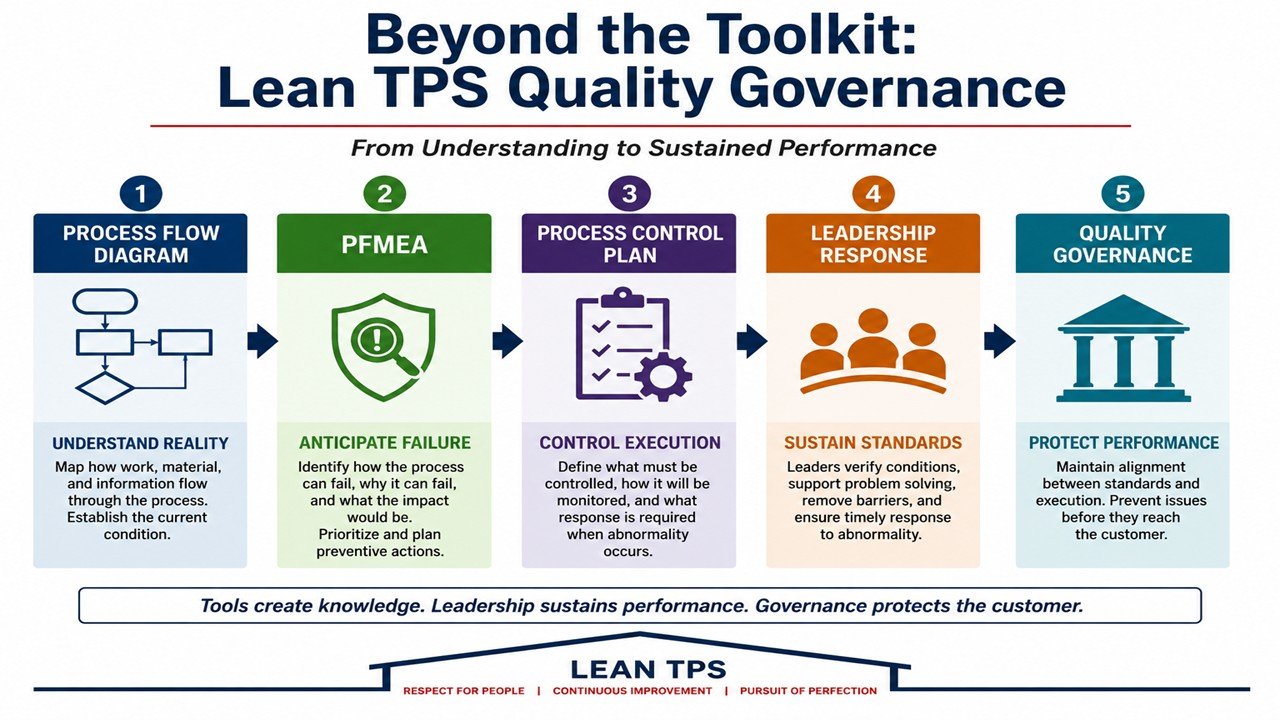
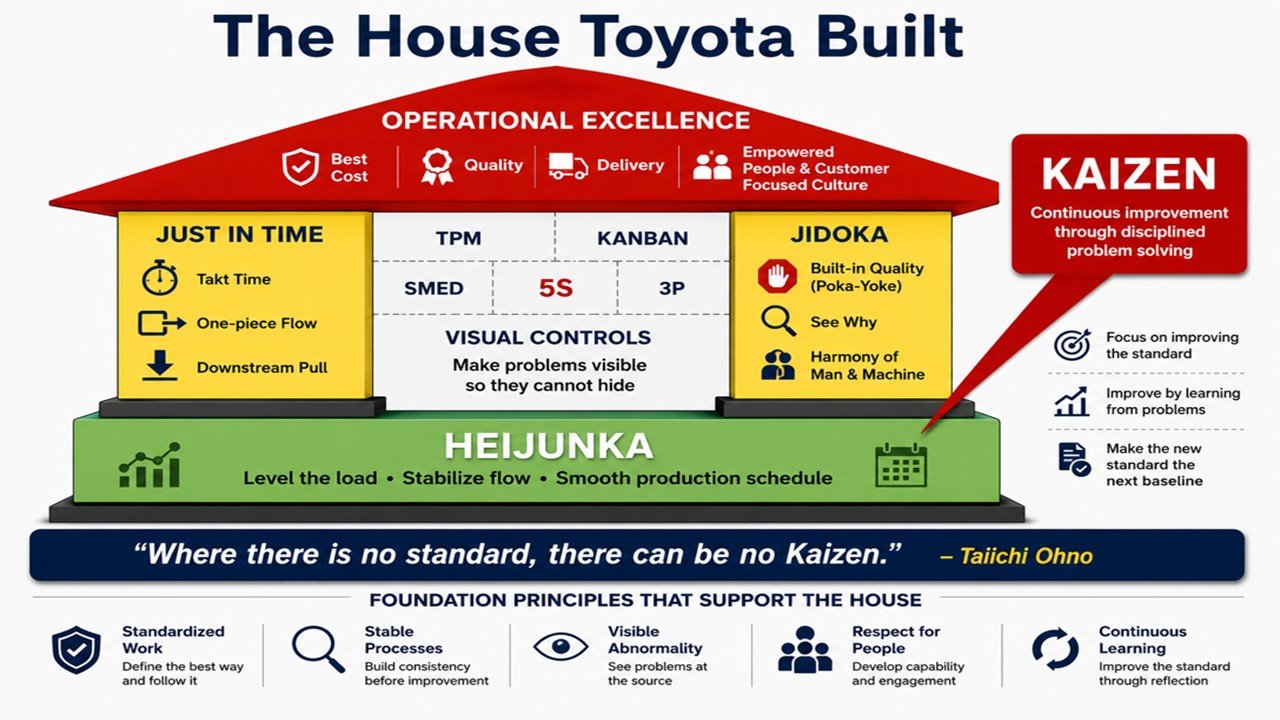
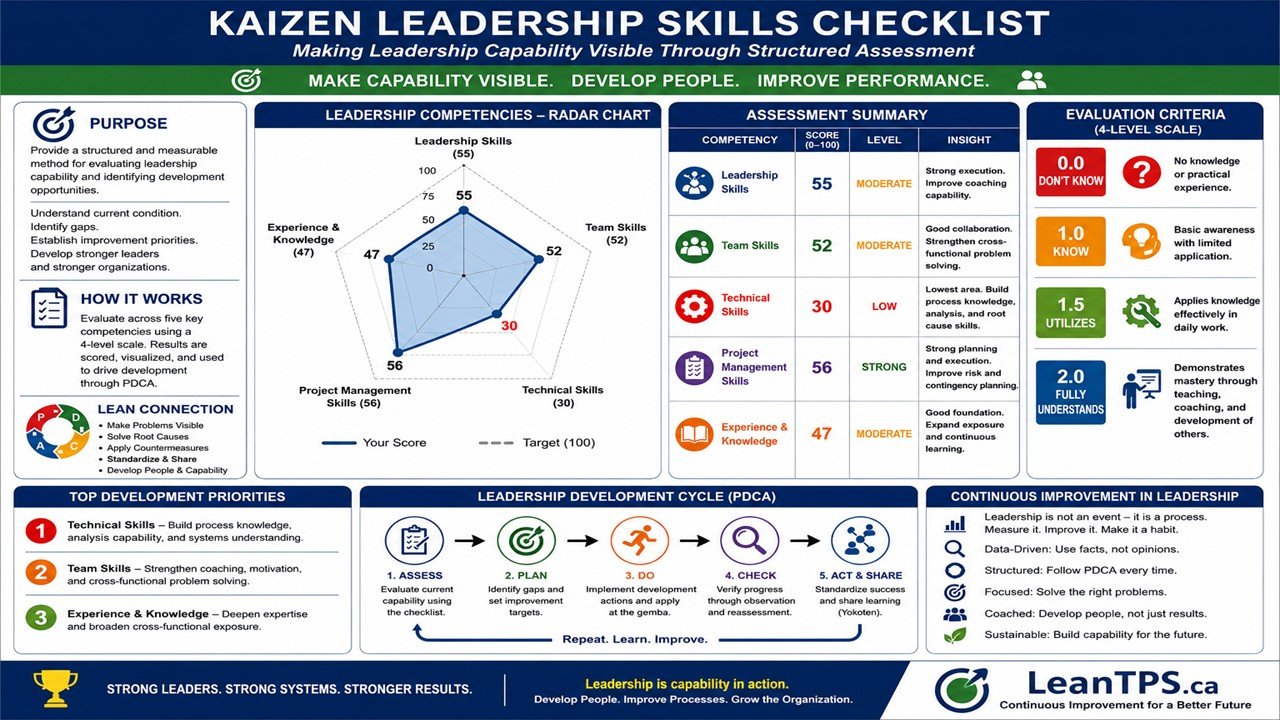
TPS was designed to evolve. Every method, from 5S to Standardized Work, included reflection as part of the structure. PDCA is not simply a loop. It is a disciplined process for confirming what was learned and integrating those lessons into the next cycle. Without reflection, PDCA becomes a mechanical routine rather than a thinking process.
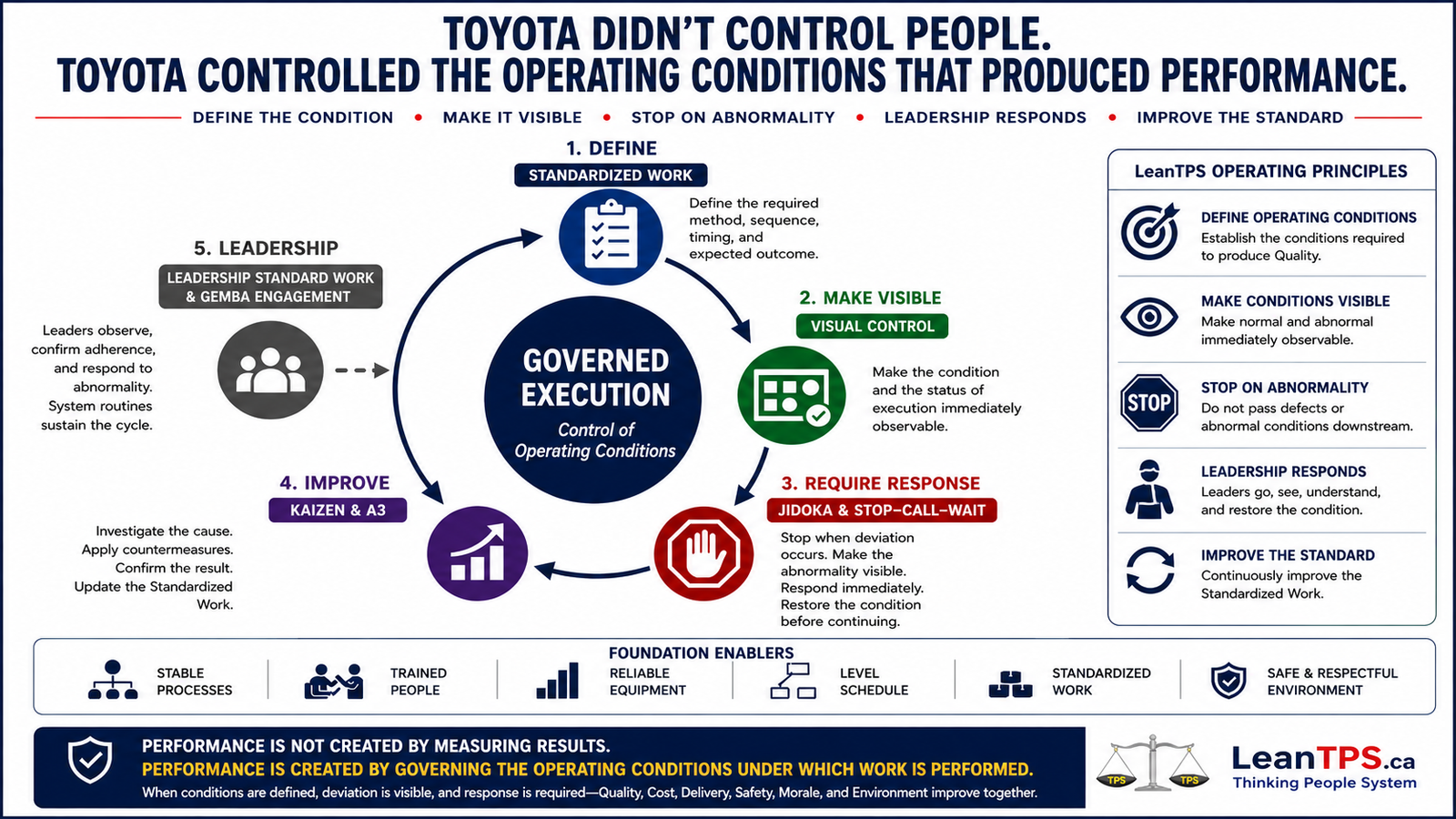
The danger of scripting improvement is that it replaces reflection with compliance. When people repeat phrases or follow pre-written coaching patterns, they may appear aligned, but real thinking is lost. Toyota never built its culture on slogans. It built it on evidence, observation, and shared understanding of cause and effect.
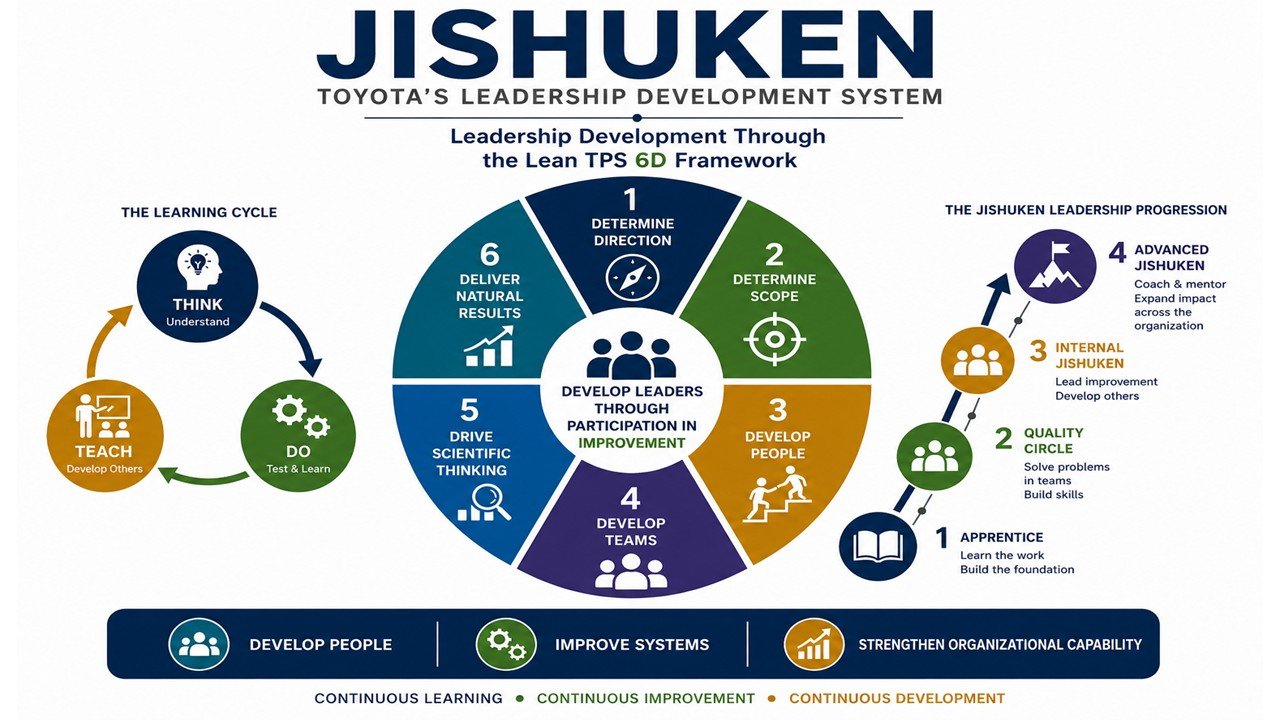
Becoming a learning organization requires humility. It requires people at every level to acknowledge what they do not yet know and to learn from the reality of the Gemba. Leaders demonstrate this by asking questions, listening deeply, and supporting teams in testing ideas. This is what transforms daily work into continuous improvement.
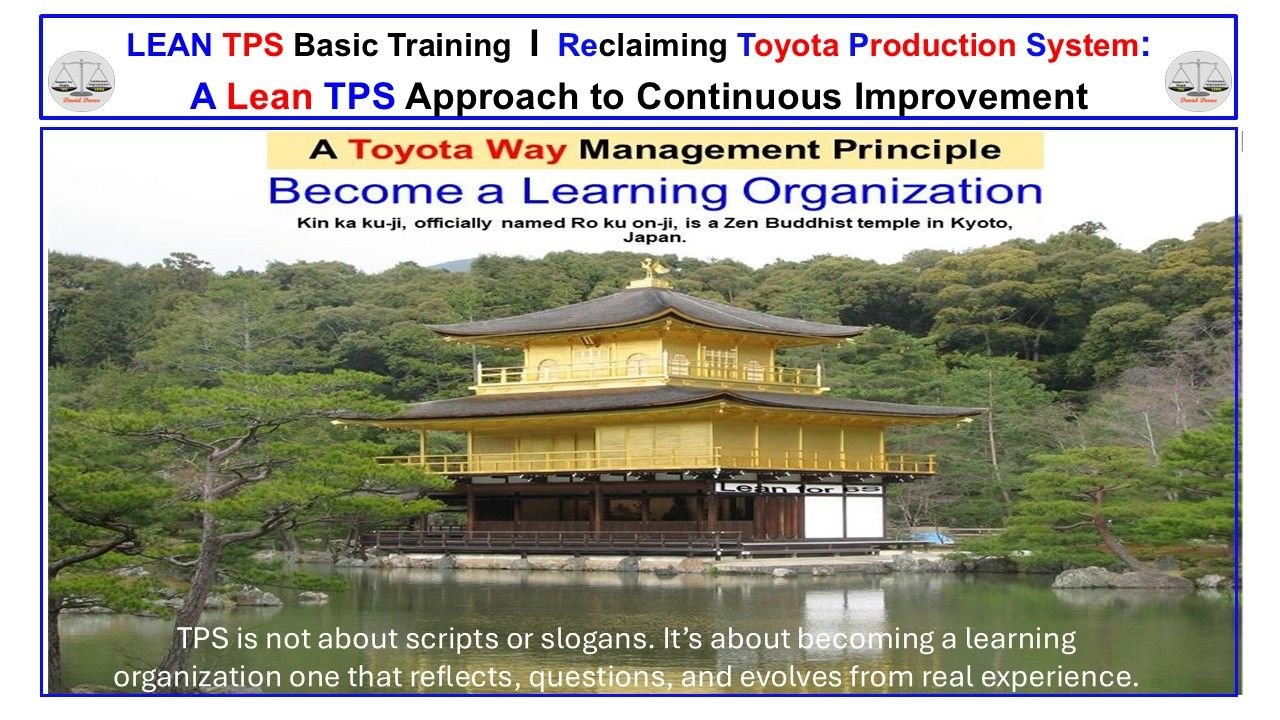
The image above, taken at the Golden Pavilion in Kyoto, represents this mindset. In TPS, stability and reflection coexist. Structure provides the foundation, but learning gives it life. Each person who questions, reflects, and improves adds strength to the system.
Lean TPS is not about protecting methods from criticism. It is about adapting them through understanding. Real improvement begins when people are free to question, reflect, and grow. That is how a system becomes capable of learning.