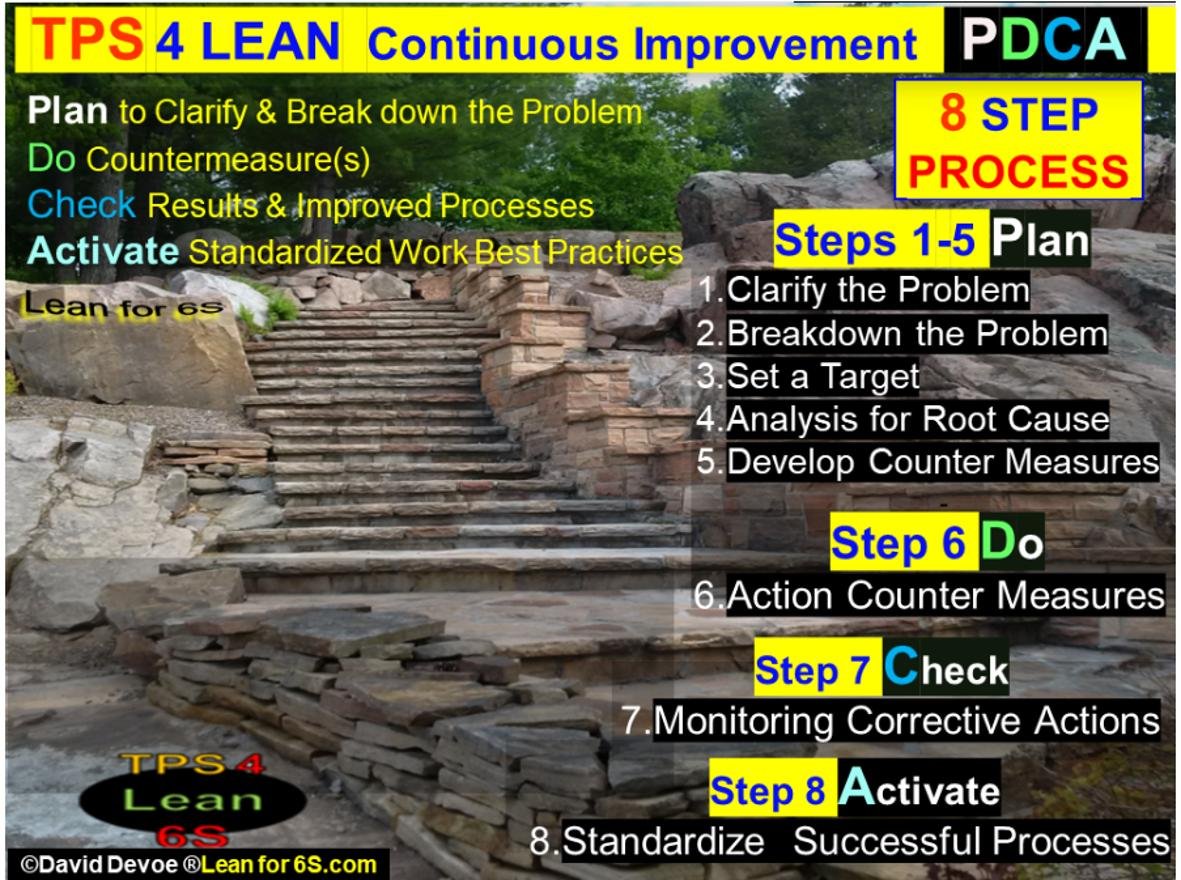
TPS 4 LEAN: The 8-Step PDCA Process

Visual diagram showing Toyota’s 8-Step PDCA process for continuous improvement, with steps from Plan through Activate labeled over stone steps symbolizing progression.
The TPS 4 LEAN PDCA process is Toyota’s structured method for problem-solving and learning. It links improvement to leadership discipline, ensuring that every step builds understanding and stability. The 8-Step model turns PDCA into a repeatable system for teaching, reflection, and standardization.

The TPS 4 LEAN PDCA process is a structured approach to improvement that defines how Toyota develops people, stabilizes operations, and builds a culture of learning. It is not just a problem-solving method but a management system that teaches how to think scientifically and act with discipline.

PDCA stands for Plan, Do, Check, and Activate. It represents the continuous improvement loop that connects every level of the organization. The process begins by clarifying the problem, understanding the current condition, and breaking complex issues into manageable pieces. Improvement is not random activity but a deliberate series of steps that build knowledge and strengthen capability.

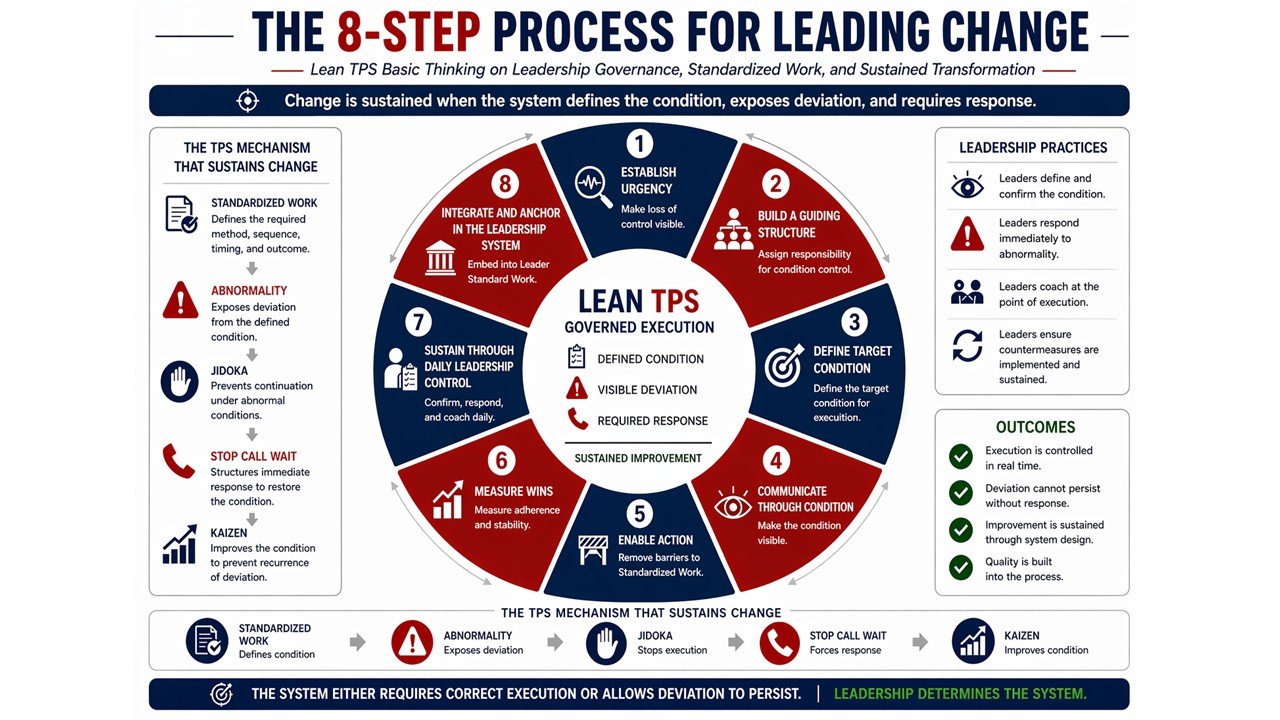
The 8-Step method expands the traditional PDCA cycle into a clear, teachable framework that can be used at the Gemba by anyone leading improvement. The first five steps form the Plan phase. Teams start by clarifying the problem, breaking it down, setting a measurable target, analyzing root causes, and developing countermeasures that address the real issues rather than the symptoms.

Step six is Do, where the countermeasures are implemented in a controlled and visible way. Teams use Standardized Work and temporary measures to test and confirm that the actions have the intended effect. Problems are not hidden or ignored but surfaced and discussed so that learning can occur.

Step seven is Check, which involves monitoring performance, verifying stability, and confirming that results are repeatable. In Toyota, checking is not inspection but reflection. Leaders go to the Gemba, review the facts, and compare results to the target. This phase ensures that countermeasures produce improvement that can be sustained.

Step eight is Activate, the step that makes Toyota’s approach different from most improvement systems. Here, the team standardizes the successful condition, documents the new method, and shares the learning across other areas. Activate links PDCA to Standardized Work, ensuring that improvement is not temporary but built into daily management.

The TPS 4 LEAN process strengthens the connection between leadership and problem-solving. Each PDCA cycle teaches how to observe, think, and act in alignment with purpose. The goal is not perfection in one event but progress through continuous practice. When teams follow these eight steps consistently, they create a system that eliminates waste, reduces variation, and increases value to customers.

In Toyota’s view, the PDCA cycle is both a teaching tool and a leadership routine. It develops the ability to see problems early, act quickly, and prevent recurrence. The 8-Step method turns improvement from a project into a way of life.
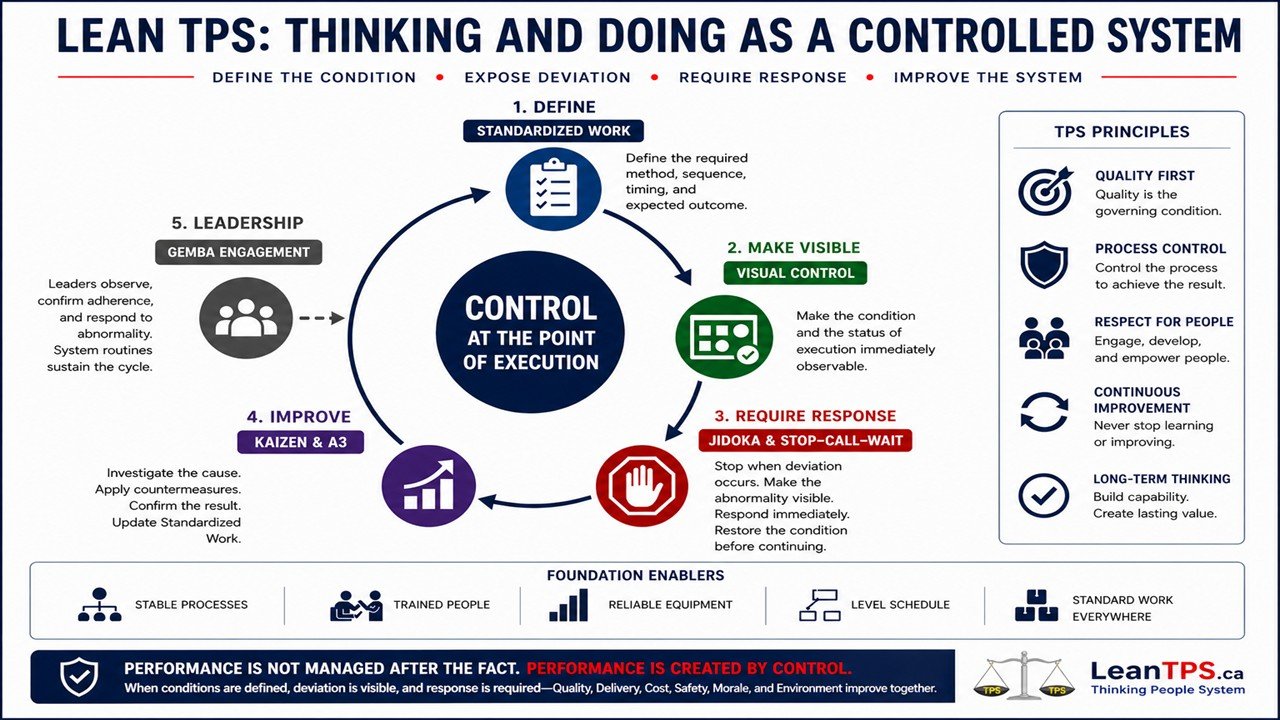
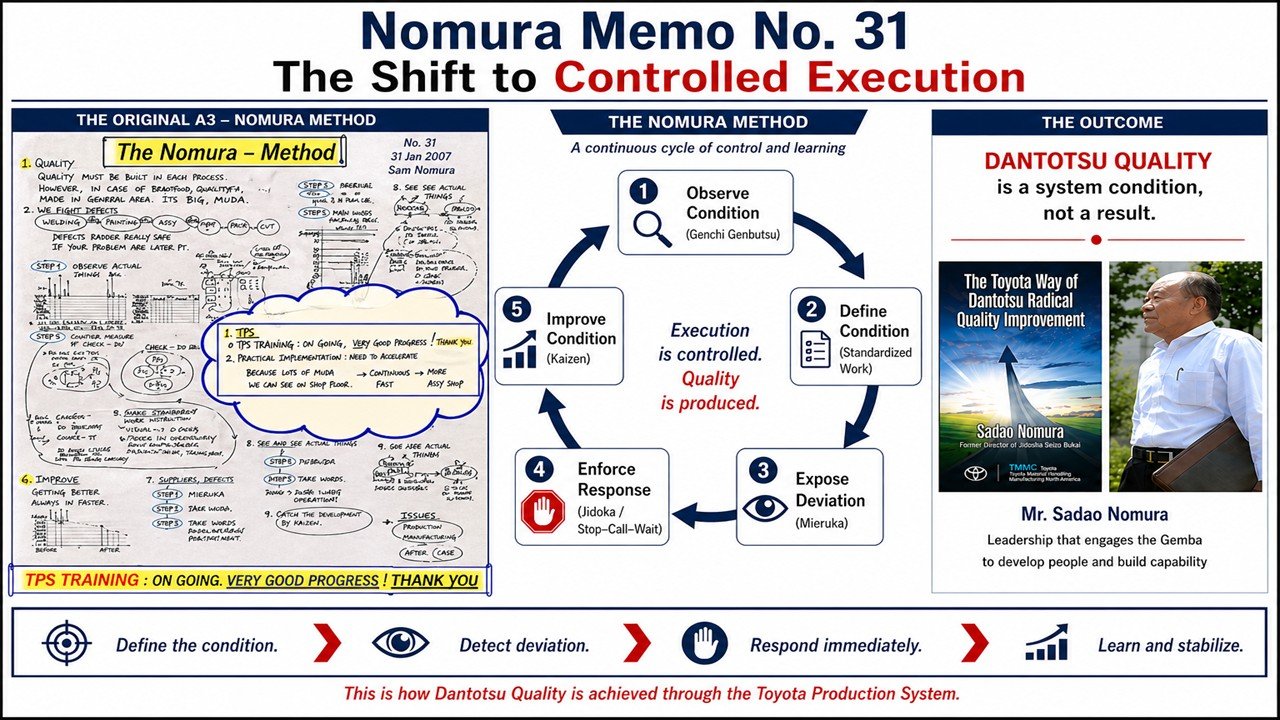
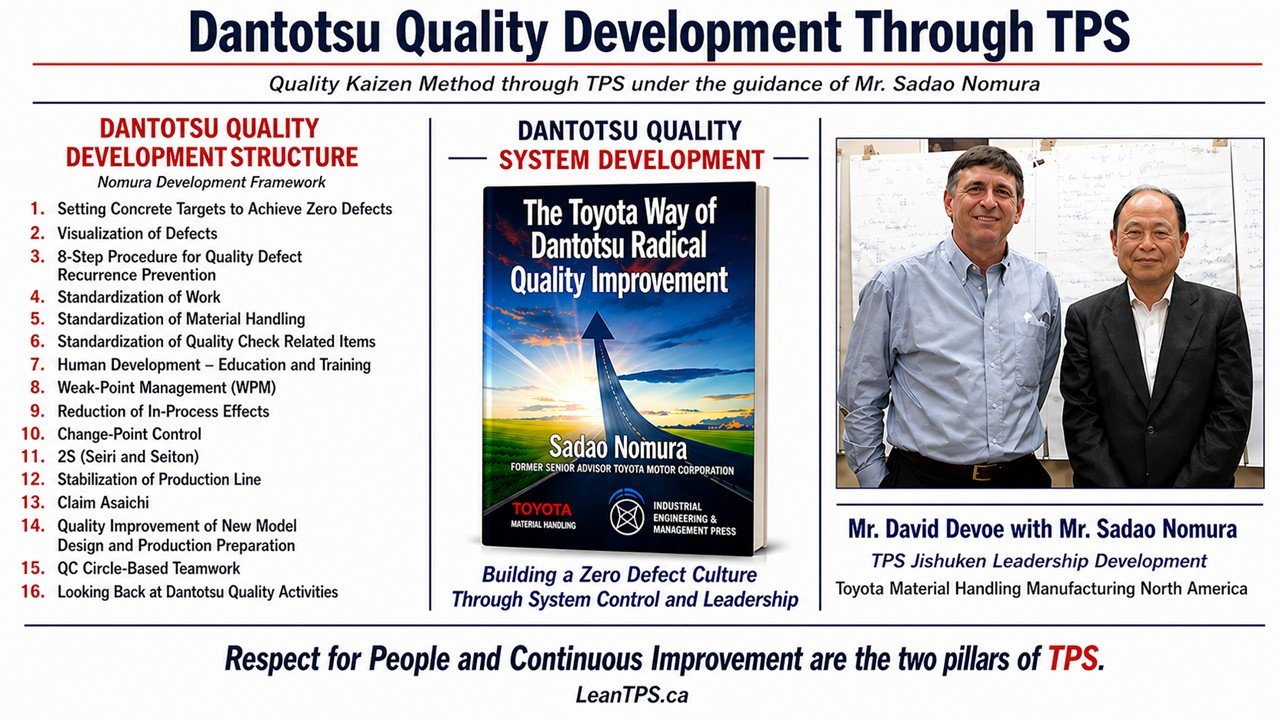
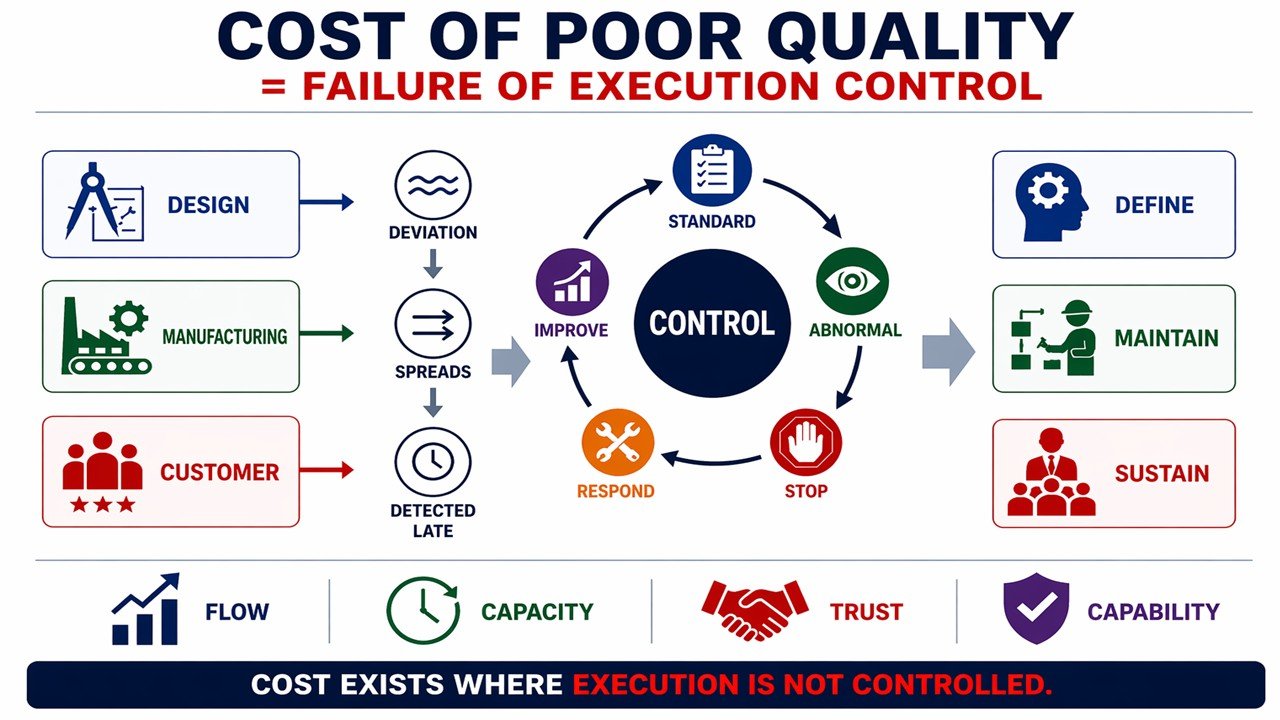
A Lean TPS system requires that execution is governed by three questions that define control. The required condition for execution must be explicitly defined through method, sequence, timing, and outcome. The point at which the condition is violated must be immediately recognizable during execution. The response required when the condition is not met must be enforced without delay. When these three elements operate together, execution is controlled and Quality is maintained as a condition of the system. Control precedes improvement because improvement depends on a stable and defined state of execution. When conditions are not defined, exposed, and enforced, improvement activity operates on an unstable system and results do not hold. Work continues under abnormal conditions, variation accumulates, and outcomes remain inconsistent. When control is established, improvement operates within defined boundaries and reinforces the condition that governs execution. Quality exists only when the required condition is maintained during each cycle of work. Quality is not achieved through measurement or inspection after execution. Quality is protected through enforcement of conditions during execution. When the condition is not met, work does not continue, and response restores the defined state before execution resumes. This enforcement prevents deviation from propagating and maintains stability at the source. A Lean TPS system requires that continuation under abnormal conditions is not permitted. When work continues despite violation of method, sequence, timing, or outcome, control does not exist and the system becomes dependent on judgment. Deviation is absorbed into normal work, and Quality is degraded. When continuation is prevented, the system enforces the boundary between normal and abnormal states and maintains control of execution. The system extends beyond individual elements and requires integration across condition definition, exposure, response, and learning. When these elements are aligned, execution is governed, leadership responds as required, and learning is embedded through repeated cycles of confirmation and correction. This integration establishes a system that maintains control and protects Quality as a condition of execution. Further development of this system requires expansion into condition design, response structure, and leadership integration at scale. The next stage addresses how conditions are constructed, how response is embedded across functions, and how governance is sustained across the organization.
Lean TPS governance image showing how conditions, deviation detection, and enforced response control execution.
Industrial Engineering and Toyota Production System comparison showing governance, stop authority, and no continuation under abnormal conditions in Mixed-Model Human–Humanoid environments
Industrial Engineering develops system capability through analysis and optimization. The Toyota Production System governs execution in Mixed-Model Human–Humanoid environments by enforcing stop authority and preventing continuation under abnormal conditions.
Governance as the missing link in continuous improvement systems showing standard operating procedures, visual control, Andon stop, Jidoka, and required leadership response to protect Quality
Continuous improvement systems fail when governance is absent. Standard operating procedures, visual control, Andon, and Jidoka must function together to stop execution, require leadership response, and protect Quality at the source
Toyota Production System Quality progression showing governing conditions, abnormality detection, and enforced response across operations
Quality in the Toyota Production System governs execution. Work continues only when conditions are met, abnormality is visible, and response is required.
Diagram illustrating Jishuken as deliberate buffer reduction within Lean TPS governance, showing how reduced manpower, inventory, and cycle time expose management behavior and test Quality protection under disciplined control.
Improvement without governance amplifies variation. Jishuken deliberately reduces buffer to expose whether leadership discipline can protect Quality under tighter operating conditions. Stability under compression confirms governance maturity.
Lean TPS Swiss Cheese Model showing four aligned cheese slices representing Organizational Systems, Leadership Governance, Task Conditions, and Point of Execution, with layered penetration paths demonstrating Quality containment.
A visual representation of the Lean TPS Swiss Cheese Model™, demonstrating how layered governance architecture progressively protects Quality from Organizational Systems through to Point of Execution.