What does 5S have to do with flow, quality, and leadership?
More than most realize. It is the beginning of everything.
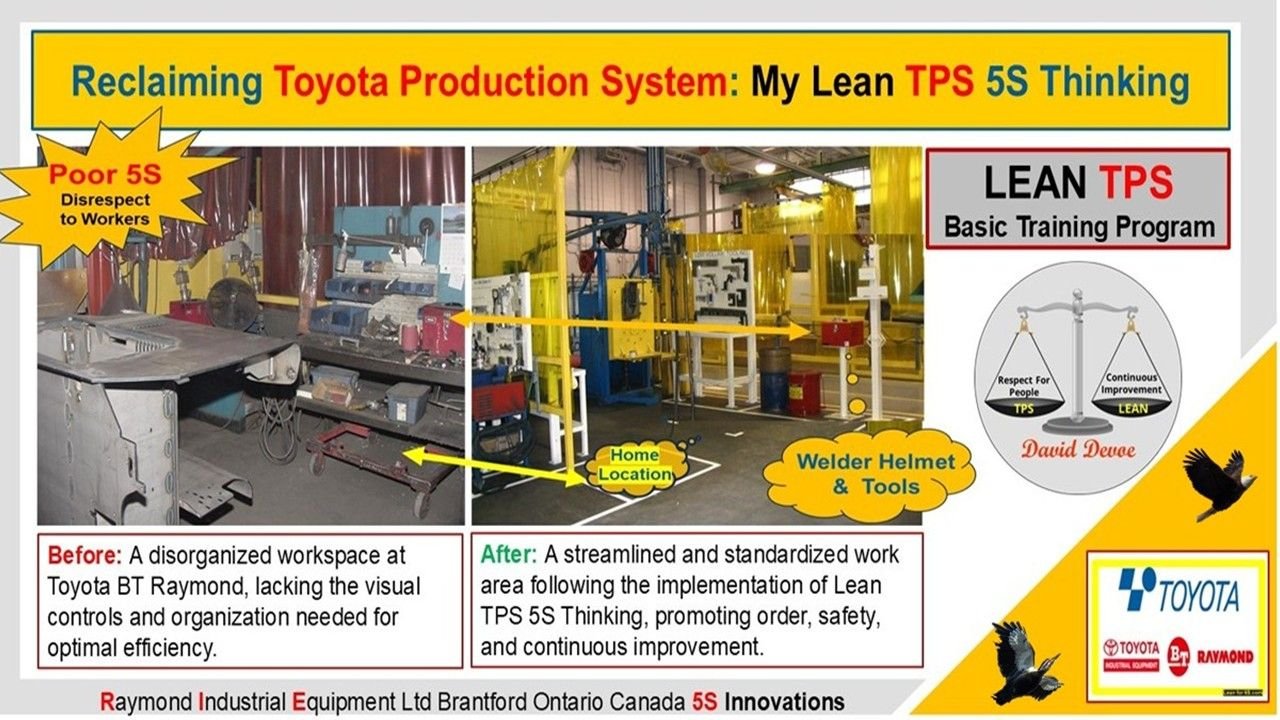
At Toyota, training never started with cost targets or performance metrics. It started with learning how to see. The first lesson was always 5S Thinking. Not because it was simple, but because it created the foundation for stability, visibility, and discipline.
Over the years, I have trained more than one thousand people in 5S Thinking and watched disorganized work areas transform into smooth, stable, and high-performing environments. The change was never just about cleaning or taping floors. It was about developing a structured way of thinking that made problems visible and improvement possible.
5S Thinking teaches order and awareness at the most fundamental level of Lean TPS.
It begins with:
Sort (Seiri) – Remove everything that is not needed.
Set in Order (Seiton) – Define the exact place and method for storing each item.
Shine (Seiso) – Clean and inspect to expose abnormalities early.
Standardize (Seiketsu) – Create consistent routines that sustain flow and quality.
Sustain (Shitsuke) – Build discipline through leadership and daily reinforcement.
At Toyota Raymond, 5S was always trained alongside Standardized Work Charts, Combination Tables, Working Sequence, and Takt Time. The reason was clear. You cannot improve what you cannot see. A cluttered or inconsistent workplace hides problems and prevents improvement from taking hold.
Every successful Lean TPS transformation begins with this foundation.
Not with spreadsheets.
Not with automation.
But with the discipline to see.
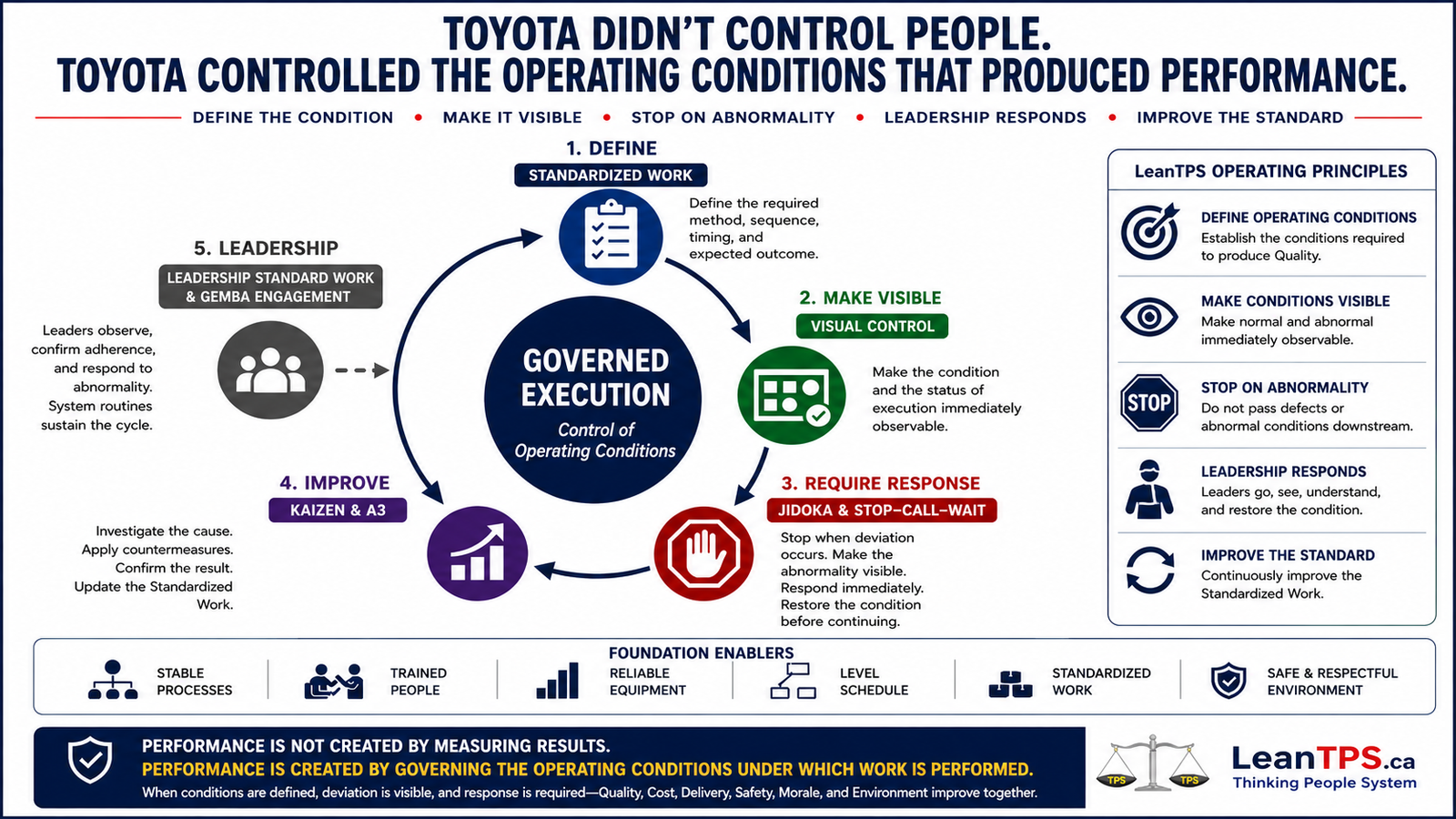
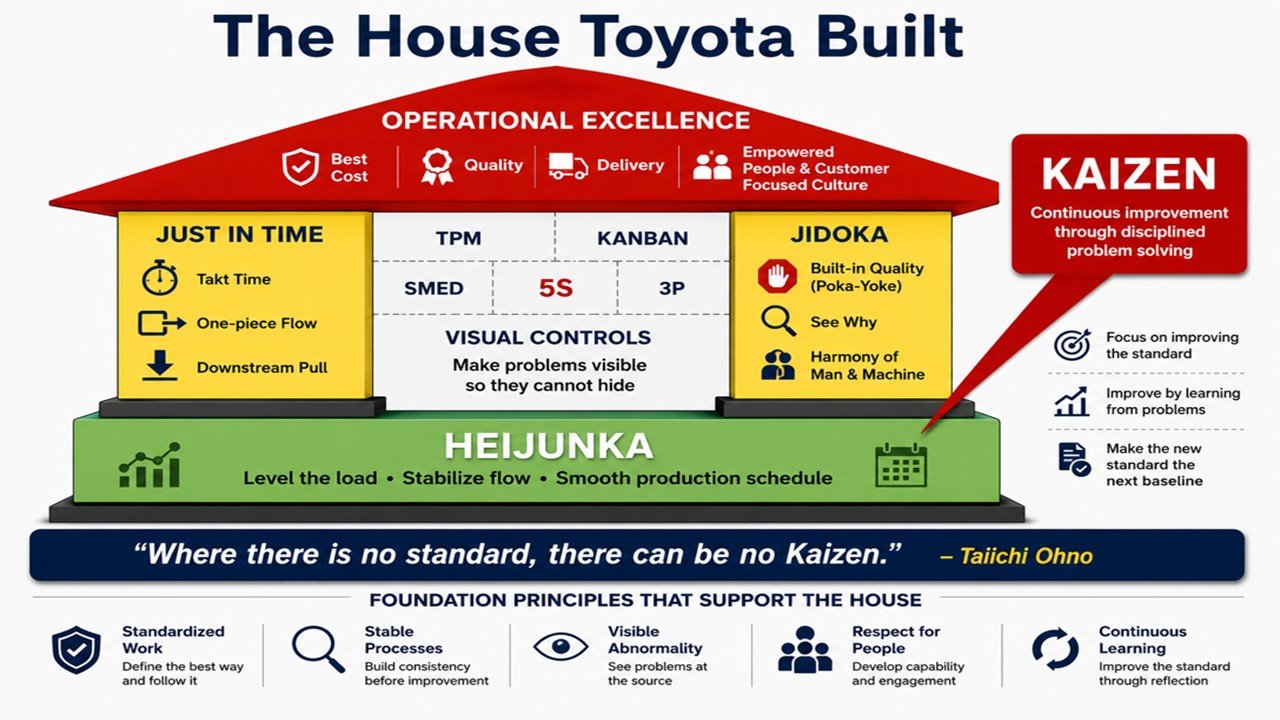
The 5S system is the first visible layer of the Lean TPS Swiss Cheese Model. It creates the stable base that supports Jidoka, Standardized Work, and Just-in-Time. When 5S is missing, improvement efforts fail to hold. When it is practiced correctly, it builds capability and strengthens the structure that supports quality, cost, and delivery performance.
Genchi Genbutsu means to go and see for yourself.
The same principle applies to 5S.
Seeing the real workplace reveals the conditions that make improvement possible.
That is why every Lean TPS journey starts with 5S Thinking.