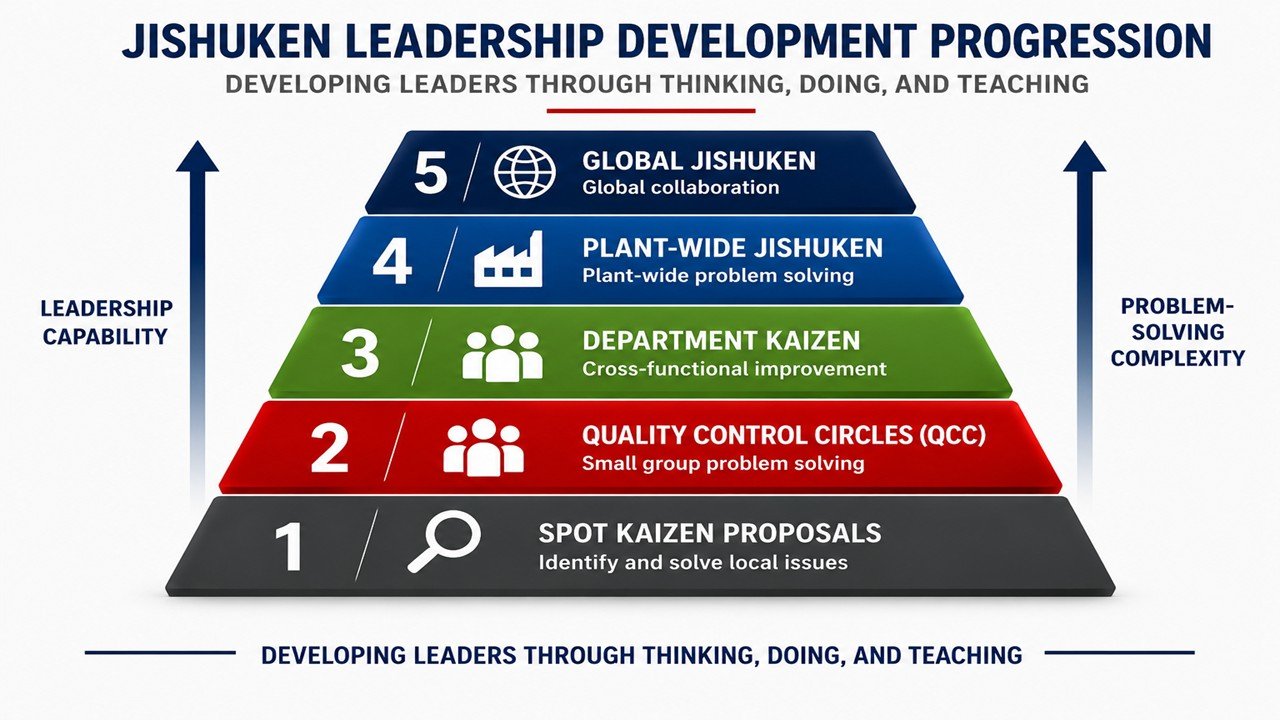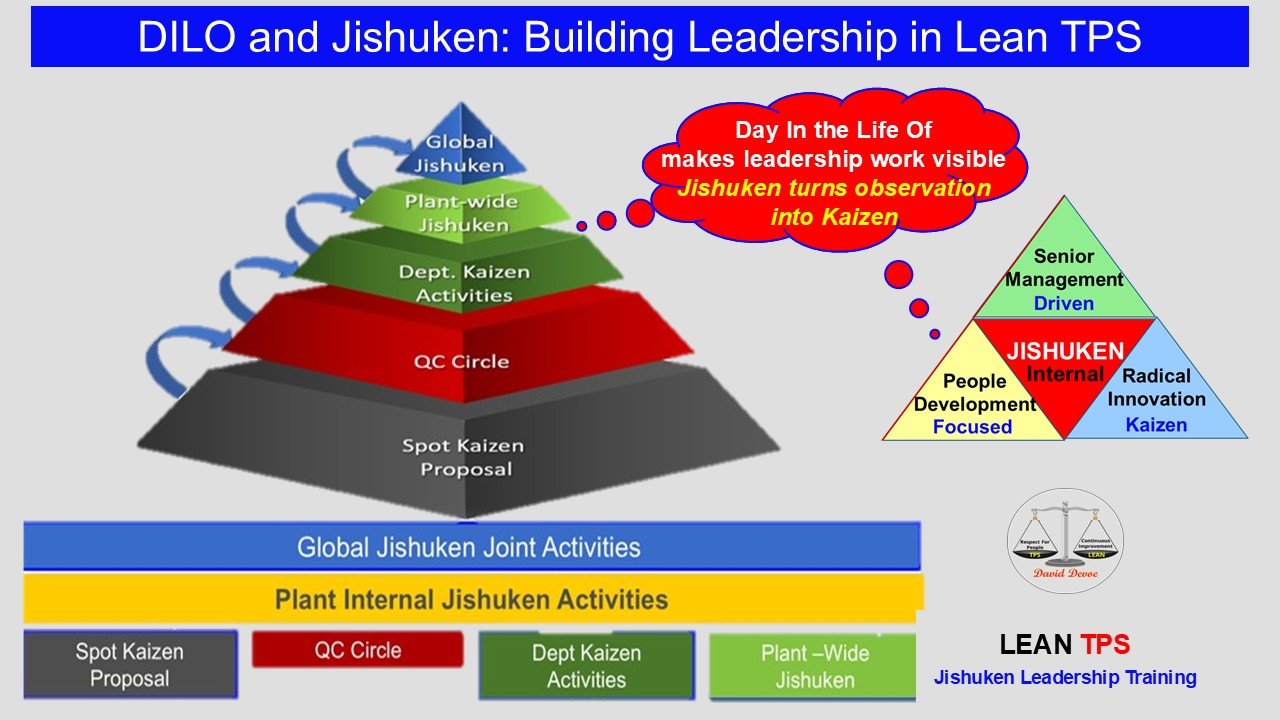
“Day in the Life Of” makes leadership work visible, and Jishuken turns observation into Kaizen.
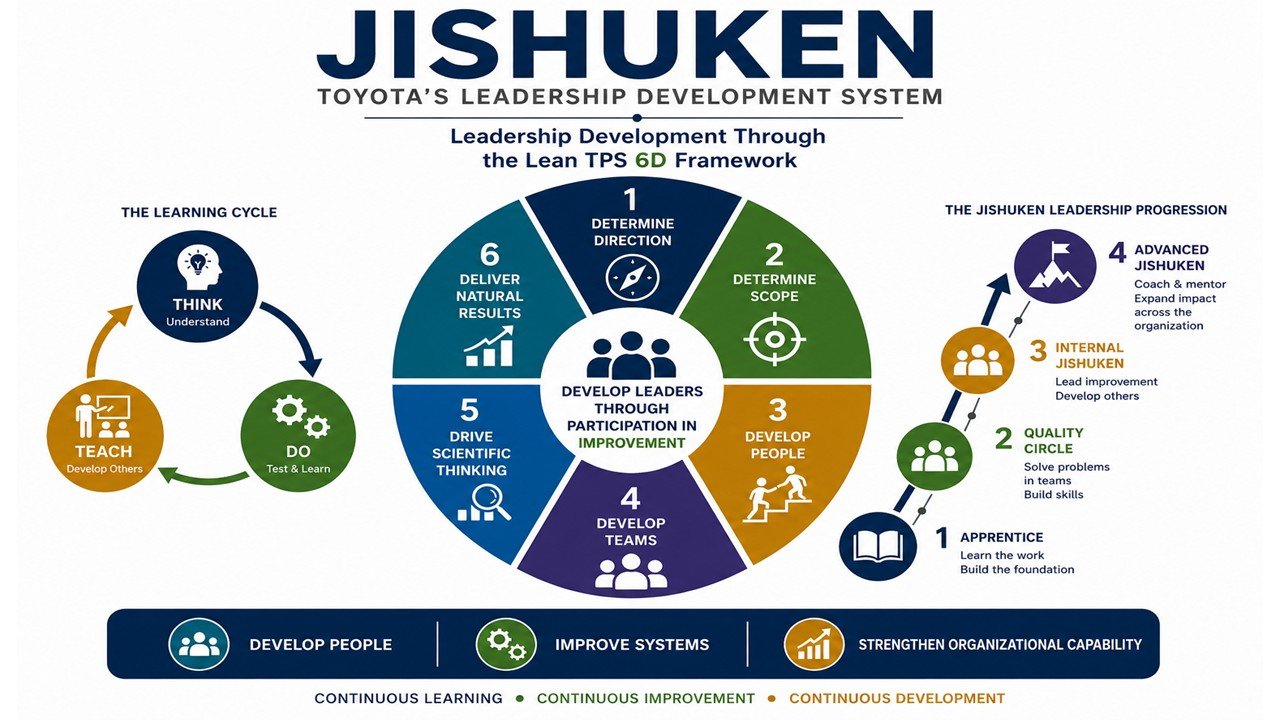
At Toyota, leadership development was built through structured learning at the Gemba. The Day in the Life Of (DILO) revealed how leaders truly spent their time. Jishuken turned those observations into disciplined, team-based improvement. Together they formed the engine of leadership development within TPS.
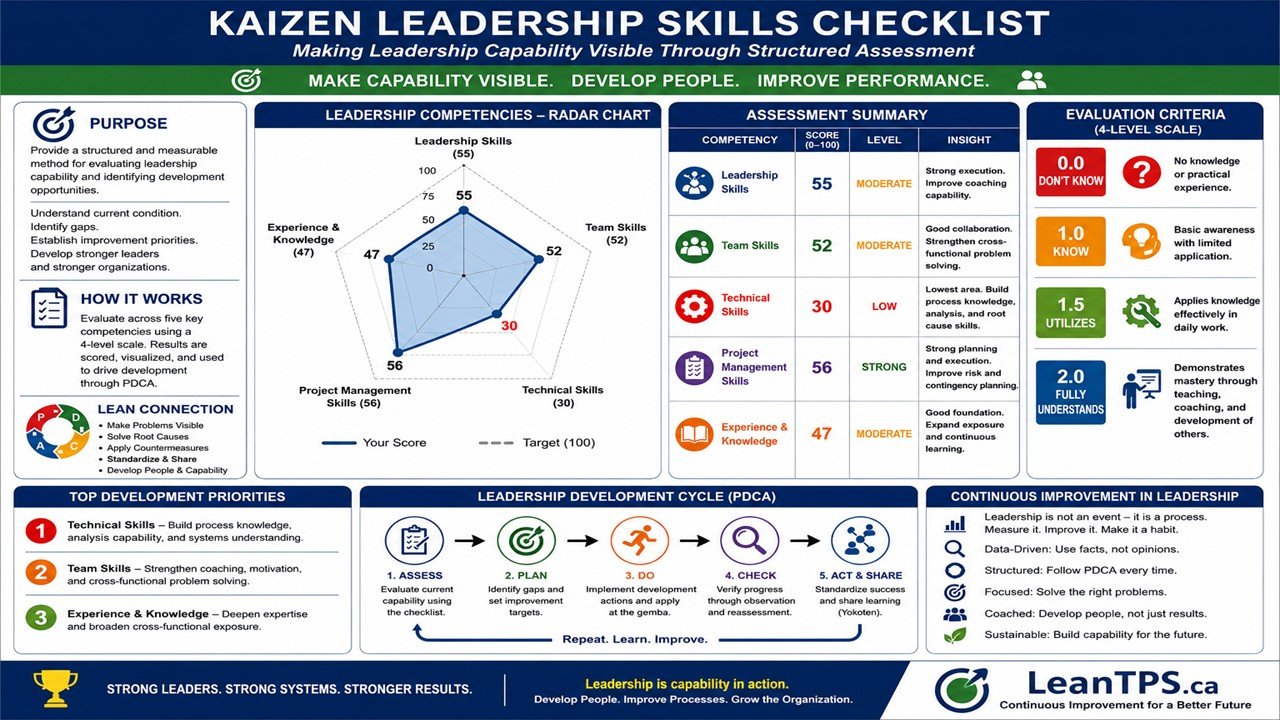
Too often, organizations rely on classrooms, profiles, or off-site programs to build leaders. Lean TPS begins where work happens. The DILO exposes how leaders spend their time, what support is missing, and how coaching can become a visible part of daily practice.
A DILO is simple in structure but powerful in impact. For one day or even a week, a leader’s time is observed and recorded. Every meeting, interruption, email, problem-solving moment, and shopfloor visit is tracked. The outcome is a factual map of where time and attention are going.
At Toyota, the intent was never to criticize. It was an act of respect. By studying the leader’s day, the organization could see what prevented leaders from excelling and what systems required reinforcement.
Observation alone, however, does not create learning. Jishuken transforms the DILO from analysis into Kaizen. Leaders and members study the data together, visualize the flow of time, and design countermeasures. When meetings dominate, they question structure. When firefighting consumes the day, they look at instability. When coaching disappears, they rebuild the schedule so that Genchi Genbutsu and problem solving become standard practice.
This process reshapes habits, not just schedules. One Jishuken revealed that supervisors spent less than ten percent of their time at the shopfloor. Together they redesigned leader standard work to protect coaching time and strengthen presence at the line. The improvement was immediate. Coaching became a non-negotiable part of leadership.
Another study found that over forty percent of supervisors’ time was lost to meetings and emails, with frequent interruptions that blocked problem solving. The Jishuken team responded by introducing visual boards to shorten meetings, setting escalation rules to limit interruptions, and restoring structure around leader standard work. The result was stability, stronger communication, and improved leader rhythm.
The lessons are clear. Leadership work must be visible. Teamwork is essential to change habits. Succession is built daily through practice, not policy. And Respect for People remains the foundation for all improvement.
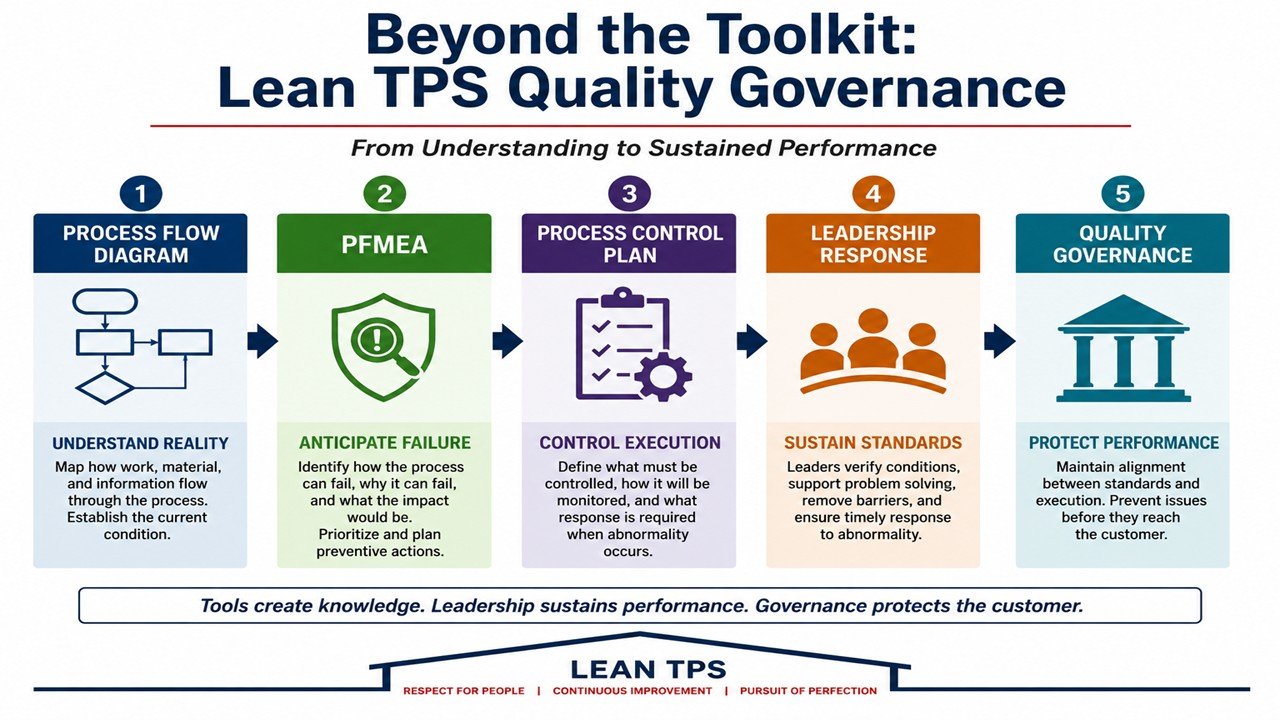
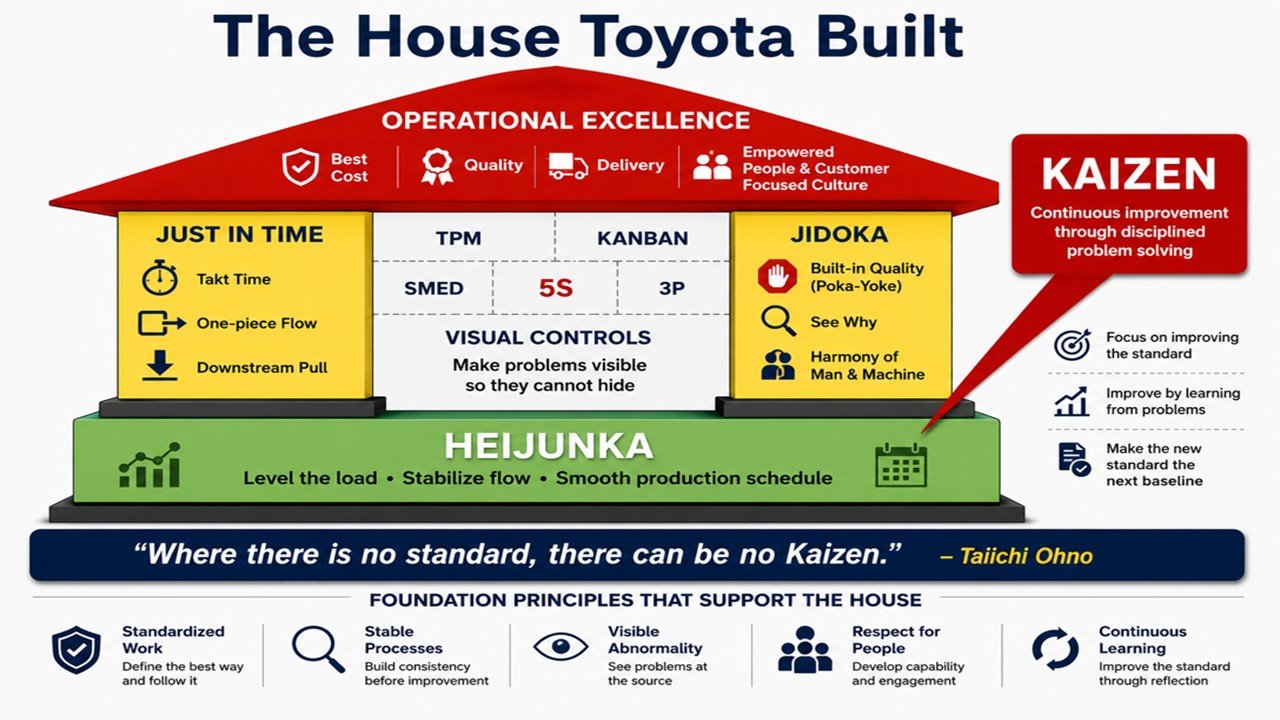
The DILO and Jishuken show that Lean TPS is not a collection of tools. It is a disciplined system of structure, support, and leadership development through daily work.