Why Failure Remains Misunderstood in Modern Systems
Failure in complex systems is commonly approached through retrospective explanation rather than governed control, a limitation addressed by the Lean TPS Swiss Cheese Model. Organizations initiate investigation after breakdown occurs, identify contributing factors, and reconstruct the sequence of events that led to the outcome. Retrospective analysis defines how failure is interpreted but does not define how execution must behave to prevent recurrence. Identification of causes does not control system behavior, and execution continues under the same conditions that allowed the failure to form. Quality is not protected when explanation replaces control of operating conditions.
Explanation-based models organize failure after the system has already entered an abnormal state. Human error, technical malfunction, and communication breakdown are identified as contributing elements, but the conditions that require work to stop are not defined. Detection alone does not change system behavior. When deviation is visible but continuation is permitted, the system absorbs the condition rather than correcting it. Failure exposure increases because response is not required at the point of occurrence.
Failure formation begins before visible breakdown and develops through accumulated deviation across layers of execution. Conditions shift from defined standards, signals are not acted upon, and response is delayed or incomplete. The system continues to operate while conditions are no longer controlled, and variation is passed forward without containment. Failure emerges when multiple layers permit continuation under degraded conditions rather than interrupting execution.
Prevention requires a system that governs execution conditions rather than explains outcomes. Detection must expose deviation at the point of occurrence. Interruption must remove permission to continue. Response must restore defined conditions. Confirmation must verify stability before restart. These elements define control of execution and prevent the system from entering a failure state. Quality is maintained only when deviation changes system state immediately and continuation is conditional on restored conditions.
The Original Swiss Cheese Model
The Swiss Cheese Model defines failure as the result of multiple conditions interacting across system layers rather than a single causal event. The model organizes contributing factors into distinct categories that influence execution and shifts analysis away from individual error toward system interaction. This structure improves understanding of how breakdowns occur. The model describes how conditions combine to produce failure but does not define how execution must be governed to prevent that condition from forming. Quality is not protected when system behavior is described without control of continuation.
The model is structured across four layers that represent different levels of system influence. Organizational influences define the environment in which work is performed through policies, resource allocation, training systems, and structural decisions. Unsafe supervision reflects how leadership actions or inaction affect system stability through oversight, correction, and tolerance of deviation. Preconditions for unsafe acts define the conditions under which people perform work, including workload, clarity, environment, and communication. Unsafe acts represent visible errors at the point of execution where deviation becomes observable. These layers categorize sources of failure but do not enforce conditions that govern execution behavior.
Weaknesses within each layer are represented as openings through which failure can pass when alignment occurs. Failure is explained as the result of these openings aligning across multiple layers, allowing conditions to propagate through the system. This structure provides a clear mechanism for understanding how failure emerges without assigning blame to a single point of breakdown. Failure is not random and forms through interaction across layers of influence. Execution continues while these conditions are present because interruption and response are not defined within the model structure.
The model remains descriptive rather than governing. Reconstruction occurs after alignment has already taken place, but layer behavior is not defined in a way that prevents alignment from forming. Detection may exist within layers, but interruption is not required, response is not enforced, and confirmation is not defined. Continuation is not constrained by the model, and execution proceeds under conditions that are no longer controlled. Quality is exposed when explanation replaces enforcement of execution conditions.
The Break Point: Explanation Is Not Control
The Swiss Cheese Model explains how failure forms, but it does not define how systems prevent failure. Explanation operates retrospectively by organizing events after alignment has already occurred, while control governs how work proceeds before alignment can form. Explanation reconstructs interactions across layers and identifies contributing factors, but it does not establish execution conditions that prevent continuation under deviation. Control defines how the system must behave when conditions change and requires interruption when those conditions are not met. Quality is not protected when system behavior is explained without enforcing control of continuation.
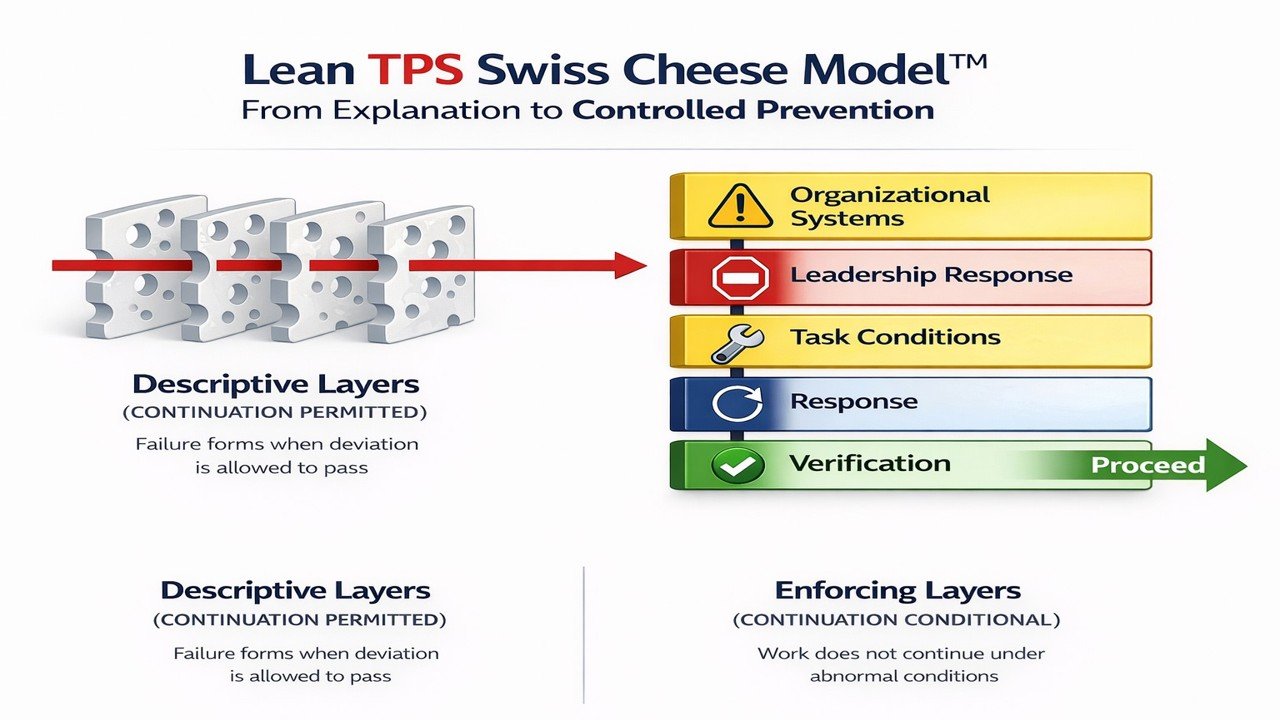
Explanation-based models define layers as descriptive categories of influence that can contain weakness. These layers represent how conditions interact, but they do not govern how execution proceeds when those conditions begin to degrade. The system continues while those conditions are present because interruption and response are not required. In a control-based system, layers define operating conditions and enforce behavior when those conditions are not met.
The distinction between descriptive and enforcing layers determines system behavior. A descriptive layer can contain weakness without changing how work proceeds, which allows deviation to accumulate across layers. An enforcing layer does not permit continuation under degraded conditions because interruption is required and response is mandatory. Failure exposure increases when detection does not trigger interruption and when response is not enforced. Deviation is contained only when system behavior changes at the point of occurrence.
Systems designed only to understand failure continue to operate under degraded conditions until alignment occurs. Weaknesses may be visible, and signals may exist, but without enforced interruption and required response, those signals do not change behavior. Deviation accumulates across layers because continuation is permitted. Failure is not caused by the existence of weaknesses but by the system allowing work to proceed while those weaknesses are present across multiple layers.
The Swiss Cheese Model identifies how alignment occurs but does not prevent it. Prevention requires that layers govern continuation rather than describe failure. Detection must expose deviation, interruption must remove permission to continue, response must restore defined conditions, and confirmation must verify stability before restart. Quality is protected only when continuation is conditional and execution is governed by enforced response.
The Lean TPS Redesign
The Lean TPS Swiss Cheese Model changes the function of the system from descriptive explanation to governed control of execution. The original model defines layers as sources of potential weakness, while the Lean TPS model defines layers as control points that determine whether work is permitted to continue. Layers no longer categorize failure conditions. Quality is protected only when execution is controlled through defined conditions rather than explained after deviation has occurred.
The objective of the Lean TPS model is not to understand how failure occurred but to prevent the system from entering a failure state. Layers do not contain openings that are analyzed after alignment. Layers define the conditions under which execution is permitted and enforce response when those conditions change. Continuation is revoked when deviation is detected. Response is required to restore defined conditions, and execution does not proceed until those conditions are confirmed. Quality is maintained as a condition of execution through enforcement of system behavior.
Each layer operates with a consistent role in controlling execution. The system defines normal conditions, exposes deviation, interrupts continuation, and requires restoration before restart. These requirements apply across all levels of the system. Organizational systems define what normal looks like through structure, roles, and coordination. Leadership systems ensure that deviation is surfaced and acted upon without delay. Task conditions are designed so that execution remains stable under load and does not rely on individual compensation. Frontline execution applies Jidoka to interrupt continuation and expose deviation at the point of occurrence.
Layers do not operate as independent categories and function as connected control mechanisms that reinforce each other through defined conditions and required response. When one layer weakens, the system does not rely on downstream correction to absorb deviation. Restoration is required before continuation is permitted, and deviation is not allowed to move forward. Failure is not treated as an outcome to be explained and is prevented through governed execution.
The Four Layers as Control Systems
The four layers of the Swiss Cheese Model are retained, but their function changes from descriptive categories to enforcing control systems. Each layer defines operating conditions, detects deviation, interrupts continuation, and requires response before execution proceeds. Layers no longer describe where failure can occur and define how failure is prevented through governed behavior. Quality is protected when execution is controlled at each layer.
Organizational Systems define the normal condition of the enterprise through standards, roles, capacity limits, and coordination structures that establish what is permitted. When these elements are unclear or unstable, the system has no reference for normal, variation is absorbed without detection, and downstream layers are forced to compensate. Organizational Systems do not document intent and define enforceable conditions that govern execution.
Leadership Response governs how the system reacts to deviation through defined escalation pathways, response timing, and ownership of action. Leadership presence at the point of execution confirms that standards are real and that deviation is acted upon immediately. When response is delayed or symbolic, deviation becomes normalized and continues without containment. Leadership enforces response to restore defined conditions.
Task Conditions and Human Factors define the stability of execution by aligning work design, workload balance, clarity of instruction, and environmental conditions with system capacity. When work is overloaded, ambiguous, or misaligned, people compensate, and these compensations introduce variation that is difficult to detect and control. Conditions must be designed so that the correct action is the natural action and does not depend on individual effort.
Gemba Execution verifies conditions at the point of work and represents the final layer before output. This layer exposes deviation if upstream controls have not acted but does not absorb failure. Gemba Execution has authority through Jidoka to interrupt continuation when conditions are not met. The frontline exposes deviation and requires response rather than compensating for failure.
The layers reinforce each other through defined conditions and required response. When Organizational Systems define unstable conditions, Leadership Response must correct them. When Leadership Response fails, Task Conditions degrade and introduce variation. When Task Conditions degrade, Gemba Execution interrupts continuation and exposes deviation. Each layer is accountable for preventing the system from passing risk forward. Protection depends on enforcement of conditions within each layer.
The Governing Mechanism
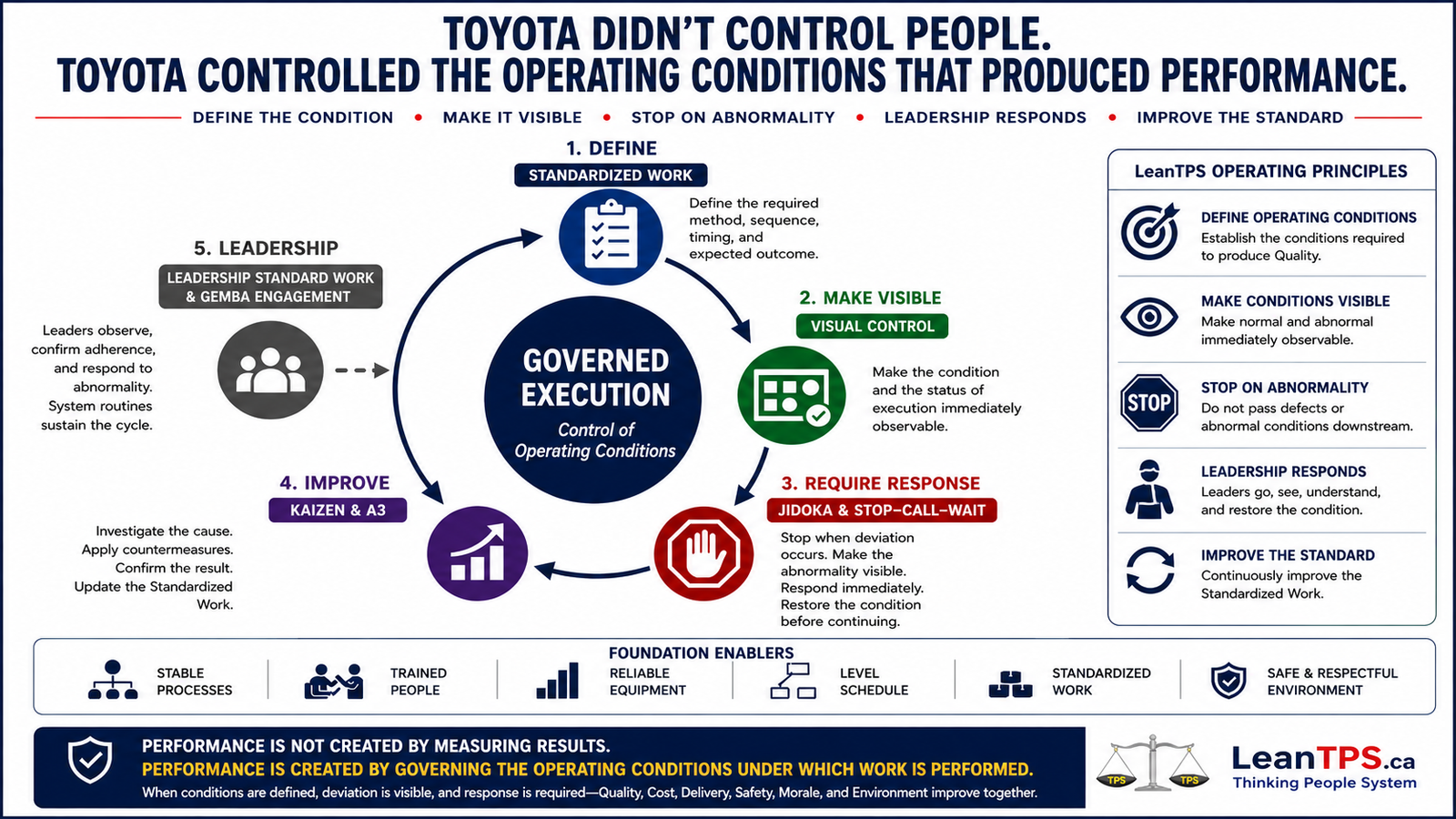
The Lean TPS Swiss Cheese Model operates through a defined mechanism that governs whether work is permitted to continue. The mechanism is not implicit, is not discretionary, and is enforced at every layer of execution. System behavior is determined by how deviation is handled when operating conditions change. Continuation is conditional on compliance with defined standards. Quality is protected only when this mechanism is enforced without exception.
The mechanism consists of four conditions that must function together to control execution. Detection identifies when operating conditions deviate from defined standards and requires that deviation be visible at the point of occurrence. Abnormality must be observable in real time and cannot depend on interpretation or delayed reporting. Interruption stops continuation when deviation is present and removes permission to proceed under degraded conditions.
Response restores defined conditions through clear ownership and immediate responsibility for action. Response is required to return to normal conditions before work resumes. Confirmation verifies that conditions have been restored through direct validation rather than assumption. Restart is not permitted until conditions are confirmed to meet defined standards.
These four elements define system behavior and must operate together to prevent deviation from propagating across layers. Detection without interruption allows deviation to continue. Interruption without response delays correction. Response without confirmation introduces uncertainty into execution. All four are required to maintain control of system conditions. Deviation must change system state immediately, and restart requires confirmation that normal conditions have been restored.
How Failure Forms Across Layers
How Failure Forms Across Layers
Failure does not begin at the point of breakdown and forms through a sequence of permitted continuation under degraded conditions. A condition deviates from defined standards, the deviation is not detected, and execution proceeds without interruption. Detection may occur, but interruption is not triggered, and work continues under conditions that no longer meet requirements. Interruption may occur, but response is delayed or incomplete, and conditions are not restored. Confirmation is assumed rather than verified, and execution continues under degraded conditions. Failure forms when deviation does not change system behavior.
The sequence repeats as the condition passes from one layer to the next without containment. Each layer absorbs the deviation instead of stopping it and allows continuation under conditions that are no longer defined. The system remains operational but is no longer controlled because deviation is not contained at the point of occurrence. Alignment forms when multiple layers permit continuation under degraded conditions rather than enforcing interruption and response.
The Swiss Cheese Model represents alignment as openings passing through layers, while the Lean TPS model defines the mechanism that allows alignment to form. Alignment is not random and is not caused by a single breakdown within a layer. Alignment results from continuation being permitted across multiple layers under abnormal conditions. A single deviation does not cause failure because failure requires that deviation moves without interruption through the system. Each layer has the opportunity and responsibility to stop the condition through detection, interruption, response, and confirmation.
Failure formation occurs when each element of the governing mechanism fails to enforce control. When detection fails, the condition remains hidden. When interruption fails, the condition continues and is passed forward. When response fails, the condition persists. When confirmation fails, resolution is assumed without verification. The system adapts to the deviation, abnormal conditions become tolerated, and tolerated conditions become normal.
The final layer does not create failure and reveals it after all upstream opportunities to prevent it have been missed. By the time the outcome is visible, the system has already failed through accumulated continuation across layers. Failure is not an event and does not occur at a single point in time. Failure is a sequence of permitted continuation under abnormal conditions across multiple layers of the system.
Why Layers Fail to Protect
Layers do not fail because they are absent. Layers fail because they do not enforce the conditions that govern execution. Most systems include procedures, defined roles, documented escalation paths, and built-in redundancy, and this structure creates the appearance of control. Protection is assumed based on the presence of these elements, but structure alone does not create control. Protection exists only when conditions are enforced at each layer.
Redundancy without enforcement creates exposure. Multiple layers can exist while each layer permits continuation under degraded conditions. The system accumulates risk instead of containing it when deviation is absorbed rather than stopped. Failure is not caused by structural absence but by behavioral permission that allows execution to proceed under conditions that are no longer defined. Deviation is passed forward because continuation is allowed when it should not be.
Organizational Systems may define standards, but those standards do not govern behavior when enforcement is absent. Documentation does not create control. Defined conditions must be actively enforced to prevent deviation from propagating. Leadership Response may define escalation pathways, but delayed, optional, or inconsistent response allows deviation to become normalized. Leadership presence without enforcement does not stabilize execution. Response must be required when deviation occurs.
Task Conditions may define how work is intended to be performed, but unstable workload, unclear instruction, or adverse environmental conditions force people to adapt. Adaptation under pressure introduces uncontrolled variation and increases exposure across layers. Gemba Execution may detect abnormality, but detection alone does not protect the system when interruption is not permitted or supported. Detection without authority allows continuation, and deviation is not contained at the point of occurrence.
Each layer appears to exist, but each layer fails to act when authority is not defined and enforced. Systems become exposed while appearing controlled because continuation is permitted across all layers under degraded conditions. Failure does not result from a single breakdown and results from collective permission to continue under conditions that are no longer controlled. Control requires that each layer has authority to detect deviation, interrupt continuation, require response, and confirm restoration of conditions. Without authority, layers describe risk. With authority, layers prevent it through enforced control of execution.
Application Across Systems
The Lean TPS Swiss Cheese Model applies across domains because the governing mechanism of failure and prevention is not industry-specific. Failure follows a consistent structure wherever work proceeds under defined conditions. Conditions deviate, deviation is not contained, continuation is permitted, and exposure increases across layers. Protection exists only when deviation changes system behavior and continuation becomes conditional.
In aviation, layered controls exist across equipment, procedures, communication, and leadership to define and enforce safe operating conditions. These controls are designed to detect abnormality and interrupt continuation when conditions are not met. Risk is contained when interruption and response are enforced. Exposure increases when continuation is permitted despite deviation, allowing conditions to propagate across layers.
In healthcare, protocols define how care must be delivered through checklists, handoffs, and escalation pathways that establish expected conditions of execution. These elements function as control mechanisms when deviation is detected and acted upon immediately. Patient safety depends on interruption and response at the point of care. Risk passes forward when deviation is absorbed or normalized within the system.
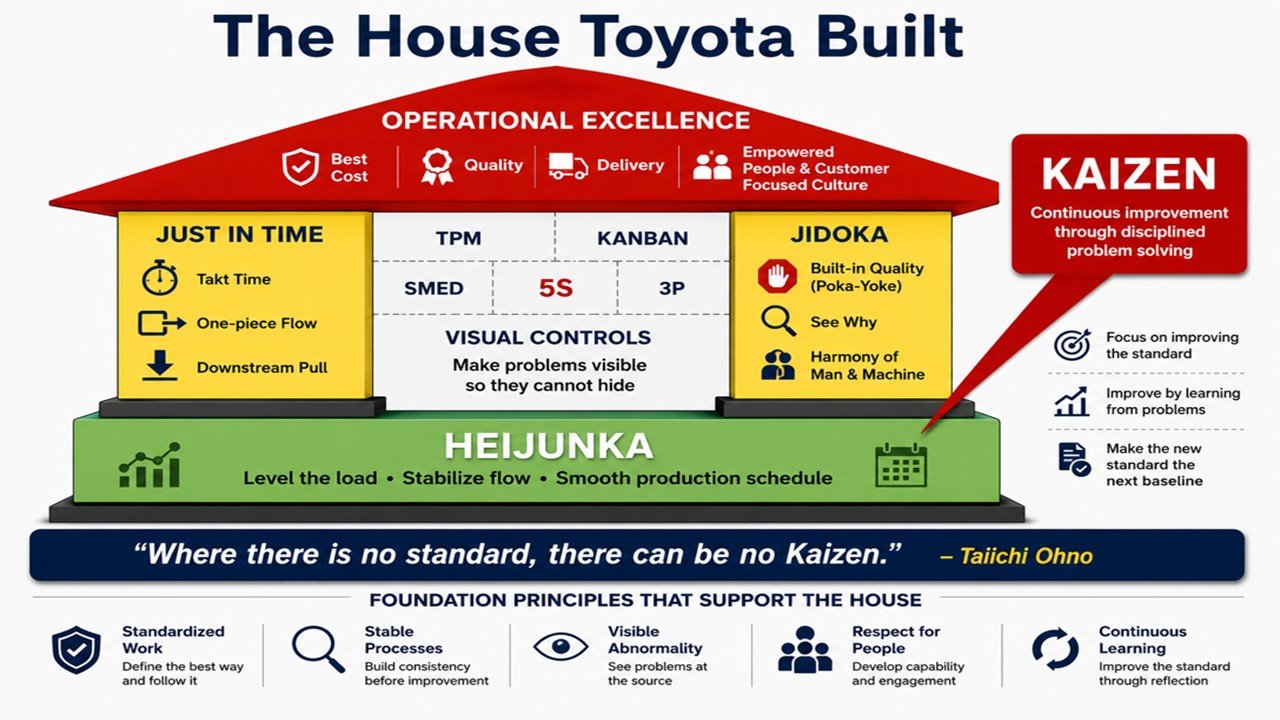
In manufacturing, Standardized Work, visual controls, and flow design define normal conditions of execution and align work to system capacity. Abnormality is exposed and acted upon through Jidoka, which enforces interruption when conditions are not met. Defects are contained at the source when continuation is not permitted under degraded conditions. Variation moves downstream when production proceeds without enforcement.
In digital and service systems, transactions, workflows, and decision rules define how work progresses through system logic. ERP and scheduling systems execute transactions and optimize sequencing but do not determine whether work should continue under abnormal conditions. Without governance, systems adjust to deviation and allow continuation under degraded states. With governance, continuation is constrained, interruption is enforced, and response is required before execution proceeds.
Across all domains, the pattern remains consistent. Layers may exist and controls may be defined, but protection depends on enforcement of those conditions at each layer. The presence of controls does not guarantee stability. Stability exists only when deviation changes system behavior. The Lean TPS Swiss Cheese Model evaluates systems by determining whether layers enforce conditions or permit continuation. Quality is maintained only when execution is governed rather than adjusted.
Leadership Responsibility and System Ownership
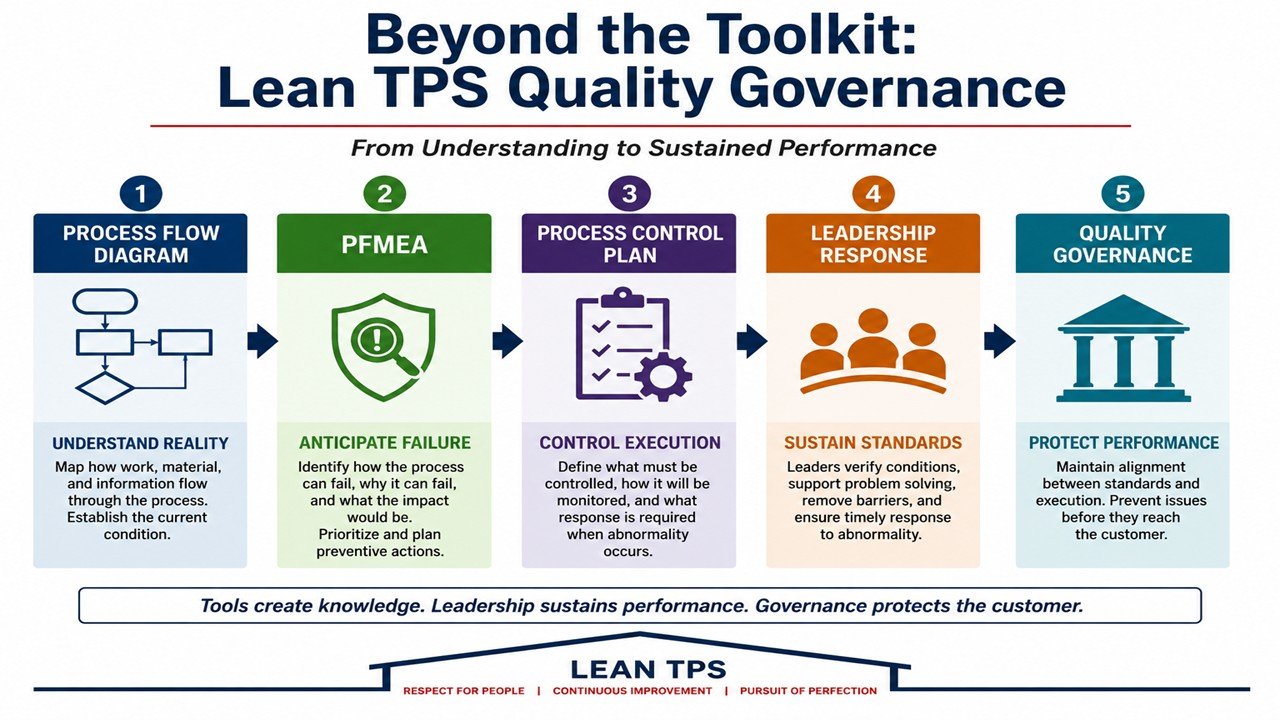
Prevention is not a function of the model. Prevention is a function of leadership that governs execution conditions. The Lean TPS Swiss Cheese Model defines structure, but leadership determines whether that structure enforces behavior. Responsibility does not sit at the point of failure. Responsibility sits where conditions are defined, enforced, and confirmed. Leaders own the conditions under which work is performed and establish the boundaries that determine whether execution is permitted to continue. Quality is protected only when those boundaries are enforced.
Leaders define standards, establish capacity limits, determine escalation pathways, and assign ownership for response to deviation. These elements define the normal condition and the mechanism for restoring it when deviation occurs. When these elements are unclear, unstable, or not enforced, the system permits continuation under degraded conditions and allows deviation to pass across layers. This is not a failure of the frontline and is a failure of system ownership.
In many organizations, leadership engagement is triggered by outcomes rather than conditions of execution. Performance is reviewed after results are visible, and response follows failure rather than preventing it. This reactive structure allows deviation to accumulate because interruption and response are not enforced at the point of occurrence. In a control-based system, leadership engagement is continuous and embedded within execution. Leaders confirm conditions at the point of work, verify that standards reflect actual execution, ensure that escalation pathways function, and act immediately when deviation is detected.
Standardized Work defines the normal condition of execution, and Jidoka enforces interruption when that condition is not met. Leader Standard Work ensures that confirmation occurs consistently and that response is required before continuation. These elements form a system of ownership that governs execution behavior. When leadership defines conditions but does not enforce them, the system adapts to deviation and normalizes instability. When leadership enforces conditions, the system stabilizes and deviation is contained at the source.
Ownership is not measured by intention and is measured by whether continuation is permitted when conditions are not met. If work continues, the system is not governed. If work stops, response is required, conditions are restored, and confirmation is completed before restart, the system is controlled. Leadership does not explain failure and prevents the system from entering a failure state through enforcement of execution conditions.
Closing: Prevent Alignment
Failure does not occur when a single layer breaks. Failure occurs when multiple layers permit continuation under conditions that are no longer controlled. The Swiss Cheese Model explains how alignment forms across layers, while the Lean TPS Swiss Cheese Model prevents alignment by enforcing conditions at each layer. Layers do not protect the system by existing. Layers protect the system only when they govern execution.
Detection must expose deviation at the point of occurrence. Interruption must remove permission to continue. Response must restore defined conditions. Confirmation must verify stability before restart. These elements must operate at every layer to prevent deviation from propagating across the system. When enforcement is present, alignment cannot form. When enforcement is absent, deviation moves across layers and failure becomes inevitable.
The distinction between explanation and control defines system capability. Explanation reconstructs failure after alignment has occurred. Control defines how the system must behave so that failure cannot form. Systems do not fail at the point of breakdown. Systems fail when continuation is permitted while conditions are no longer controlled. The purpose of the system is not to understand failure. The purpose of the system is not to understand failure. The purpose is to prevent it.