Lean TPS Starts with 5S Thinking: Structure Before Flow

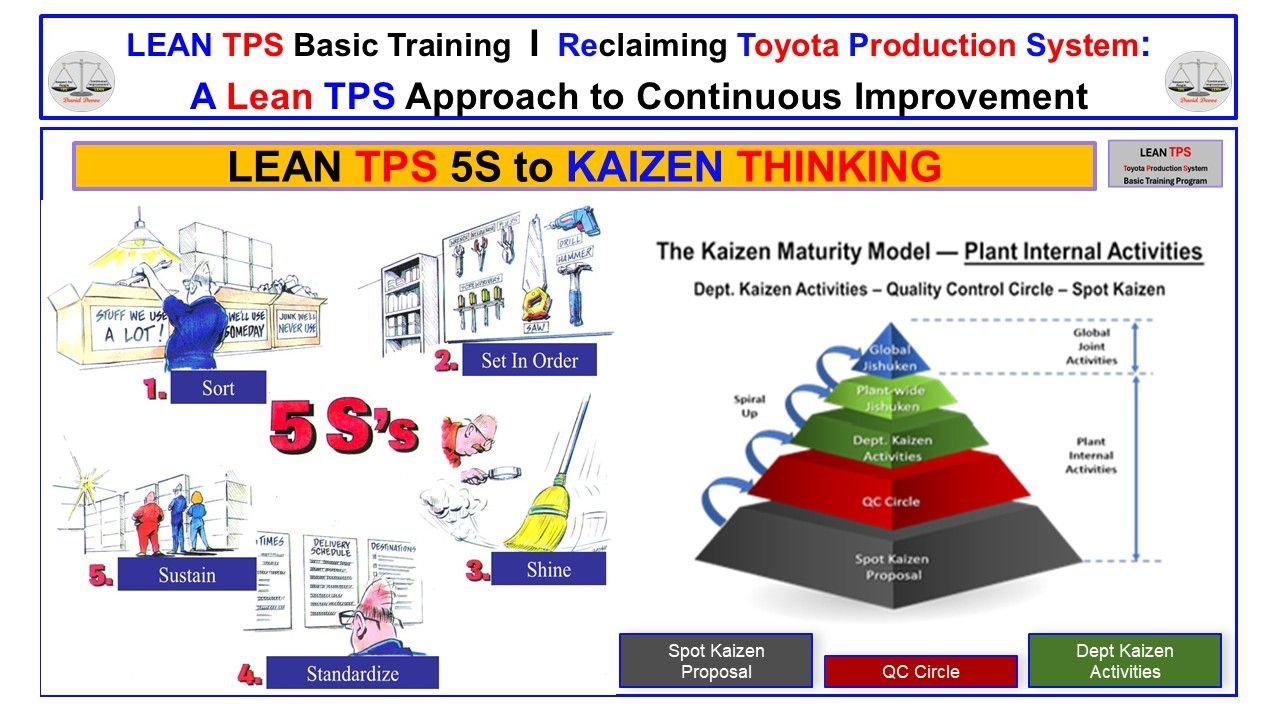
Lean TPS 5S Thinking visual showing 5S steps and their role as the foundation of Kaizen and continuous improvement.
Lean TPS begins with 5S Thinking. It is not cleaning. It is structure. It creates the visibility and control that make improvement possible.

In Lean TPS, every transformation begins with structure. 5S Thinking is the foundation. It is not cleaning or preparation. It is the discipline that allows a system to see, think, and improve.

During my time with Toyota L&F in Takahama, Japan, and later through Jishuken activities at Toyota BT Raymond and the Toyota Material Handling Manufacturing North America Working Group, we always began with 5S. It was never optional. It was the foundation for flow, quality, and leadership development.

5S Thinking builds the conditions for visibility and control. It aligns people to a common structure and reveals the real condition of work. When applied correctly, it is not about order for appearance. It is about seeing what is happening and understanding why.

Inside Toyota, the sequence was fixed:

  1. Establish 5S.
  2. Confirm stability.
  3. Introduce Standardized Work.
  4. Build flow and pull.
  5. Teach Kaizen.

Every improvement activity relied on that foundation. Without 5S, there was no visibility. Without visibility, there was no control. Without control, leadership had nothing to teach or sustain.

Each element of 5S has a specific purpose:

  • Sort (Seiri): Remove unnecessary items.
  • Set in Order (Seiton): Arrange what remains so problems are visible.
  • Shine (Seiso): Clean to reveal wear, damage, or leaks.
  • Standardize (Seiketsu): Create visual routines that keep order.
  • Sustain (Shitsuke): Maintain the habit through leadership confirmation and team ownership.

When teams practice 5S correctly, it changes how they see work. Problems surface faster. Standards become clearer. Leadership gains a way to coach rather than control.

This is why Lean TPS training begins here. 5S Thinking exposes friction, builds shared routines, and prepares the environment for improvement. It is not an entry-level activity. It is system design in its most practical form.

If your workplace struggles with inconsistency or hidden waste, the first move is not automation or new tools. It is rebuilding structure through 5S Thinking. That structure is what makes flow and Kaizen possible.
Introduction Artificial intelligence and humanoid robotics are entering production, logistics, and service environments faster than most organizations are prepared for. Many companies are searching for frameworks to manage this shift, but the structure they need has existed inside Toyota for nearly a century. The Toyota Production System is the only

What Mr. Ohno and Dr. Shingo would think of modern Lean interpretations
A Lean TPS visual showing what Mr. Ohno and Dr. Shingo emphasized: TPS as a complete system based on Jidoka, Kaizen, scientific thinking, and learning by doing.
Lean TPS Jishuken case study visual showing production kaizen results at a Takahama supplier, including 30 percent man-hour reduction and leadership engagement through Lean TPS Basic Training.
A Takahama Jishuken case study showing how supplier performance improved by 30 percent through structured leadership engagement and Lean TPS thinking.
Visual representing the evolution of the Toyota Production System and Lean TPS from Kaizen and Jishuken foundations.
Lean TPS connects Toyota’s industrial legacy to modern continuous improvement through reflection, Jidoka, and leadership development at the Gemba.
Visual showing Toyota leaders Mr. Sadao Nomura, Mr. Seiji Sakata, and Mr. Susumu Toyoda reviewing Lean TPS Basic Training at Toyota BT Raymond.
TPS Basic Thinking continues the tradition of Toyota Production System learning, emphasizing reflection, abnormality response, and waste elimination through structured training.
Visual showing Just In Time and Jidoka pillars from Lean TPS Basic Training with focus on lead time reduction and abnormality response.
Lean TPS Basic Training teaches how Just In Time and Jidoka work together to prevent failure, reduce stagnation, and build capability in people through the Toyota Production System.