Many organizations measure success through performance metrics—tracking efficiency, productivity, and output. These numbers are useful, but they do not create transformation on their own. True improvement begins with how people think and act.
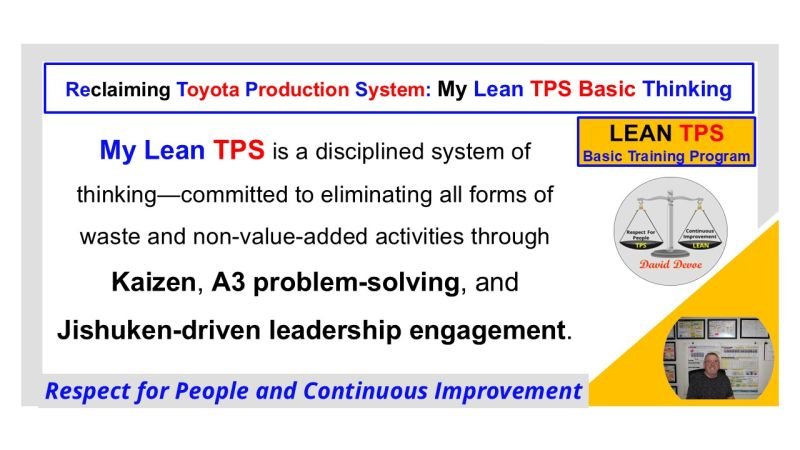
Lean TPS is not a measurement system. It is a disciplined system of thinking and doing that eliminates waste and develops capability. It connects leadership, problem-solving, and teamwork in a structured way that builds continuous improvement into daily work.
Thinking Beyond Metrics
When Lean is reduced to scorecards and KPI dashboards, it loses the purpose that makes it effective. In Toyota, metrics are not the goal—they are the reflection of leadership discipline. Numbers only have meaning when they are connected to cause, countermeasure, and confirmation.
During my training and implementation experience, I saw that leadership engagement and structured problem-solving determined success far more than performance charts or targets. The purpose of metrics is to guide thinking, not to replace it.
The QCDSME Framework
Toyota’s management approach can be summarized through the QCDSME model: Quality, Cost, Delivery, Safety, Morale, and Environment. Each represents a principle of thinking rather than a performance indicator.
1. Quality
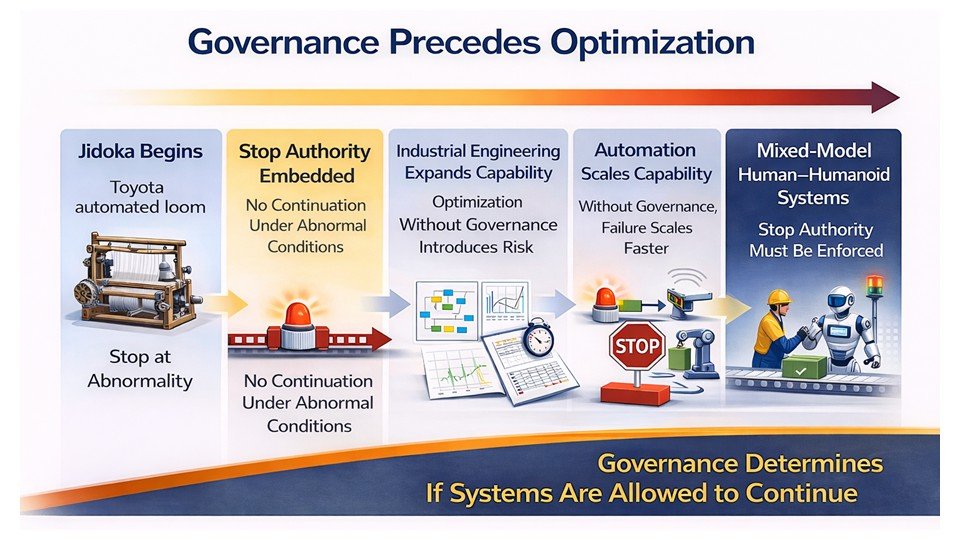
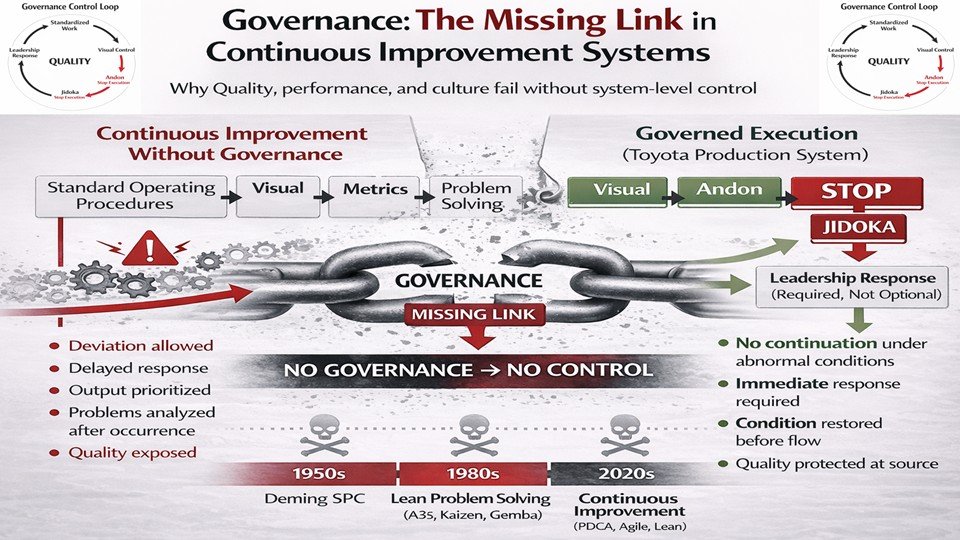
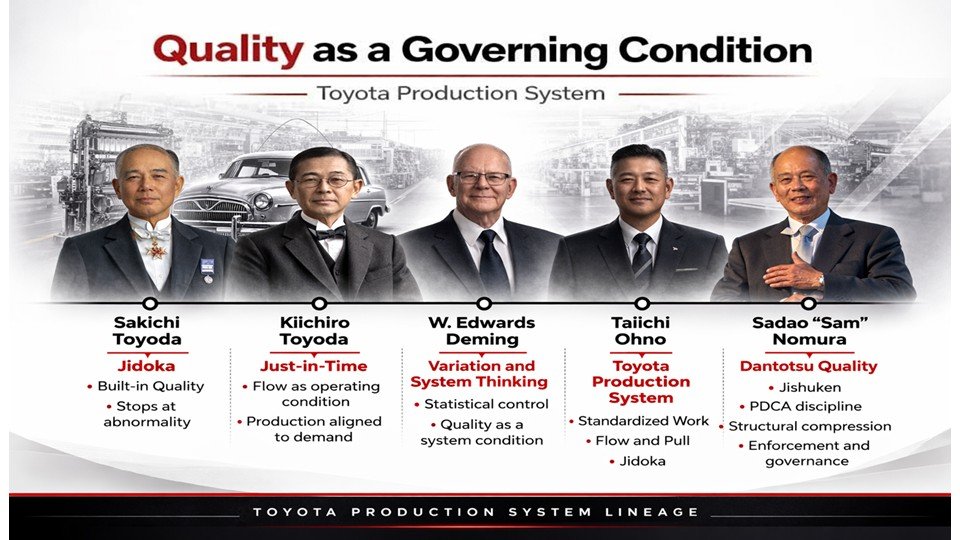
Built into every process through Jidoka and Standardized Work. Quality is not inspected in—it is created through prevention, visualization, and immediate correction of abnormalities.
2. Cost
Reduced by eliminating waste, not by cutting resources. Cost improvement is a result of improved flow, efficient layout, and balanced work.
3. Delivery
Achieved through Just-in-Time flow that aligns takt time and customer pull. Overproduction is eliminated by designing systems that respond to actual demand.
4. Safety
Driven by leadership accountability, not compliance forms. Safety is maintained through Hoshin Kanri and Genchi Genbutsu—leaders must see and understand risks firsthand.
5. Morale
Built through engagement, teamwork, and continuous learning. Jishuken and Respect for People connect improvement with individual growth. When people are trusted and supported, motivation becomes self-sustaining.
6. Environment
Protected through waste elimination and resource efficiency. Environmental improvement is part of operational responsibility, ensuring long-term stability for both the company and society.
QCDSME is not a reporting system—it is a model for structured leadership thinking. Each element reinforces the others to create a balanced system of performance and learning.
The Core of Lean TPS Thinking
Lean TPS applies three interconnected disciplines that make improvement sustainable:
Kaizen
Daily, structured problem-solving that develops people through small, continuous improvements.
A3 Problem-Solving
A method for clarifying problems, identifying causes, and developing countermeasures through visual logic and shared understanding.
Jishuken Leadership Engagement
Leadership learning through direct involvement in improvement. Leaders observe, analyze, and coach in real conditions to build both results and capability.
These three practices create the foundation for a learning organization where improvement never stops.
From Numbers to Capability
Lean TPS transforms the purpose of metrics. Instead of measuring for comparison, it measures to learn. Instead of focusing on output, it focuses on process stability.
Leadership must shift from reporting results to developing people who can produce results consistently. Each number should represent a process condition, not an isolated achievement.
When Lean TPS is applied as a system of thinking, performance naturally follows. The goal is not to chase efficiency but to build the conditions that make efficiency possible.
Final Reflection
Lean TPS is a thinking system designed to eliminate waste, stabilize processes, and develop capability at every level. The QCDSME model provides structure for this thinking, while Kaizen, A3, and Jishuken connect it to daily leadership practice.
Organizations that focus on thinking and doing rather than measuring and reacting achieve sustainable improvement. Real transformation occurs when leadership engagement turns metrics into meaning and actions into learning.