Reclaiming Toyota Production System: My Lean TPS Basic Training

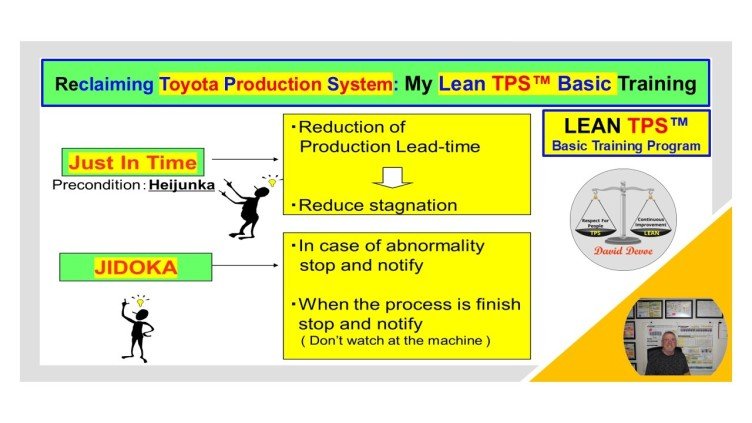
Visual showing Just In Time and Jidoka pillars from Lean TPS Basic Training with focus on lead time reduction and abnormality response.
Lean TPS Basic Training teaches how Just In Time and Jidoka work together to prevent failure, reduce stagnation, and build capability in people through the Toyota Production System.

The Toyota Production System (TPS) was never just a production method. It was a complete management system designed to eliminate stagnation, shorten lead time, and develop people who can see and solve problems. My Lean TPS Basic Training continues this purpose by focusing on how Just In Time and Jidoka work together to prevent failure before it occurs.

Just In Time is the discipline of synchronizing production to customer demand. Its precondition is Heijunka, or production leveling. By reducing variation and balancing workloads, the system reduces stagnation and shortens lead time. This balance is what allows flow to exist without excess inventory or hidden waiting time.

Jidoka is the second pillar of TPS. It ensures that when an abnormality occurs, the process stops immediately. Stopping to notify is not a delay it is leadership in action. When the process finishes, the same principle applies: stop and confirm before moving on. Machines and people both follow the same rule. This prevents defects from moving downstream and teaches the team to see and respond to abnormality in real time.

In my training at Toyota, these principles were never taught as theory. They were practiced daily. Each stop, each notification, and each confirmation built awareness. The goal was not to rely on experience but to build systems that prevent error. This is how TPS created quality, safety, and flow together.

The Lean TPS Basic Training Program I teach today returns to these fundamentals. It reconnects improvement to its original purpose developing thinking people who can recognize abnormality, respond to it immediately, and design systems that sustain stability. True improvement begins when everyone understands why Just In Time and Jidoka must always work together.
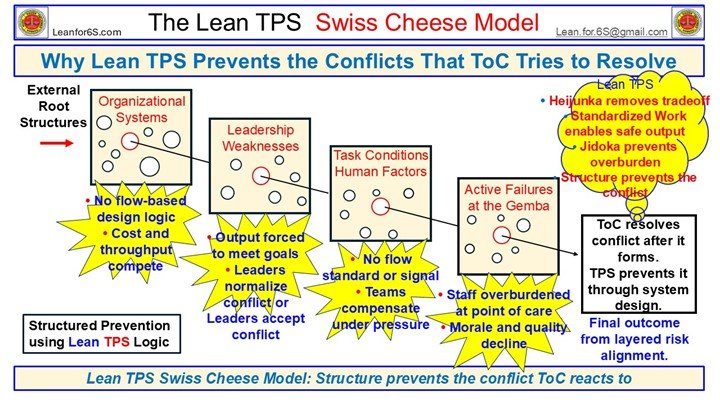
Introduction Artificial intelligence and humanoid robotics are entering production, logistics, and service environments faster than most organizations are prepared for. Many companies are searching for frameworks to manage this shift, but the structure they need has existed inside Toyota for nearly a century. The Toyota Production System is the only

What Mr. Ohno and Dr. Shingo would think of modern Lean interpretations
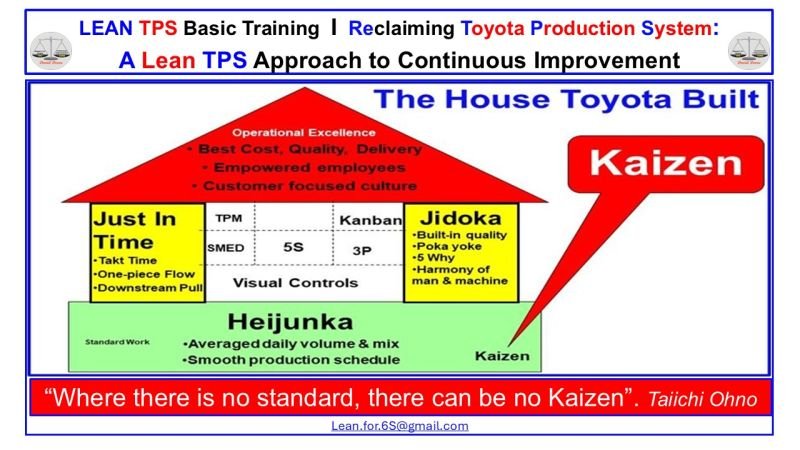
A Lean TPS visual showing what Mr. Ohno and Dr. Shingo emphasized: TPS as a complete system based on Jidoka, Kaizen, scientific thinking, and learning by doing.
Lean TPS Jishuken case study visual showing production kaizen results at a Takahama supplier, including 30 percent man-hour reduction and leadership engagement through Lean TPS Basic Training.
A Takahama Jishuken case study showing how supplier performance improved by 30 percent through structured leadership engagement and Lean TPS thinking.
Visual representing the evolution of the Toyota Production System and Lean TPS from Kaizen and Jishuken foundations.
Lean TPS connects Toyota’s industrial legacy to modern continuous improvement through reflection, Jidoka, and leadership development at the Gemba.
Visual showing Toyota leaders Mr. Sadao Nomura, Mr. Seiji Sakata, and Mr. Susumu Toyoda reviewing Lean TPS Basic Training at Toyota BT Raymond.
TPS Basic Thinking continues the tradition of Toyota Production System learning, emphasizing reflection, abnormality response, and waste elimination through structured training.
Portrait of Yoshiyasu “Yoshi” Mori, Toyota Sensei known for leading Jishuken activities at Toyota Material Handling Manufacturing North America.
Mr. Yoshiyasu “Yoshi” Mori taught that real improvement is not about fixing problems but about developing people who can see and solve them. His lessons in Jishuken and TPS leadership continue to shape how Lean TPS is practiced today.