A 20-Category Assessment Framework for Building a Thinking People System
Introduction to the Lean TPS Assessment
The Lean TPS Assessment is designed as a practical tool to help organizations measure their progress in applying Lean and Toyota Production System philosophies, practices, and methods. It is not a simple scorecard. It is a structured way to reveal strengths, expose weaknesses, and create a shared language for improvement.
Lean TPS is built on two unshakable pillars: Respect for People and Continuous Improvement. These are not abstract values but daily practices that shape how leaders make decisions, how employees engage in their work, and how organizations deliver value to customers. The assessment is built around these principles and expands them into twenty categories that represent the essential foundations of a Lean TPS Enterprise.
Each category is supported by ten carefully written questions. The questions are not meant to be answered quickly or casually. They are prompts to examine how deeply Lean TPS is understood, practiced, and sustained at every level. Some will challenge leadership commitment. Others will reveal whether systems are in place to stabilize flow, reduce waste, and build quality into processes. Still others will test whether employees, suppliers, and customers are genuinely included as partners in continuous improvement.
The scoring system provides a way to measure progress, but the real value comes from the conversations and insights that the questions generate. Each question can be scored from zero to five, or marked as not applicable when needed. With twenty categories and ten questions per category, the assessment covers two hundred points of inquiry. A perfect score would total one thousand points, but the purpose is not to chase a number. The purpose is to learn where the enterprise is strong, where it is inconsistent, and where it must focus next.
The categories span every dimension of Lean TPS transformation. They begin with foundations in leadership, vision, and customer focus. They extend through daily practices such as cycle time reduction, standardized work, and workplace organization. They examine strategic processes like policy deployment, value stream mapping, and supplier partnerships. They include enabling systems such as quality planning, production scheduling, and total productive maintenance. Finally, they look ahead to leadership development, digital integration, and sustainability. Together, these categories form a comprehensive picture of whether Lean TPS is treated as a set of tools or as a living management system.
The purpose of this assessment is to help organizations see themselves clearly. Most organizations believe they are further along in their Lean TPS journey than they really are. Without structured reflection, gaps remain hidden, problems are rationalized, and improvement efforts become scattered. This tool forces alignment between words and actions, between intentions and reality. It gives leaders a way to engage their teams in honest discussion, and it provides employees with a voice in shaping the future state.
Every organization is different. Some may score high in employee involvement but low in supplier relations. Others may excel at 5S Thinking and visual management but struggle with policy deployment. The assessment does not provide easy answers, but it shows where questions must be asked. Its value lies in making improvement visible, measurable, and actionable.
Lean TPS is not a project. It is not a quick fix. It is a long-term transformation of culture, systems, and leadership. This assessment reflects that truth. It demands reflection, discipline, and a willingness to confront uncomfortable realities. For organizations willing to use it with honesty, it provides a roadmap toward becoming a true Lean TPS Enterprise.
How to Use This Assessment
This assessment should be used as a mirror, not a checklist. Each question is written to test how deeply Lean TPS is practiced in daily work. The best way to use it is in discussion, not in isolation. Leaders, managers, and employees should sit together, read each question aloud, and ask themselves if the practice is truly present in their organization. A score of five means the practice is consistent, visible, and sustained. A score of one or two means it is weak or inconsistent. A score of zero means it does not exist. “Not applicable” should be used sparingly, only when the question does not apply to the nature of the work.
The numbers provide a way to track progress, but the real purpose is the conversation. When disagreement arises, that is where learning begins. The questions are not about compliance but about capability. They reveal whether Lean TPS has been reduced to tools and projects or if it has been built into culture and leadership. Treat each question as an opportunity to learn, and each score as a guide for where to focus improvement next.
Category 1: Lean TPS Enterprise (Foundations)
Definition:
Lean TPS refers to all Lean and Toyota Production System methodologies, philosophies, practices, tools, and techniques. A Lean TPS Enterprise is built on the foundation of Respect for People and Continuous Improvement. These are expressed through leadership, culture, and system design. Without this foundation, Lean efforts risk becoming a collection of disconnected tools rather than a true transformation of how the organization thinks and operates.
Assessment Questions:
- Do leaders and employees understand the two pillars of Lean TPS: Respect for People and Continuous Improvement?
- Has the organization established a clear Lean TPS vision connected to long-term purpose and strategy?
- Is there a structured method to align goals and priorities across the enterprise?
- Are problems addressed through Plan-Do-Check-Act and A3 thinking instead of firefighting?
- Do leaders regularly go to the workplace to see the reality of work before making decisions?
- Is senior management visibly involved in Lean TPS activities?
- Are Lean TPS principles included in training for all employees?
- Does the enterprise measure success by flow, quality, safety, and engagement as well as cost?
- Are improvements and lessons learned shared across functions and sites?
- Is Lean TPS treated as a long-term management system rather than a short-term program?
Summary:
This category explores the very roots of Lean TPS: whether the enterprise is built on a foundation strong enough to sustain transformation. Lean TPS cannot thrive if it is only understood as a toolbox or a set of disconnected improvement projects. The essence lies in culture, leadership, and the ability to align people toward a shared purpose.
The first set of questions tests awareness of the two pillars, Respect for People and Continuous Improvement. These are not slogans but deeply held values that shape behavior. Respect for People means designing systems where employees can succeed, where leadership listens, and where improvement is a shared responsibility. Continuous Improvement means that every process, every day, is open to challenge and refinement. Without these two together, Lean TPS collapses into empty compliance.
The next focus is on vision and deployment. A Lean TPS vision is not a vague statement but a clear long-term purpose connected to customer needs, social responsibility, and enterprise growth. Hoshin Kanri, or policy deployment, is a discipline to align every level of the organization to that purpose. When strategy and daily work are connected, employees see meaning in their efforts, and leadership ensures improvement contributes to long-term success rather than scattered wins.
Questions also address how problems are managed. Firefighting is common in traditional organizations: reacting to issues, applying patches, and moving on. Lean TPS replaces this with structured problem-solving, using Plan-Do-Check-Act cycles and A3 reports that make the thinking visible. This approach transforms problems into opportunities for learning and builds organizational capability.
Leadership behavior is another critical indicator. Lean TPS leaders do not sit behind reports; they practice Genchi Genbutsu, or “go and see.” By visiting the workplace, they connect directly with reality, understand conditions firsthand, and show employees that their work matters. Visible senior management involvement sends a clear signal that Lean TPS is not delegated or optional, but central to how the organization is run.
Training and onboarding are essential to embed principles into the culture. When new employees learn Lean TPS from the start, they enter a system that values improvement and respect. Similarly, metrics must expand beyond cost. Lean TPS measures flow, quality, safety, engagement, and learning. These broadened measures show whether the enterprise is delivering value in a sustainable and balanced way.
The final questions look at learning and sustainability. Yokoten, or horizontal sharing, ensures that lessons are spread across functions and sites so that improvement multiplies rather than stays isolated. Finally, Lean TPS must be treated as a management system and culture. If it is seen as a temporary project, enthusiasm will fade and old habits will return.
In summary, Category 1 reveals whether Lean TPS is truly the foundation of the enterprise or merely a side activity. It asks whether leadership and culture are aligned with principles, whether strategy is connected to daily work, and whether improvement is treated as a way of life. A strong foundation ensures Lean TPS does not depend on individual champions or short bursts of activity but becomes the enduring way the enterprise operates.
Category 2: Lean TPS Management (Leadership and Commitment)
Definition:
Lean TPS management is about leading with principles, not authority. Leaders are responsible for aligning purpose, process, and people so that improvement becomes a daily practice. Their actions, not words, demonstrate commitment to continuous improvement and respect for people. In this category, leadership behavior is tested against the standards of Lean TPS.
Assessment Questions:
- Do top leaders participate directly in improvement activities?
- Has the organization developed a clear vision for Lean TPS that guides decisions?
- Are managers trained to lead problem-solving rather than only manage results?
- Do leaders encourage structured thinking in decision-making?
- Are leaders evaluated on how they develop their teams, as well as results achieved?
- Do leaders regularly visit the workplace to see and understand problems?
- Do managers coach and mentor employees in Lean TPS practices?
- Are potential leaders being developed to continue Lean TPS into the future?
- Do performance reviews reinforce Lean TPS behaviors?
- Are leaders accountable for sustaining improvement and problem-solving culture?
Summary:
This category examines whether leadership is truly aligned with Lean TPS principles or simply supporting them in words. Leadership is the force that shapes culture. If leaders do not model Lean TPS behaviors, no system of tools will take hold.
The first test is participation. Leaders must be present in improvement activities, not only observing but actively contributing. When employees see senior leaders solving problems alongside them, they know Lean TPS is not a delegated initiative but a leadership priority. Leaders who only speak about Lean but never participate send a message that it is optional or secondary.
Vision is the next critical factor. A Lean TPS vision provides a compass for decisions. It defines what kind of enterprise the organization seeks to become and how continuous improvement supports that goal. Leaders who lack a clear Lean TPS vision risk making decisions that optimize locally but undermine long-term growth.
Leadership must also be equipped with the skills to lead problem-solving. Traditional management often focuses on results alone, leaving employees to guess how to improve. Lean TPS requires leaders to coach structured thinking, guiding employees to use methods such as Plan-Do-Check-Act and A3 problem solving. By teaching process thinking, leaders multiply improvement capability throughout the organization.
Evaluation systems reveal what leaders truly value. If leaders are assessed only on short-term results, Lean TPS behaviors will fade. Instead, evaluations must include how leaders develop their teams, sustain improvement, and live the principles of respect and continuous improvement. This creates accountability for culture, not just outcomes.
Genchi Genbutsu, the practice of going to the workplace, is again emphasized here. Leaders who regularly visit the Gemba understand problems firsthand and build credibility with employees. Coaching and mentoring are equally important. Lean TPS leaders do not simply issue orders; they grow people. By teaching employees to think scientifically and solve problems, they prepare the next generation of leaders.
Succession planning is another signal of commitment. If Lean TPS leadership skills are not being developed in future leaders, the culture will not endure. Performance reviews also play a role by reinforcing Lean TPS behaviors and making them part of formal evaluation. Finally, leaders must be accountable for sustaining improvement. Culture is shaped by what leaders tolerate, reward, and model.
In summary, Category 2 reveals whether Lean TPS leadership is authentic or symbolic. It looks at whether leaders are present at the workplace, whether they coach rather than command, and whether they hold themselves accountable for building people and sustaining culture. When leaders act with principle and commitment, Lean TPS thrives. Without this, it collapses into slogans and short-lived projects.
Category 3: Lean TPS Customer Focus
Definition:
In Lean TPS, the customer is both the final buyer and the next person in the process. Every action should be designed to deliver value and remove waste. True customer focus means aligning processes and measures with customer satisfaction, ensuring that quality is built in at every step, and that value is continuously delivered.
Assessment Questions:
- Is “customer” clearly defined as both external buyers and internal process partners?
- Does the organization regularly engage customers to understand their needs?
- Are employees trained to view their work from the customer perspective?
- Is customer feedback used to guide improvements?
- Are measures of success aligned with customer satisfaction?
- Do teams understand how their work affects the customer experience?
- Is there a process to address customer concerns quickly?
- Are suppliers and partners engaged in customer-focused improvements?
- Are improvement efforts prioritized based on customer value?
- Do employees feel responsible for delighting customers in every interaction?
Summary:
This category tests whether customer value truly drives improvement efforts or if it is only a slogan. Lean TPS recognizes two types of customers: the external buyer who purchases the product or service and the internal partner who receives the next step in the process. Both must be satisfied for value to flow.
The first set of questions examines clarity. If employees cannot clearly define who their customer is, they cannot align their work to deliver value. Defining the customer as the next process partner emphasizes accountability at every handoff. This eliminates the mindset of “my part is done” and replaces it with “did I make the next step successful?”
Customer engagement is also critical. Organizations that regularly seek feedback understand changing needs and can adapt processes accordingly. Employees trained to view work from the customer perspective see beyond tasks to the experience being created. When feedback guides improvement, the customer becomes a driver of learning rather than a passive recipient.
Measures of success reveal whether customer satisfaction is central. If only cost and efficiency are measured, customer value may be neglected. Including customer experience, responsiveness, and satisfaction ensures alignment with what truly matters. Employees must also understand how their work contributes to the customer experience. Without this awareness, improvement risks optimizing processes that do not add value.
Responsiveness to concerns shows respect for customers. A structured process to resolve issues quickly builds trust. Supplier and partner involvement extends customer focus beyond the organization to the entire value chain. Prioritization based on customer value ensures resources are directed where they create the most impact. Finally, employee responsibility for delighting customers shows whether customer focus has become cultural.
In summary, Category 3 evaluates whether customer value is the anchor of Lean TPS. It reveals whether the organization defines its customers clearly, engages them regularly, and measures success through their eyes. It also examines whether employees take ownership of the customer experience at every level. When customer focus is authentic, Lean TPS avoids becoming an efficiency program and instead becomes a value creation system that sustains competitiveness and trust.
Category 4: Lean TPS Employee Involvement and Teamwork
Definition:
Respect for People in Lean TPS is expressed through the belief that employees are the true source of improvement. Tools and systems provide structure, but it is people who solve problems, generate ideas, and build capability. Involving employees fully creates ownership, builds problem-solving skills, and strengthens teamwork across the organization. Without engagement, Lean TPS risks becoming mechanical and unsustainable.
Assessment Questions:
- Are employees encouraged to raise problems without fear of blame?
- Do employees participate in regular improvement meetings?
- Is cross-training used to increase flexibility and shared knowledge?
- Are employees given structured opportunities to join problem-solving activities?
- Do employees have access to the tools and data needed to improve their work?
- Are employee suggestions for improvement acted upon and recognized?
- Is teamwork emphasized over individual performance in improvement activities?
- Are employees involved in setting goals and reviewing progress?
- Do leaders demonstrate respect by listening and responding to employee ideas?
- Are achievements celebrated at the team level?
Summary:
This category reveals whether employees are active partners in Lean TPS or only passive participants. In traditional systems, improvement is often left to specialists or management. Employees are expected to follow instructions rather than contribute. Lean TPS flips this model. It depends on the involvement of those who know the work best. When employees are fully engaged, they bring insight into problems, creativity in solutions, and ownership in sustaining results.
The first question addresses fear. If employees are afraid of blame, they will hide problems. A culture of fear creates silence, and silence hides waste. Respect for People means creating safety for employees to raise issues without punishment. This is the foundation of honest improvement.
Improvement meetings and problem-solving sessions provide structure. Without time and space, improvement becomes an afterthought. Cross-training is another signal of respect. It expands capability, builds flexibility, and prevents employees from being trapped in narrow roles. This benefits both the organization and the employees by increasing resilience and opportunity.
Access to tools and data empowers employees to make informed improvements. If employees lack visibility, they cannot act. Recognition of suggestions shows that ideas are valued. Even if not every suggestion is adopted, acknowledgment encourages continued participation.
Teamwork is emphasized over individual heroics. Improvement is rarely the result of one person but the collaboration of many. Involving employees in setting goals and reviewing progress deepens ownership. When leaders listen and respond to ideas, they model respect and encourage dialogue. Celebrating achievements at the team level reinforces the culture of shared success.
The deeper question is whether employee involvement is systematic or optional. Organizations may claim to value employees but fail to create processes that enable participation. This category measures whether involvement is consistent, structured, and valued as part of daily operations.
When employees are engaged, Lean TPS becomes sustainable. Continuous improvement is not dependent on management directives but is driven from the ground up. This builds resilience. Employees become problem solvers, leaders grow as coaches, and teamwork creates energy for transformation. The questions in this section uncover whether respect for people is truly lived out or merely stated.
Category 5: Lean TPS Supplier Relations
Definition:
In Lean TPS, suppliers and subcontractors are not external entities to be pressured for cost reductions. They are partners in creating value. Strong supplier relationships are based on trust, long-term commitment, and shared improvement. When suppliers thrive, the enterprise thrives. Weak or transactional relationships lead to instability, quality issues, and hidden costs.
Assessment Questions:
- Are suppliers treated as long-term partners rather than interchangeable vendors?
- Do suppliers understand how their products or services are used in final operations?
- Are suppliers engaged in improvement initiatives with the organization?
- Is supplier performance measured on quality, delivery, and flexibility as well as cost?
- Are suppliers supported in building their own Lean TPS practices?
- Are materials delivered in packaging designed for point-of-use efficiency?
- Are long-term contracts used to stabilize supply and strengthen partnerships?
- Are suppliers included in risk management planning?
- Is supplier input considered in product design and planning?
- Do suppliers share responsibility for improving customer satisfaction?
Summary:
This category examines the depth of supplier relationships. Many organizations focus narrowly on price when dealing with suppliers. While cost is important, Lean TPS recognizes that true value comes from stability, quality, and flow. A supplier forced into short-term cost cutting may compromise on quality, delay deliveries, or become financially unstable, which ultimately costs the enterprise more.
Treating suppliers as long-term partners is the first step. Partnerships build trust and stability. When suppliers understand how their products are used, they can design better solutions. Joint improvement initiatives extend Lean TPS beyond the enterprise. Engaging suppliers in problem-solving, waste reduction, and innovation strengthens the entire value stream.
Supplier performance must be measured on more than cost. Quality, delivery, and flexibility are equally important. A low-cost supplier who delivers late or provides poor quality is not creating value. Supporting suppliers in building Lean TPS capability spreads improvement beyond the organization’s walls. When suppliers learn Lean principles, they reduce waste and improve reliability, benefiting both sides.
Packaging and delivery practices matter as well. Materials delivered to the point of use reduce handling, inventory, and errors. Long-term contracts provide stability for suppliers, enabling them to invest in improvement and capacity. Including suppliers in risk management ensures that disruptions can be anticipated and mitigated.
Supplier involvement in product design creates better outcomes. Suppliers often have deep knowledge of materials and processes that can improve quality and reduce cost. Sharing responsibility for customer satisfaction aligns suppliers with enterprise goals.
The questions in this category reveal whether the enterprise sees suppliers as partners or transactions. A transactional approach limits trust and creates fragility. A partnership approach builds resilience and long-term competitiveness. Strong supplier relationships reduce hidden costs, improve flow, and enable innovation. This section shows whether the organization is building a value chain or simply managing contracts.
Category 6: Lean TPS Quality Planning and Strategy
Definition:
Quality in Lean TPS is not inspected in at the end of a process. It is planned, designed, and built in from the start. Quality is a system-wide responsibility connected to customer needs and business strategy. A true Lean TPS quality system prevents defects, engages employees, and creates learning at every level.
Assessment Questions:
- Is quality defined as meeting customer requirements the first time?
- Are quality goals included in business strategy and made measurable?
- Are processes designed to prevent defects rather than detect them later?
- Do employees receive training to identify and correct quality issues?
- Is real-time quality data available and visible?
- Are leaders focused on preventing defects rather than reworking them?
- Are customers, suppliers, and employees engaged in setting quality standards?
- Do quality measures track customer satisfaction as well as internal performance?
- Are root causes of defects analyzed and corrected consistently?
- Is quality treated as a strategic advantage, not just a compliance requirement?
Summary:
This category tests whether quality is an organizational priority or a control activity. In traditional systems, quality is often treated as inspection. Products are checked at the end, and defects are removed if found. This approach is costly and ineffective. Lean TPS shifts quality to prevention. Processes are designed to produce quality at the source, with employees empowered to stop and correct problems immediately.
Defining quality as meeting customer requirements the first time is fundamental. It sets a clear standard that waste from rework is not acceptable. Quality goals included in the business strategy ensure alignment with long-term objectives. If quality is not strategic, it risks being compromised for short-term results.
Process design is critical. Building quality into processes prevents defects before they occur. Employees must be trained to recognize and address quality issues. Without training, they may lack the confidence or skill to act. Real-time data makes quality visible, enabling immediate response.
Leaders must prioritize prevention over rework. Fixing defects after they occur is wasteful. By focusing on prevention, leaders demonstrate commitment to doing the right thing the first time. Engaging customers, suppliers, and employees in setting standards ensures that quality reflects real needs, not assumptions.
Measures must extend beyond internal performance to include customer satisfaction. A process can meet internal specifications and still fail the customer. Root cause analysis ensures that problems are not repeated. Treating quality as a strategic advantage transforms it from a compliance activity to a source of competitiveness.
This section reveals whether quality is embedded in strategy, supported by leadership, and practiced at every level. A strong quality system builds trust with customers, reduces cost, and drives improvement. Without it, Lean TPS efforts collapse under the weight of defects, rework, and dissatisfied customers.
Category 7: Lean TPS Material and Information Flow Chart (Value Stream Mapping)
Definition:
In Lean TPS, the Material and Information Flow Chart, often referred to as Value Stream Mapping, is a method to make the movement of materials and information visible across the entire system from supplier to customer. The purpose is not to create a picture for its own sake but to expose waste, clarify flow, and align improvement with the needs of the customer. A Material and Information Chart shows how value is created, where delays occur, and how information directs material flow. It is a disciplined tool that supports systemic improvement, preventing the organization from drifting into scattered or isolated projects.
Assessment Questions:
- Are value streams clearly defined by product family, service type, or customer segment?
- Has a current state Material and Information Chart been created for each critical flow?
- Does the chart identify both value-added and non-value-added activities?
- Are cycle times, lead times, inventory levels, and queue times measured and included?
- Do cross-functional teams participate in creating and reviewing the charts?
- Is a future state chart developed to guide improvement with measurable targets?
- Are improvement priorities explicitly linked to findings from the chart?
- Are results and updates shared with employees, leaders, and stakeholders?
- Are suppliers and customers occasionally engaged in mapping sessions to extend visibility?
- Is the Material and Information Chart updated regularly to reflect actual conditions, not assumptions?
Summary:
This category examines whether the organization can see its operations as an integrated flow of material and information rather than a set of disconnected activities. The Material and Information Chart (VSM) creates a shared understanding of how value moves, where waste accumulates, and what direction improvement must take. Without this practice, most organizations end up reacting to problems as they arise, rather than improving strategically.
The first step is clarity. Value streams must be defined by product family, service type, or customer segment. Mapping at too broad a level makes the chart useless, while mapping at too narrow a level risks missing systemic waste. Once defined, the current state chart must be built with honesty and discipline. This is not about how the process is supposed to work but about how it truly functions today.
The strength of the Material and Information Chart lies in its ability to separate value from waste. A process map that shows steps without identifying waste is incomplete. By including data such as cycle time, lead time, inventory, and queue time, the chart becomes a diagnostic tool rather than a static diagram. These measures allow organizations to quantify waste and set a baseline for improvement.
Cross-functional involvement is essential. Sales, engineering, operations, purchasing, and logistics all see different parts of the flow, and only together can the full picture be drawn. The creation of a future state chart is where strategy meets practice. This chart should not be a dream but a realistic vision of how the flow can improve, with measurable targets tied to customer needs.
Improvement projects must be prioritized and guided by the findings of the chart. Without this discipline, teams often chase problems based on urgency or politics instead of systemic importance. Sharing results across the organization reinforces transparency and alignment. Including suppliers and customers in mapping sessions extends visibility beyond the enterprise, creating stronger partnerships.
The final test of maturity is regular updating. A chart that is created once and left unchanged quickly loses relevance. Conditions evolve, processes shift, and markets change. Regular updates ensure that the chart reflects reality, keeping improvement efforts grounded.
This category reveals whether the Material and Information Chart is a strategic driver of improvement or a symbolic exercise. In a true Lean TPS culture, mapping is the lens through which flow, waste, and opportunity are understood. It disciplines the organization to see reality, align improvement with purpose, and prevent scattered efforts. When practiced consistently, it becomes one of the most powerful tools for transforming operations into systems that create value reliably and sustainably.
Category 8: Lean TPS Cycle Time
Definition:
Cycle time in Lean TPS is the total time it takes for a product, service, or piece of information to move from the start of a process to completion. Shortening cycle time improves responsiveness, exposes waste, and increases competitiveness. Long cycle times hide problems and create excess inventory. Measuring, managing, and improving cycle time is essential for flow.
Assessment Questions:
- Are cycle times measured consistently across information flow and material flow?
- Do employees understand how cycle time connects to customer satisfaction?
- Are clear targets set for reducing cycle time in major processes?
- Are bottlenecks identified and addressed systematically?
- Is cycle time compared against the customer demand rate to check alignment?
- Are employees trained to analyze waiting, handoffs, and delays?
- Is technology applied appropriately to shorten cycle times without adding complexity?
- Is cycle time data visible and updated at the workplace?
- Are cycle time improvements communicated and celebrated as competitive advantages?
- Are cycle time reductions pursued to improve quality and flow as well as cost?
Summary:
This category explores whether cycle time is understood and managed as a strategic factor. Many organizations treat cycle time as a background measure, only analyzing it when a problem arises. In Lean TPS, cycle time is central because it directly reflects the speed of value delivery to the customer.
Measuring cycle time consistently across both information and material flow provides a complete picture. Order entry delays can be as damaging as production delays. Employees must understand the connection between cycle time and customer satisfaction. A customer waiting weeks for a quote is as dissatisfied as one waiting for late shipments.
Setting clear reduction targets creates focus. Bottlenecks are often the biggest contributors to long cycle times, and identifying them requires structured problem-solving. Comparing cycle time to customer demand rate ensures alignment. If cycle time is longer than demand, delays and backlogs are inevitable.
Training employees to analyze waiting, handoffs, and delays builds problem-solving capability. Technology can be useful but must not create complexity. Real-time data displayed at the workplace keeps cycle time visible, making it everyone’s concern.
Communicating cycle time improvements highlights competitive advantages. Customers value responsiveness, and shorter cycle times often mean faster delivery, lower cost, and higher satisfaction. Pursuing cycle time improvements for quality and flow ensures balance. Shortening time without considering quality risks instability.
This section reveals whether cycle time is seen as a key performance measure or treated casually. Long cycle times create hidden costs, excess inventory, and dissatisfied customers. Short cycle times expose waste, make problems visible, and strengthen competitiveness. In Lean TPS, cycle time is not just a number. It is a reflection of the health of the value stream and the organization’s ability to deliver value quickly and reliably.
Category 9: Lean TPS 5S Thinking
Definition:
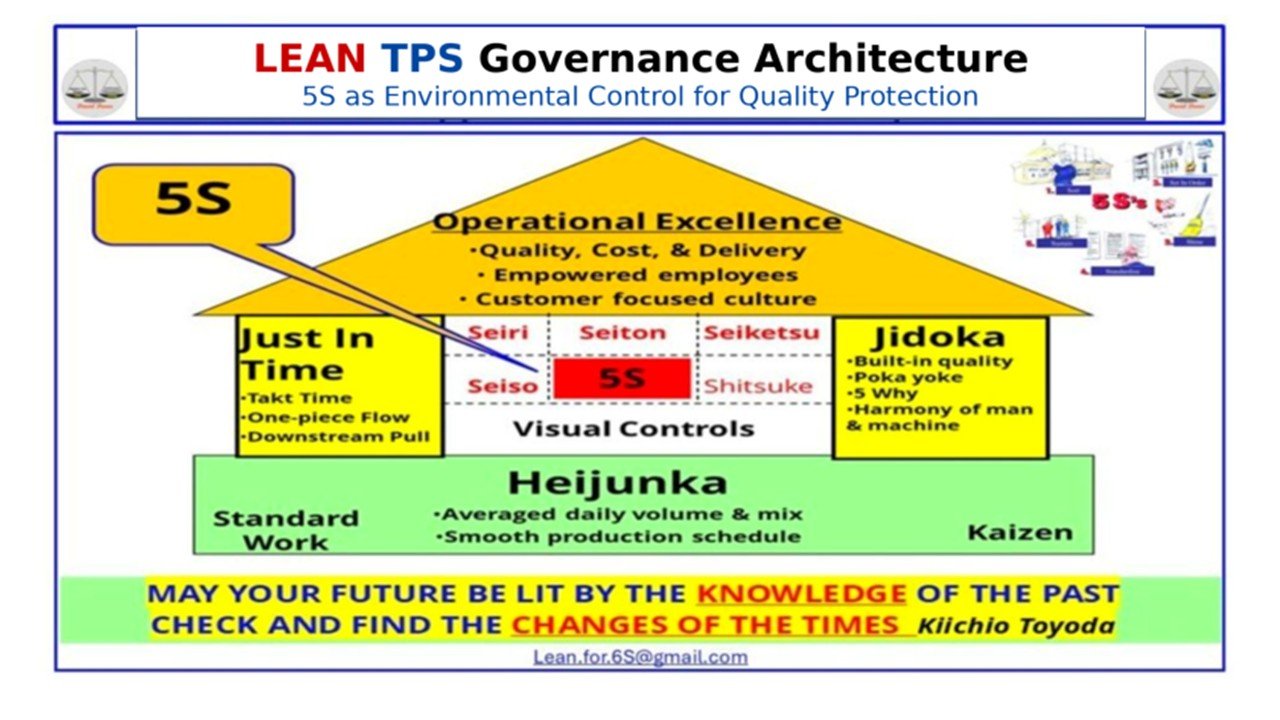
5S in Lean TPS stands for Sort, Set in order, Shine, Standardize, and Sustain. It is the foundation for workplace organization, safety, and discipline. 5S is not housekeeping. It is a system for creating stability, eliminating waste, and making problems visible. Without 5S, flow breaks down, quality suffers, and improvement stalls.
Assessment Questions:
- Is 5S understood as a management discipline rather than a cleaning activity?
- Are unnecessary items consistently removed from work areas?
- Are tools, parts, and materials organized so that everything has a clear location?
- Is cleaning treated as an inspection to detect abnormalities early?
- Are standards for workplace organization clearly documented and followed?
- Do leaders reinforce discipline by reviewing and supporting 5S practices?
- Are 5S activities directly linked to safety and quality improvements?
- Are 5S practices shared across teams to encourage learning?
- Do employees feel ownership for maintaining and improving 5S conditions?
- Is 5S sustained over time and integrated into daily work, not just projects?
Summary:
This category reveals whether 5S is being practiced as a serious Lean TPS discipline or treated as a one-time event. Too often, organizations conduct a “5S blitz,” clean up a workspace, take before-and-after photos, and then allow clutter and disorder to return. In Lean TPS, 5S is much more than cleaning. It is a way of building stability and discipline that supports all other improvement activities.
The first question distinguishes whether 5S is seen as a management system or just housekeeping. Removing unnecessary items is not cosmetic. It eliminates clutter that hides waste and creates confusion. Organizing tools and materials so everything has a defined place ensures that waste of motion, searching, and delays are eliminated.
Treating cleaning as inspection adds another layer of value. Employees detect abnormalities in equipment, tools, or materials while cleaning, preventing bigger problems later. Standards for workplace organization must be visible and easy to follow. Leaders play a critical role by reinforcing discipline and showing respect for the system.
Linking 5S directly to safety and quality elevates its importance. If 5S is only about tidiness, employees may not take it seriously. Sharing practices across teams spreads learning and creates consistency. Ownership by employees ensures sustainability. If 5S is seen as management’s responsibility, it will fade.
The final test is whether 5S is sustained over time. Sustainability requires discipline, leadership support, and integration into daily work. A strong 5S system creates credibility for Lean TPS. It demonstrates that the organization can maintain standards, eliminate waste, and expose problems. Without 5S, Lean TPS lacks a stable base. With it, improvement can grow systematically and reliably.
Category 10: Lean TPS Manufacturing Planning
Definition:
Manufacturing planning in Lean TPS ensures that production capacity is aligned with actual customer demand. The goal is to provide a stable and flexible flow that reduces waste and minimizes inventory. In Lean TPS, planning is not about producing to forecast alone but about balancing demand, supply, and capability in a way that exposes problems instead of hiding them.
Assessment Questions:
- Are forecasts and sales plans reliable enough to guide production planning?
- Are bills of material simplified to eliminate unnecessary movement and transactions?
- Is production planning aligned with the customer demand rate to support balanced flow?
- Does planning prioritize stability of flow over local efficiency metrics?
- Are safety stocks reviewed and adjusted based on actual demand variation?
- Are suppliers included in planning discussions to stabilize material supply?
- Are flexible planning methods used to handle high product mix and low volumes?
- Do managers and supervisors review production plans at the workplace with teams?
- Are production simulations or modeling tools used to test schedules before release?
- Does planning consistently support on-time delivery with minimal inventory levels?
Summary:
This category evaluates whether the organization uses manufacturing planning as a system to support flow or whether planning is simply a bureaucratic exercise. In Lean TPS, the purpose of manufacturing planning is to create stability that allows continuous improvement to take root. If planning is inaccurate, disconnected from demand, or overly rigid, it creates excess inventory, long lead times, and hidden waste.
Forecasts and sales plans are always imperfect, but the question is whether they are reliable enough to guide planning. A plan built on wildly inaccurate forecasts is worse than no plan at all. Bills of material that are complex and layered add transactions and movement that waste time and increase the risk of error. Simplification here is a form of waste elimination.
Aligning production planning with the rate of customer demand is a hallmark of Lean TPS. The goal is not to maximize local efficiency but to balance the flow of the entire value stream. This often challenges traditional measures because local departments may resist changes that reduce their efficiency percentage, even though they improve system performance.
Safety stocks are sometimes necessary, but Lean TPS demands that they be managed actively. Static safety stock levels are signs of reactive planning. Engaging suppliers in planning builds stability beyond the plant itself. Flexible planning methods become essential in high mix, low volume environments, which are common in modern markets.
The involvement of managers and supervisors in reviewing plans at the workplace is critical. Plans built in offices without input from the Gemba rarely survive first contact with reality. Using simulations or modeling tools before execution prevents surprises and builds confidence in schedules.
The ultimate measure of manufacturing planning is whether it consistently supports on-time delivery with the lowest possible inventory. If inventory is high, delivery unstable, or firefighting constant, then planning is not serving its purpose. A strong planning system exposes problems, encourages cross-functional alignment, and creates predictability. Without this discipline, Lean TPS cannot achieve flow.
Category 11: Lean TPS Production Scheduling
Definition:
Production scheduling in Lean TPS ensures that work is released into the system in a way that matches customer demand and balances flow. Unlike traditional systems that push work into production, Lean TPS uses pull scheduling to release work based on actual need. Production scheduling is not just an administrative task but a strategic system for controlling flow, reducing queues, and stabilizing operations.
Assessment Questions:
- Is pull scheduling used instead of traditional push scheduling?
- Is the schedule balanced to match the rate of customer demand?
- Are lot sizes minimized to reduce waiting and queues between processes?
- Does final assembly determine the pace of upstream operations?
- Are visual scheduling tools used at the workplace to manage flow?
- Are material queues monitored and reduced through disciplined scheduling?
- Are suppliers included in production scheduling coordination?
- Do leaders regularly review schedules at the workplace for accuracy?
- Is level scheduling practiced to stabilize product mix and production volume?
- Has production scheduling improved delivery performance and lowered inventory?
Summary:
This category examines whether production scheduling supports true flow or whether it hides problems through overproduction and excess inventory. Traditional push scheduling often floods the system with work, creating queues, bottlenecks, and unevenness. In contrast, Lean TPS emphasizes pull scheduling, which ties production directly to customer demand.
The first test is whether the system has moved away from push scheduling. Push systems generate local efficiency but create global instability. Pull scheduling ensures that only what is needed is released, preventing overproduction. Balancing the schedule to match the rate of customer demand (takt time) is another critical factor. Without this balance, the system oscillates between overload and starvation.
Lot sizes must be reduced to allow for smooth flow. Large batches create waiting and hide defects. When final assembly sets the pace for upstream operations, the system becomes synchronized, reducing mismatches in supply and demand. Visual scheduling tools at the workplace keep scheduling transparent and allow problems to be seen in real time.
Monitoring and reducing material queues is a sign of discipline. Excess material between operations indicates that flow is broken. Including suppliers in scheduling ensures that the supply chain is synchronized with the production rhythm. Regular schedule reviews at the workplace ensure that reality matches the plan.
Level scheduling is one of the most powerful but difficult practices. By leveling product mix and volume, the system reduces peaks and valleys that cause stress, waste, and errors. The final proof of effective scheduling is improved delivery performance and reduced inventory. If scheduling does not produce these results, then it is not functioning as Lean TPS intends.
This category reveals whether scheduling is reinforcing the principles of flow and customer demand or whether it is undermined by old habits. Good scheduling does not only move work around; it stabilizes the system and builds confidence in the ability to deliver consistently.
Category 12: Lean TPS Structured Flow
Definition:
Structured flow in Lean TPS is the intentional design of materials, information, and people movement to create smooth progress without interruption. It focuses on eliminating waste from transportation, motion, waiting, and unnecessary handoffs. A well-structured flow makes problems visible, supports quality, and ensures predictable performance across the value stream.
Assessment Questions:
- Are work cells designed to support specific product families or processes?
- Is plant layout structured to minimize transportation and wasted movement?
- Are materials delivered to point-of-use in the right quantity and time?
- Are visual controls used to track inputs, outputs, and process status?
- Is inspection integrated into the flow rather than performed at the end?
- Are processes designed to allow continuous flow where possible?
- Is equipment positioned to support flow instead of departmental separation?
- Are disruptions such as breakdowns quickly detected and resolved?
- Do employees understand how their work contributes to the flow of the whole system?
- Is improving flow treated as a priority at all levels of the organization?
Summary:
This category measures whether the organization has designed its operations for smooth, uninterrupted flow or whether it tolerates wasteful movement, long transport routes, and stop-start processes. Structured flow is one of the most visible indicators of Lean TPS maturity because it directly affects efficiency, quality, and responsiveness.
Work cells designed around specific product families support flow by grouping resources together to reduce movement and waiting. A plant layout that minimizes transportation and wasted motion eliminates non-value activities. Materials delivered to the point of use reduce unnecessary handling and shorten lead time.
Visual controls are essential for flow. They make inputs, outputs, and status visible to everyone, ensuring that problems are seen immediately. Integrating inspection into the flow prevents defects from moving forward undetected. Processes that are designed for continuous flow allow work to move smoothly without interruption, creating predictability.
Equipment must be positioned to support flow. Traditional layouts often group equipment by type, creating silos and long transport distances. In Lean TPS, equipment is placed to serve the flow of value, not departmental boundaries. Disruptions such as breakdowns must be detected and resolved quickly to protect flow. Employees should understand how their individual work contributes to the larger system.
Making flow a top organizational priority elevates it above local metrics. When leaders value flow, decisions about layout, equipment, and staffing are made with the system in mind. This prevents sub-optimization, where one department looks efficient while the overall system suffers.
Structured flow reveals waste and forces problems into the open. It requires intentional design, cross-functional collaboration, and leadership commitment. Without it, Lean TPS cannot deliver stability or predictability. With it, operations gain rhythm, quality improves, and the entire organization benefits from smoother performance.
Category 13: Lean TPS Process Control
Definition:
Process control in Lean TPS means ensuring that every process is designed, documented, and maintained so it consistently delivers quality at the source. Instead of relying on inspection after the fact, Lean TPS builds in systems, standards, and human empowerment to recognize abnormalities immediately and take corrective action.
Assessment Questions:
- Are processes clearly defined, documented, and followed to ensure repeatability?
- Is every employee empowered to stop the process when an abnormality occurs?
- Are problem-solving teams available to respond in real time?
- Is zero defects consistently treated as the goal in all processes?
- Are processes designed to meet customer demand rate without variation?
- Are visual controls used to identify normal and abnormal conditions?
- Are standards updated regularly to reflect best practices?
- Is process stability tracked with reliable data?
- Do leaders prioritize root cause problem solving over temporary fixes?
- Is quality built into the process itself rather than checked afterward?
Summary:
Process control is one of the most important principles of Lean TPS because it directly ties system performance to customer value. Without control at the process level, organizations fall into the trap of firefighting and inspection, which hides systemic weaknesses instead of solving them. The purpose of these questions is to explore whether an organization truly designs its work processes to be stable, repeatable, and defect-free.
The first consideration is whether processes are documented and understood by everyone performing them. In Lean TPS, Standardized Work is the foundation of process control. It defines the best-known way to perform a task safely, with quality, and in the right time. When processes are left vague or when employees are trained inconsistently, variation creeps in. This variation becomes the seedbed for quality problems, missed delivery, and wasted resources. Asking whether processes are documented and followed reveals the maturity of the organization in making standards visible and practical.
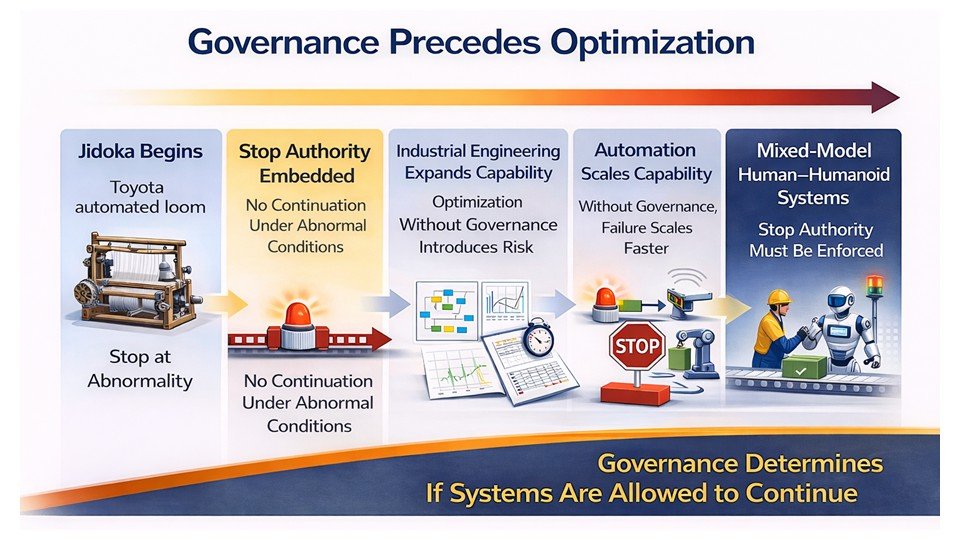
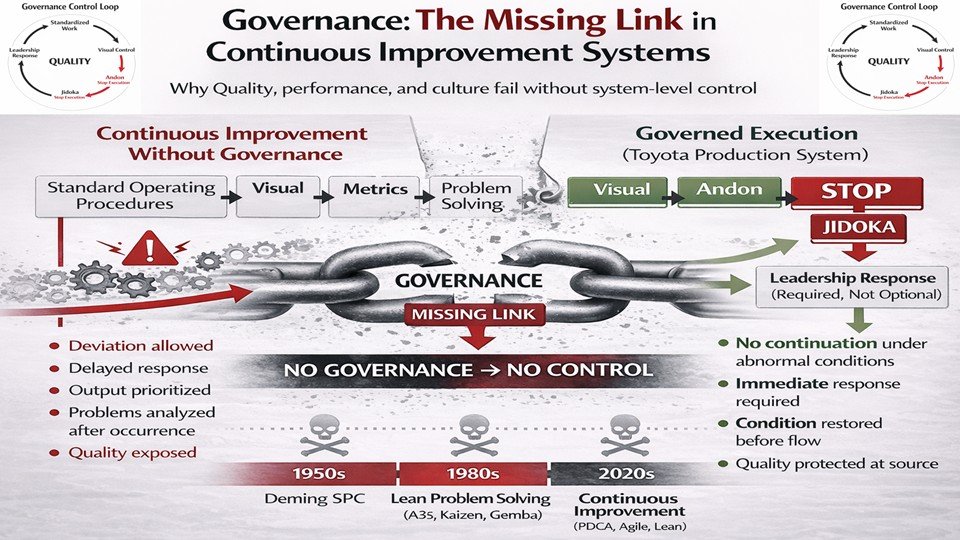
Empowerment is another essential feature. Employees must have the authority to stop a process when they see a defect or abnormality. This practice is called Jidoka, or built-in quality. When workers cannot stop the process, defects move forward, quality problems multiply, and the cost of correction increases. Asking whether employees are truly empowered tests the difference between slogans and reality. Many organizations say they support quality at the source, but only those who practice empowerment prove it daily.
Problem-solving capability is also central to process control. If an employee stops a process, there must be a team ready to respond and resolve the issue. Otherwise, stoppages turn into frustration, and empowerment becomes meaningless. Lean TPS builds structured problem-solving teams that respond immediately to abnormalities. This structure ensures that problems are not just contained but understood and corrected at the root.
Zero defects is not just a slogan but a standard of thinking. If leaders treat defects as inevitable, the culture accepts waste. Lean TPS requires a mindset that defects are unacceptable and preventable when systems are properly designed. By asking whether zero defects is a true goal, this category reveals the organization’s belief system about quality and responsibility.
Visual management plays a major role in process control. Clear signals distinguish normal from abnormal, allowing operators and leaders to act quickly. For example, visual boards, color codes, or error-proofing devices create transparency. If abnormalities remain hidden, processes drift from stability without detection.
Another critical element is data-driven monitoring. Leaders cannot rely on observation alone to manage process stability. By tracking variation, performance, and outcomes, they ensure that problems are identified early. Root cause problem solving requires both human observation and reliable data.
Finally, quality must be built into the process rather than checked afterward. Inspections at the end of production may catch defects, but they do not prevent them. Lean TPS demands that processes be designed with mistake-proofing, visual cues, and operator empowerment so that defects cannot pass through unnoticed.
The purpose of this section is to reveal whether the organization is proactive or reactive. Process control in Lean TPS shows whether leadership trusts employees, whether systems are robust, and whether learning from problems is institutionalized. Strong process control eliminates waste, improves reliability, and strengthens customer trust. Weak process control allows hidden variation to multiply, creating costs and failures that damage performance.
Category 14: Lean TPS Performance Measurement
Definition:
Performance measurement in Lean TPS is about aligning metrics with customer value and continuous improvement. Measures must guide behaviors, encourage teamwork, and highlight problems, not simply report financial outcomes.
Assessment Questions:
- Are key measures linked to customer value rather than only efficiency?
- Do measures balance flow, quality, cost, and delivery?
- Are performance measures visible at the workplace?
- Do measures encourage cooperation between functions?
- Are measures used to identify problems and drive improvements?
- Do leaders use measures for coaching instead of punishment?
- Are measures simple and understandable for employees?
- Do measures track both results and the processes that create them?
- Are reviews structured to promote learning and continuous improvement?
- Do measures reinforce Lean TPS principles rather than short-term gains?
Summary:
Performance measurement defines what an organization values and how it guides behavior. In Lean TPS, metrics must be designed to support continuous improvement, teamwork, and customer satisfaction. The purpose of these questions is to uncover whether performance measures reinforce the right culture or undermine it.
The first question addresses alignment with customer value. Too often, organizations measure what is easy instead of what is meaningful. Metrics like machine utilization or output volume may appear positive but can actually encourage overproduction and waste. Lean TPS insists that measures connect directly to customer requirements: delivery on time, quality at the source, and flow without delays. Asking whether measures link to customer value tests whether leadership truly understands the purpose of measurement.
Balance is another critical factor. A narrow focus on cost or output damages quality and safety. Lean TPS balances measures across flow, quality, cost, delivery, and people. When organizations measure only one dimension, they create unintended consequences in others. Asking whether measures are balanced reveals whether the system is designed to protect against imbalance.
Visibility matters because performance must be understood at the workplace, not just in management reports. Metrics should be displayed in real time where the work occurs so that employees can act on them. If measures are hidden in reports that arrive weeks later, they lose their ability to guide immediate action.
Collaboration across functions is also key. When measures reinforce silo behavior, departments optimize themselves at the expense of the whole. Lean TPS requires measures that encourage cooperation across the value stream. This question reveals whether the organization is still rewarding local efficiency or has shifted to system-wide improvement.
Measures should highlight problems, not hide them. When metrics are used to celebrate success only, organizations miss the opportunity to learn. Lean TPS measures performance to reveal abnormalities and trigger structured problem solving. Asking whether measures are used for improvement identifies whether the culture supports learning or punishes failure.
Leadership behavior is central to performance measurement. If leaders use measures to punish employees, trust erodes and improvement slows. Lean TPS leaders use metrics to coach, guide, and support problem-solving. The question about leadership use of measures uncovers whether leaders practice respect for people in daily management.
Simplicity is another test of maturity. If measures are too complex or require special expertise to interpret, employees cannot own them. Lean TPS ensures that measures are simple enough to be understood by those closest to the work. This creates engagement and accountability.
Tracking both results and processes is essential. Results show what happened, but processes reveal why it happened. Lean TPS requires metrics that evaluate whether processes are being followed and whether they are effective. Asking this question reveals whether leaders are managing by outcomes alone or by the systems that produce those outcomes.
Finally, measures must reinforce Lean TPS principles. If metrics are designed around short-term gains, they drive behaviors that undermine long-term transformation. Asking this question shows whether the organization uses metrics to sustain Lean TPS or to chase quarterly results.
The deeper purpose of this section is to show whether metrics are a tool for learning or a weapon for control. Lean TPS requires metrics to create alignment, reinforce respect, and highlight opportunities for improvement. Strong performance measurement creates transparency, trust, and growth. Weak measurement systems create fear, hidden problems, and short-term thinking.
Category 15: Lean TPS Quick Changeover
Definition:
Quick changeover reduces the time needed to switch between products or processes. In Lean TPS, it creates flexibility, enables small lot production, and supports flow by minimizing downtime.
Assessment Questions:
- Has a structured quick changeover program been established?
- Are changeover elements analyzed to separate internal and external tasks?
- Are tools and fixtures standardized for faster setup?
- Are employees trained to perform changeovers efficiently?
- Are changeover procedures documented with clear steps?
- Is performance measured and tracked for changeovers?
- Are bottleneck process changeovers targeted first?
- Are quick changeover practices shared across the organization?
- Do leaders support investment in changeover reduction?
- Has changeover time reduction enabled smaller lot sizes and lower inventory?
Summary:
Quick changeover is a core method of Lean TPS that allows organizations to move away from large batches and closer to flow production. The purpose of these questions is to identify whether quick changeover is treated as an essential discipline or ignored in favor of convenience.
At its foundation, quick changeover is about freeing capacity. By reducing the time and complexity of switching from one product to another, organizations can run smaller batches, reduce inventory, and respond more quickly to customer needs. When changeovers are long and complicated, organizations are forced into large lots and high inventories that hide problems and slow responsiveness. Asking whether a structured program exists reveals whether quick changeover is recognized as strategic.
Separating internal and external tasks is the first principle of changeover reduction. Internal tasks are those that can only be done when the machine is stopped. External tasks can be prepared while the machine is running. By moving as many tasks as possible to external status, downtime is reduced. This question reveals whether the organization understands and applies this principle.
Standardizing tools and fixtures is another vital element. When employees must search for tools, adjust fixtures, or improvise during changeovers, time is lost. Standardization reduces waste, increases safety, and ensures consistency. The related question tests whether this practice has been adopted.
Training is critical to ensure that employees can perform changeovers quickly and safely. Documentation of steps further ensures consistency. Asking about training and documentation reveals whether quick changeover is institutionalized or left to individual skill.
Measurement is necessary for improvement. If changeover performance is not tracked, progress cannot be sustained. Targeting bottleneck processes first is also strategic, since improving changeovers at these points provides the greatest benefit to flow.
Sharing best practices across the organization ensures that improvements are not isolated. Leadership support, both financial and cultural, is required to sustain efforts.
Ultimately, the key outcome is whether changeover reductions have enabled smaller lot sizes and reduced inventory. If not, the improvement has not achieved its purpose.
Quick changeover is a symbol of Lean TPS flexibility. It allows organizations to produce what customers need, when they need it, without tying up resources in unnecessary inventory. Strong practices show discipline, foresight, and commitment to flow. Weak practices indicate that the organization is still bound by old habits of large batch thinking.
Category 16: Lean TPS Total Productive Maintenance (TPM)
Definition:
Total Productive Maintenance is the Lean TPS approach to equipment reliability. It involves operators, technicians, and leaders working together to prevent breakdowns, improve performance, and ensure equipment is always ready to perform.
Assessment Questions:
- Are operators trained to perform routine care on their equipment?
- Are preventive maintenance schedules followed consistently?
- Are root causes of breakdowns analyzed and corrected?
- Are spare parts and tools organized at point of use?
- Are equipment performance metrics tracked and reviewed?
- Do cross-functional teams work together to improve reliability?
- Is downtime data collected and used for learning?
- Is TPM integrated into production planning?
- Do leaders support TPM activities actively?
- Has TPM improved safety, quality, and flow in the workplace?
Summary:
TPM is the Lean TPS method for ensuring equipment supports flow rather than disrupts it. The purpose of these questions is to determine whether equipment care is institutionalized as a shared responsibility or left to maintenance departments alone.
Operators are the first line of defense in TPM. By training them to clean, inspect, and perform simple maintenance tasks, organizations prevent many problems before they occur. This also creates ownership and pride in equipment performance. Asking whether operators are trained tests the strength of this principle.
Preventive maintenance schedules must be reliable and consistent. If schedules are skipped or ignored, breakdowns become frequent and unpredictable. Root cause analysis ensures that problems do not repeat, and point-of-use storage for parts and tools eliminates delays during repairs.
Measuring availability, performance, and quality ensures that leaders know the true cost of downtime. Cross-functional collaboration prevents silos and ensures that reliability is treated as a system issue.
Data collection and use are essential. Downtime must not be accepted as normal but studied for improvement. Integrating TPM into planning ensures that equipment readiness is part of the scheduling discipline.
Leadership support makes TPM a cultural norm rather than a side project. By reviewing activities and reinforcing participation, leaders make reliability a priority.
The final question tests outcomes: has TPM improved safety, quality, and flow? If not, the practices are not yet delivering results.
The larger purpose of TPM is to transform equipment care from a reactive repair system to a proactive reliability system. Strong TPM eliminates waste, reduces cost, and ensures stability for employees and customers alike. Weak TPM allows breakdowns to dictate performance, creating instability and frustration.
Category 17: Lean TPS Total Quality
Definition:
Total Quality in Lean TPS means building quality into every process, product, and service. Quality is not inspected at the end but designed and managed into the system from the start. It is the responsibility of everyone in the organization, not just a department.
Assessment Questions
- Is quality defined as meeting customer requirements every time?
- Do employees understand their role in delivering quality at the source?
- Are processes designed to prevent defects from occurring?
- Are mistake-proofing devices used to eliminate errors?
- Are quality standards visible and practical at the workplace?
- Is customer feedback incorporated into quality improvements?
- Are cross-functional teams involved in solving quality issues?
- Do leaders treat quality failures as opportunities to learn?
- Is there a structured method for addressing recurring problems?
- Has total quality improved customer trust and loyalty?
Summary
Total Quality is not a program but a philosophy that underpins the entire Lean TPS system. The purpose of this section is to reveal whether an organization has truly embraced quality as a cultural and structural foundation or if it still treats quality as a separate function.
The first principle of total quality is to define quality from the customer’s perspective. Quality means delivering exactly what the customer requires, every time, without compromise. If organizations define quality by their own convenience, they risk building products or services that meet internal standards but fail to satisfy customers. The first question challenges leaders to define quality in a way that creates alignment across the enterprise.
Employee ownership of quality is another core test. In Lean TPS, quality is not the responsibility of a separate department but the daily work of everyone. Every operator, supervisor, and manager is accountable for delivering quality at the source. This mindset eliminates the culture of blame and inspection after the fact. Asking whether employees understand their role exposes whether the culture empowers people or shields them from responsibility.
Designing processes to prevent defects is the foundation of Jidoka, or built-in quality. Processes should make it difficult or impossible to create errors. Mistake-proofing devices (poka-yoke) are critical tools that ensure errors are either prevented or detected immediately. Asking about these practices shows whether the organization is serious about preventing errors or continues to accept them as normal.
Visibility of standards ensures that employees know what good quality looks like in practice. Standards must be visible, practical, and updated to reflect customer expectations. Without visibility, employees rely on memory or assumptions, which leads to inconsistency.
Customer feedback is a powerful driver of improvement. If feedback is ignored or filtered, the organization loses opportunities to learn. Integrating feedback into improvement ensures that quality evolves with customer needs.
Cross-functional teams break down silos and ensure that quality issues are addressed systemically. When departments work in isolation, problems may be solved temporarily but recur elsewhere. Structured collaboration ensures that improvements stick.
Leadership response to failures is a decisive factor. Leaders must treat failures as opportunities for learning rather than reasons for blame. This creates psychological safety and encourages employees to surface problems early.
Structured methods for addressing recurring issues, such as root cause analysis and A3 thinking, prevent organizations from cycling through the same problems repeatedly. Without structured methods, improvements are short-lived.
The ultimate test is whether quality improvements have built trust and loyalty with customers. If customers see consistent reliability, they reward the organization with repeat business and referrals.
The purpose of this category is to test whether quality is a foundation of daily work or an afterthought. Total Quality in Lean TPS ensures stability, efficiency, and customer satisfaction. Weak quality systems create rework, frustration, and declining trust.
Category 18: Lean TPS Leadership Development
Definition:
Leadership development in Lean TPS is about creating leaders who live Respect for People and Continuous Improvement. Leaders are expected to teach, coach, and model Lean TPS principles in daily work. Leadership development is therefore a system, not an event.
Assessment Questions:
- Are leaders trained in Lean TPS principles and behaviors?
- Do leaders practice daily coaching at the workplace?
- Are potential leaders identified and developed through mentoring?
- Do leaders set the example by practicing Lean TPS themselves?
- Is leadership development structured as an ongoing process?
- Are leaders evaluated on their ability to develop people?
- Do leaders spend time at the workplace to learn from reality?
- Are succession plans aligned with Lean TPS values?
- Do leaders support and encourage continuous learning?
- Has leadership development strengthened the Lean TPS culture?
Summary:
Leadership development is the engine that sustains Lean TPS across generations of managers, supervisors, and executives. Without leadership development, Lean TPS initiatives rise and fall with individual champions, and the culture fades over time. The purpose of this section is to test whether leadership is being developed intentionally or left to chance.
Training in Lean TPS principles is the first step. Leaders must understand more than tools. They must grasp the philosophies of Respect for People and Continuous Improvement. Training ensures that leaders speak the same language and share the same vision.
Daily coaching at the workplace is the second step. Leaders must teach by doing, not just by telling. Coaching employees in problem solving, process observation, and structured thinking ensures that Lean TPS is learned in context, not in classrooms alone.
Identifying and mentoring potential leaders builds continuity. Without a system to develop successors, Lean TPS becomes fragile. Succession planning aligned with Lean TPS ensures that leadership transitions strengthen rather than weaken the culture.
Leaders must model Lean TPS themselves. They cannot delegate it to others while focusing on different priorities. Employees watch leaders closely, and inconsistency destroys trust. Asking whether leaders set the example reveals the authenticity of leadership.
Leadership development must be structured as a continuous process, not an occasional workshop. Evaluation of leaders should include how they develop people, not just the results they deliver. This balances accountability and growth.
Leaders must also spend time at the workplace to learn from reality. Genchi Genbutsu—go and see—cannot be taught from a distance. Leaders who visit the workplace regularly understand problems firsthand and build credibility.
Finally, leadership development must strengthen the culture. If leadership development is treated as an isolated program, it fails to integrate with daily work. The outcome should be a stronger, more consistent Lean TPS culture that endures over time.
This section exposes whether leadership is being cultivated as a system. Strong leadership development ensures resilience, consistency, and growth. Weak systems create dependence on a few champions and make Lean TPS vulnerable to leadership turnover.
Category 19: Lean TPS Digital and Industry 4.0 Integration
Definition:
Digital and Industry 4.0 tools include automation, data analytics, and connectivity. In Lean TPS, these tools must be applied carefully to strengthen flow, quality, and people engagement, not to replace thinking or create complexity.
Assessment Questions:
- Are digital tools aligned with Lean TPS principles?
- Do digital systems make problems more visible rather than hide them?
- Are employees trained to use digital tools effectively?
- Do digital solutions support standardization and error prevention?
- Are data analytics used to identify trends and root causes?
- Do digital investments reduce waste rather than add complexity?
- Are automation decisions guided by customer value and flow?
- Do leaders use digital systems to coach and support improvement?
- Are suppliers and partners integrated through digital connectivity?
- Has digital integration improved flow, quality, and engagement?
Summary:
Digital and Industry 4.0 technologies are powerful but dangerous if misapplied. The purpose of this section is to test whether organizations are using digital tools in alignment with Lean TPS or as a substitute for it.
Digital tools must align with principles first. If they do not, they risk creating waste disguised as progress. For example, complex dashboards may collect data but fail to improve flow or quality. Asking whether alignment exists reveals whether leadership is disciplined in technology adoption.
Digital systems must make problems more visible. Lean TPS depends on transparency. If digital tools obscure problems with complex metrics or automation, they defeat the purpose. Asking this question uncovers whether visibility is improving or declining.
Training ensures that employees can use tools effectively. Without training, digital investments become underutilized. Similarly, digital solutions must support standardization and error prevention. If they increase variation, they undermine process stability.
Data analytics should be used to identify trends and root causes, not simply to generate reports. Leaders must demand that data drive action. Investments must reduce waste rather than create unnecessary complexity.
Automation must be guided by customer value and flow. Automating a bad process simply accelerates waste. Leaders must evaluate whether automation decisions align with Lean TPS thinking.
Digital systems can also support coaching. Leaders can use real-time data to guide conversations and problem-solving. Connectivity across suppliers and partners ensures that value streams are integrated rather than fragmented.
The final test is whether digital integration has improved flow, quality, and engagement. If not, the organization is adding technology without value.
This section highlights whether digital adoption strengthens or weakens Lean TPS. Properly aligned, technology accelerates improvement. Misaligned, it creates distraction and complexity.
Category 20: Lean TPS Sustainability and Environment
Definition:
Sustainability in Lean TPS means designing systems that protect the environment, conserve resources, and ensure long-term success for people and communities. Environmental responsibility is integrated with Respect for People and Continuous Improvement.
Assessment Questions:
- Are sustainability goals aligned with Lean TPS principles?
- Are processes designed to minimize waste of energy, water, and materials?
- Are employees trained in environmental best practices?
- Are sustainability metrics tracked and reviewed regularly?
- Do improvement projects consider environmental impact?
- Are suppliers engaged in sustainability efforts?
- Are renewable or recyclable materials prioritized when possible?
- Do leaders reinforce sustainability as part of daily decisions?
- Has sustainability improved community and customer trust?
- Is sustainability treated as a long-term responsibility rather than a short-term initiative?
Summary:
Sustainability is an extension of Lean TPS principles into the broader environment and society. The purpose of this section is to evaluate whether sustainability is treated as a responsibility embedded in the system or as a separate program for appearance.
Aligning sustainability with Lean TPS ensures that environmental practices are not add-ons but part of the core. Waste elimination in Lean TPS naturally supports sustainability by reducing energy, water, and materials. Asking about alignment tests whether the organization integrates sustainability or treats it as a side project.
Designing processes to minimize resource waste extends the 5S and kaizen mindset into environmental performance. Training ensures that employees understand their role in conserving resources. Metrics provide visibility and accountability, while improvement projects that consider environmental impact prevent short-term gains at the expense of long-term health.
Suppliers must be engaged to ensure that sustainability extends across the value stream. Choices about materials and methods have a significant impact. Leaders must reinforce sustainability in daily decisions, not just in formal policies.
The outcome of sustainability should be stronger trust with communities and customers. Organizations that ignore sustainability risk damaging their reputation and future. The final question ensures that sustainability is viewed as a long-term responsibility, consistent with the principles of Respect for People and Continuous Improvement.
The purpose of this category is to test whether organizations understand the connection between Lean TPS and sustainability. Strong systems make sustainability a natural part of improvement. Weak systems create waste, harm the environment, and damage trust.
Closing Summary and Next Steps
The Lean TPS Assessment gives every organization a clear mirror. With 20 categories and 10 questions in each, the maximum possible score is 1,000 points. Each question is scored from zero to five, with “not applicable” available when needed. The totals tell an important story:
- 800–1,000 points: Lean TPS principles are deeply embedded. Leadership, systems, and culture are aligned. The focus now is refinement, innovation, and sustaining gains.
- 600–799 points: A strong system is in place, but there are gaps in consistency. Some areas of the organization may still rely on firefighting or tools without full cultural alignment. The next step is targeted training and leadership development.
- 400–599 points: Lean TPS practices exist, but they are uneven. Leadership may be supportive but not fully engaged, and daily practices may not yet be systematic. Improvement is possible, but only with stronger alignment and commitment.
- 200–399 points: Lean TPS is present in pockets or individual projects, but it is not yet a management system. Results may be short-term or local, with little evidence of stability. This is a critical stage to decide whether to recommit and build discipline.
- Below 200 points: Lean TPS is not established as a system. Efforts may be fragmented, inconsistent, or absent. This is where most organizations start, and it is also where the greatest opportunity exists for transformation.
Your score is not a grade. It is a guide to see where strengths exist, where weaknesses are hidden, and where to focus next. The assessment is most valuable when results are shared openly with leaders, managers, and employees so that improvement becomes a shared responsibility.
For many organizations, the results raise a bigger question: how do we begin, or how do we refresh a journey that has stalled? This is where guidance and training matter. Lean TPS is not learned from reading alone. It is learned by doing, with structure, coaching, and clear principles.
That is why I offer Lean TPS Basic Training. It is designed to give leaders and teams a solid foundation in the principles and practices of Lean TPS. It connects Respect for People and Continuous Improvement with the daily methods that build stability, flow, and quality. It creates the language, structure, and habits that make the assessment questions come alive in real work.
If your organization is serious about starting a Lean TPS journey, or if you need to reset and refresh efforts that have stalled, contact me. Together, we can use this assessment as a roadmap, build capability through training, and establish the discipline that creates lasting results.
Lean TPS Basic Training is the first step. The assessment shows where you are. Training provides the foundation to move forward. From there, continuous improvement becomes a system, not a slogan.
Are you ready to begin or strengthen your Lean TPS journey? If you would like guidance, tools, or support to get started, I can help.