Lean TPS Publications

Lean TPS Publications brings together my writing on Toyota Production System leadership, 5S Thinking, Kaizen, Jishuken, Standardized Work, and the discipline of continuous improvement. Each article is drawn from real Gemba experience across Toyota training, Jishuken activity, and Lean TPS leadership work in North America. The purpose of this collection is to provide clear, structured knowledge that helps organizations build capability, prevent failure, and strengthen daily operations through Lean TPS principles.

Articles

The Articles collection features longer studies on Lean TPS practice.
Each piece explores structured methods, leadership development, and improvement through 5S Thinking, Kaizen, Jishuken, and Standardized Work.
These are full Toyota-style case lessons that show how structure builds capability and prevents failure.

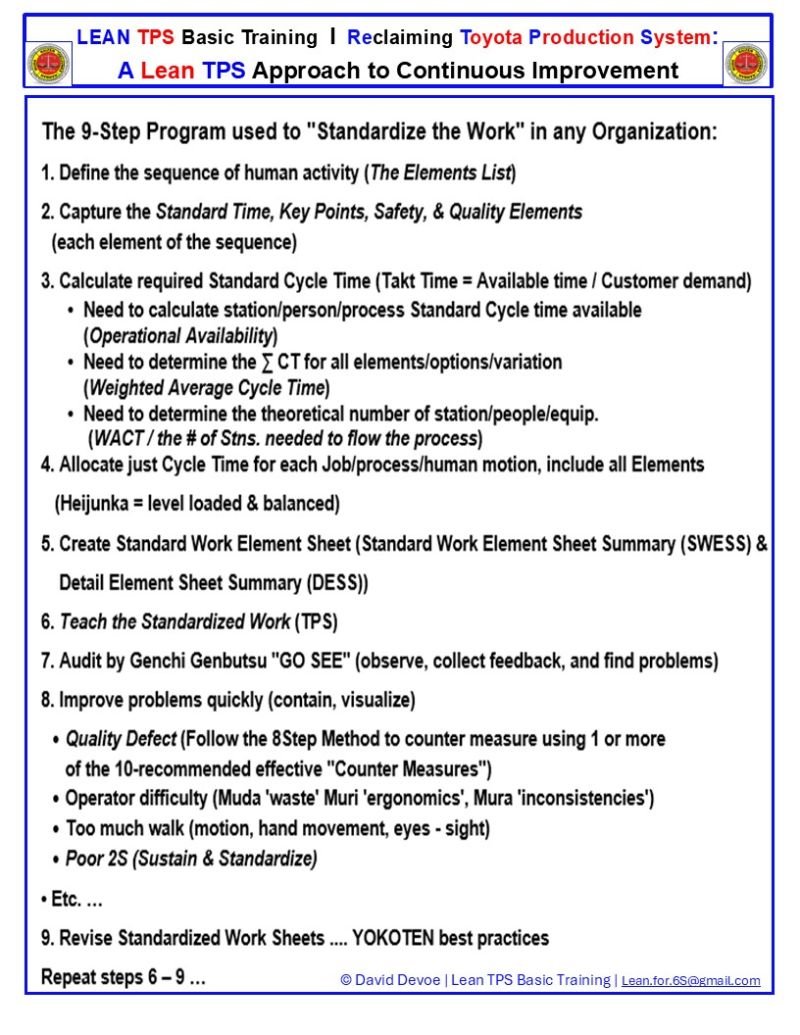
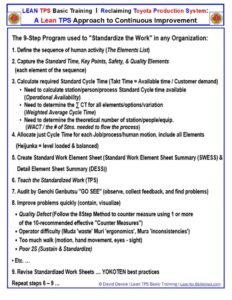
Lean TPS 9-Step Method visual showing how Toyota standardizes work through observation, measurement, teaching, auditing, and improvement to build stability and continuous flow.
The Lean TPS 9-Step Method visual summarizes how Standardized Work is created, taught, audited, and improved. It connects leadership, training, and flow into one structured method for continuous improvement.
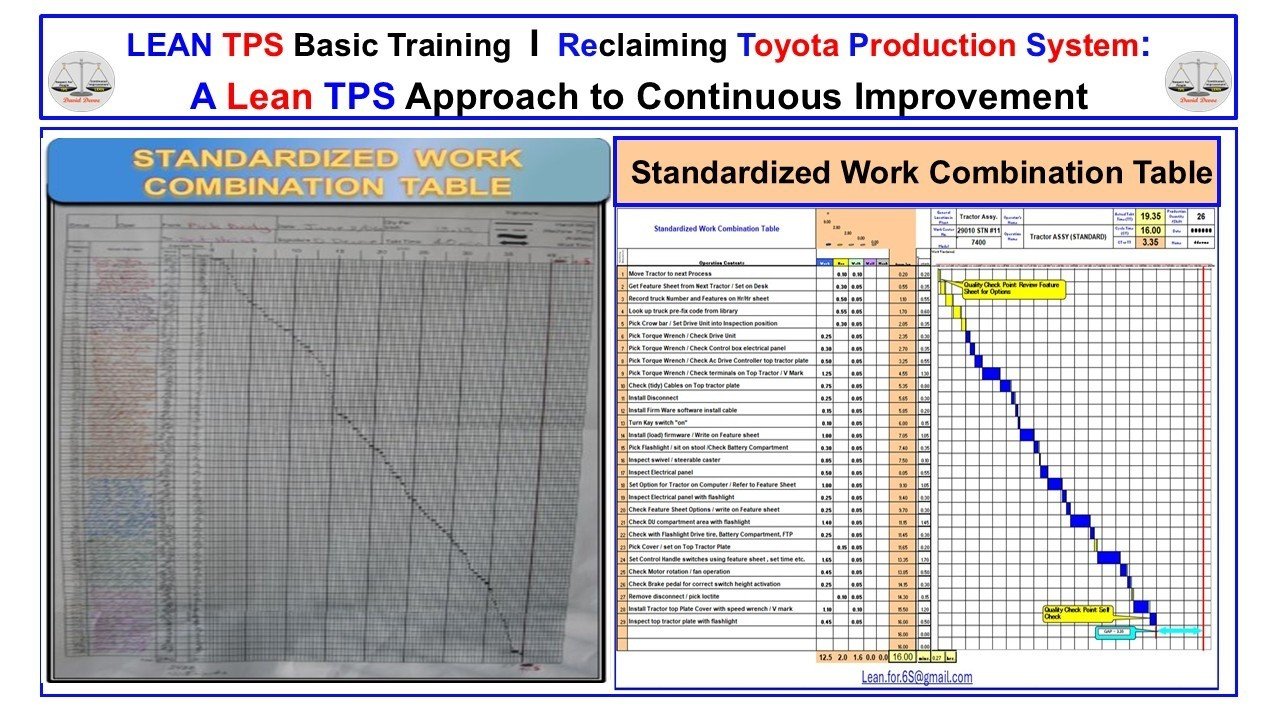
Standardized Work Combination Table showing operator time, sequence, and flow balance in Lean TPS.
The Standardized Work Combination Table (SWCT) is the visual foundation of Lean TPS. It reveals how people, machines, and time interact in sequence, exposing waste and creating flow. Used correctly, it stabilizes processes, supports Kaizen, and connects leadership to real work.
Visual diagram of Lean TPS learning levels showing how participation, simulation, teaching, and action-based learning build capability through Jishuken.
Lean TPS learning begins with structure and ends with capability. This article shows how Jishuken transforms training from awareness to action through self-motivated study and leadership participation.
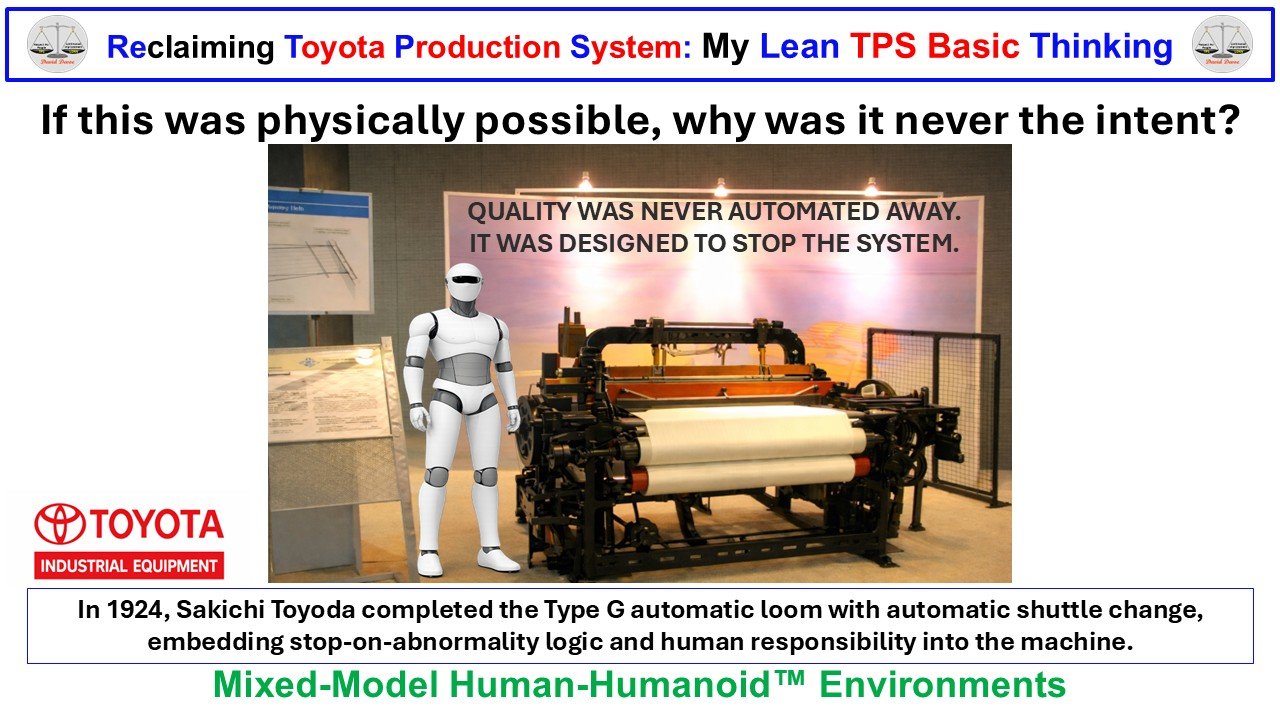
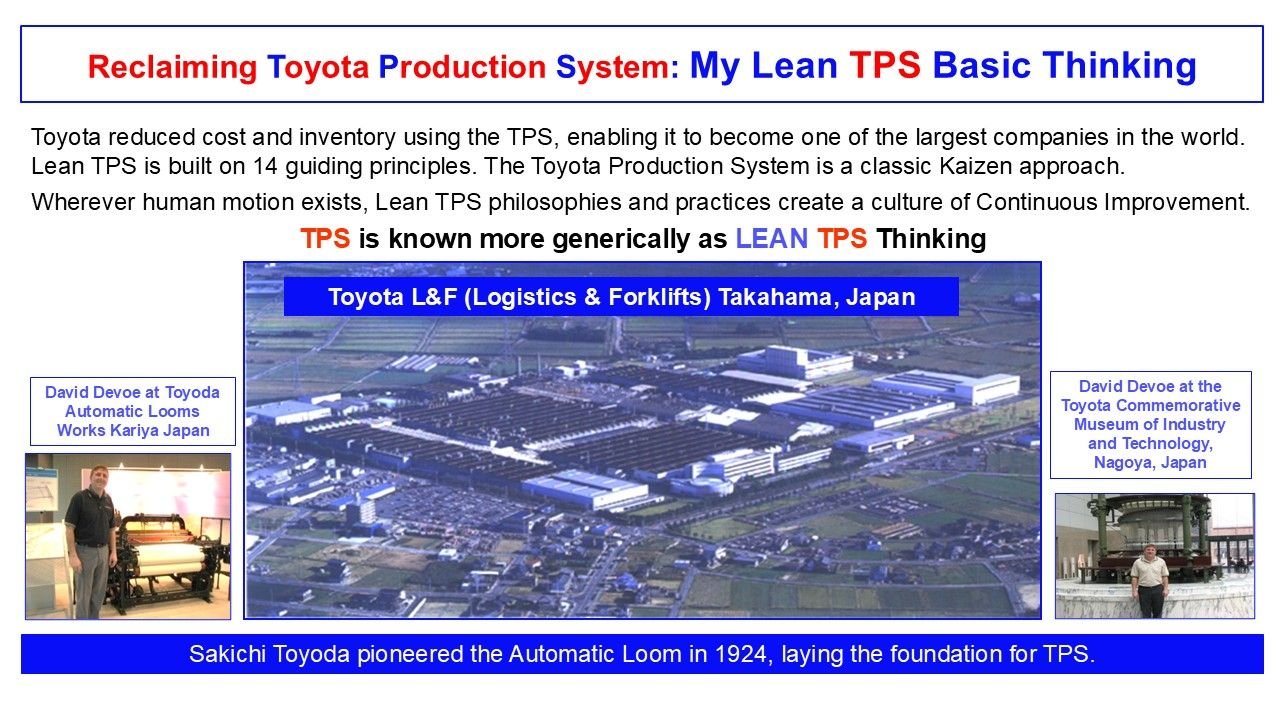
David Devoe at Toyota L&F Takahama, Japan, and Toyoda Automatic Loom Works, illustrating the origins and living practice of Lean TPS Basic Thinking.
At Toyota L&F in Takahama, Japan, Lean TPS Basic Thinking was not taught in classrooms but practiced daily at the Gemba. This article explains how Standardized Work, Jishuken, and leadership accountability create the foundation for continuous improvement.
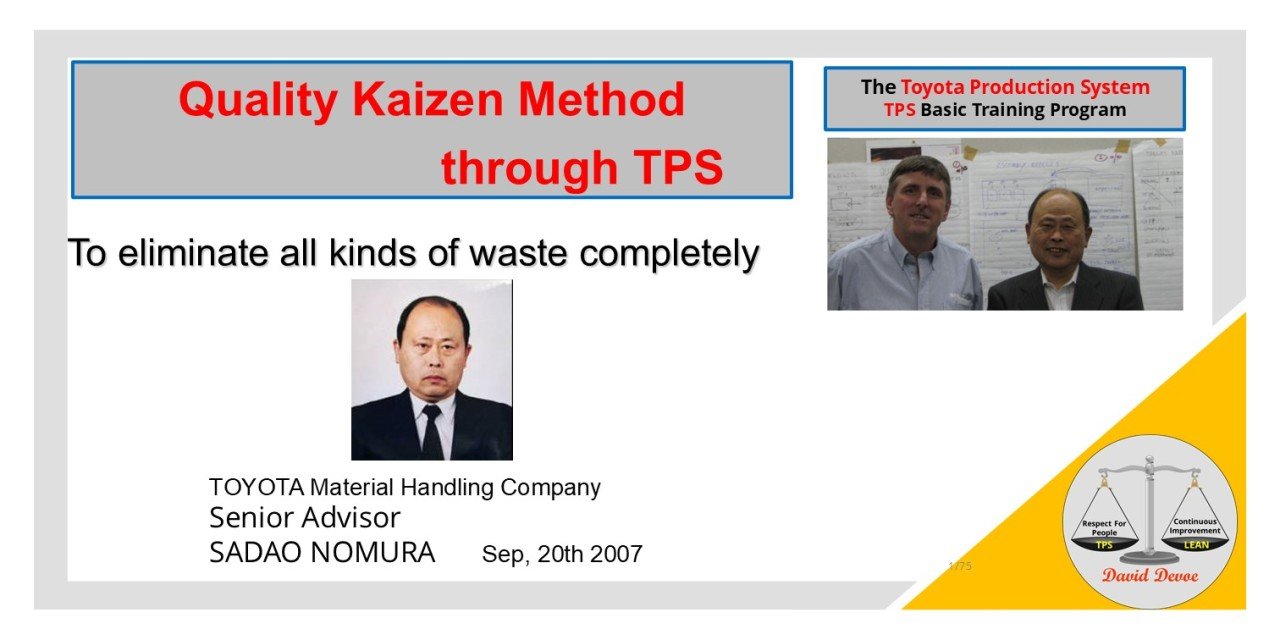
David Devoe and Mr. Sadao “Sam” Nomura at a Toyota Material Handling Jishuken event, representing the transfer of Dantotsu Quality leadership and Toyota Production System wisdom across generations.
Mr. Sadao “Sam” Nomura’s Dantotsu Quality philosophy defined how Toyota leaders connect process improvement with people development. His teachings remain a living example of how mentorship sustains the Toyota Production System across generations.
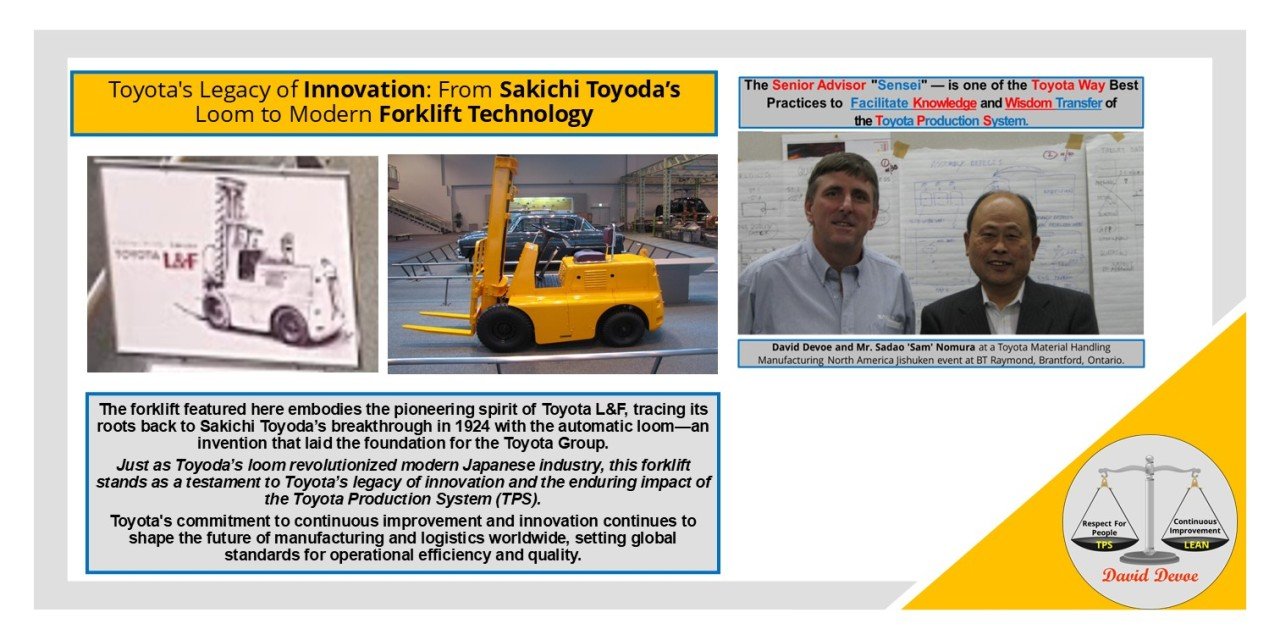
David Devoe with Mr. Sadao “Sam” Nomura at a Jishuken event at BT Raymond, alongside Toyota’s legacy forklift image linking Sakichi Toyoda’s original loom innovation to modern TPS leadership.
Toyota’s legacy of innovation began with Sakichi Toyoda’s loom and continues through Mr. Sadao Nomura’s Dantotsu leadership. This article traces how innovation, mentorship, and radical problem solving define the continuity of the Toyota Production System.
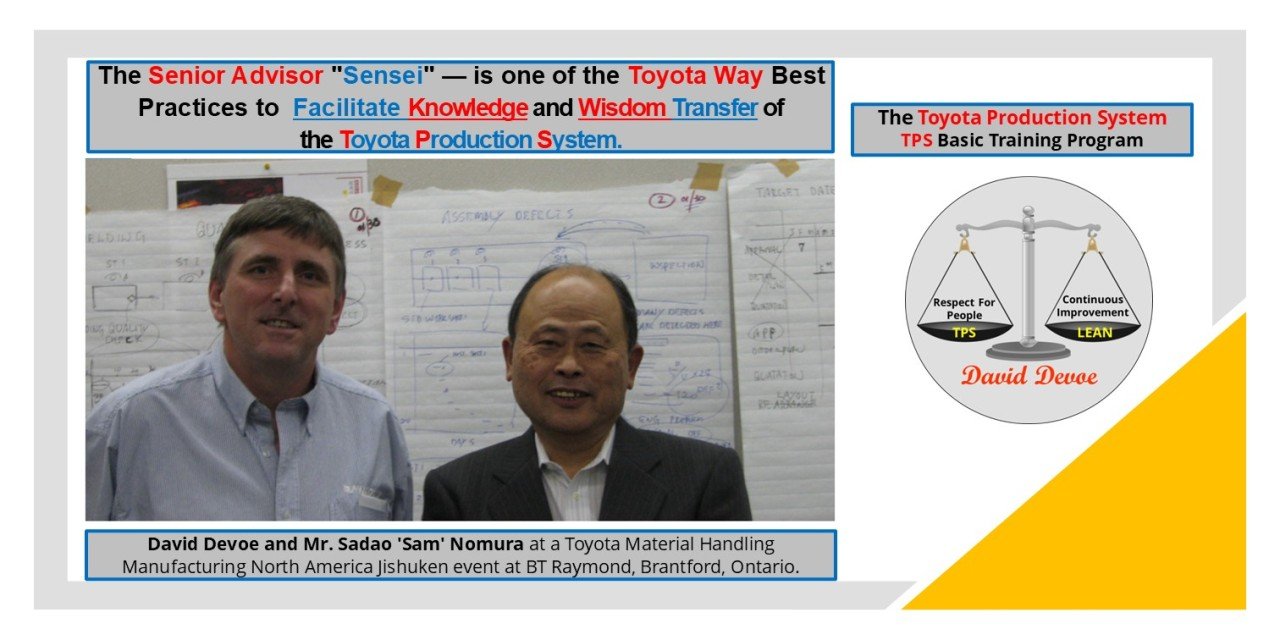
Mr. Sadao “Sam” Nomura with David Devoe during a Jishuken event at BT Raymond, Brantford, symbolizing Toyota’s tradition of mentorship and knowledge transfer in the Toyota Production System.
Mr. Sadao “Sam” Nomura personified the role of Sensei in the Toyota Production System. Through Nomura-Grams and direct mentorship, he taught that true TPS depends on knowledge transfer, structured learning, and respect for people.
David Devoe with Toyota leaders and training teams during Lean TPS Basic Training, representing lessons from Toyota Production System history and modern application.

A 20-Category Assessment Framework for Building a Thinking People System Introduction to the Lean TPS Assessment The Lean TPS Assessment is designed as a practical tool to help organizations measure their progress in applying Lean and Toyota Production System philosophies, practices, and methods. It is not a simple scorecard. It

Standardized Work in Lean TPS provides the foundation for consistency, quality, and continuous improvement. It defines the best known method, enabling leaders to see deviation, support problem solving, and sustain Kaizen. Through clear structure, it builds the discipline that transforms individual effort into team-based operational excellence.
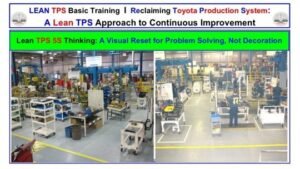
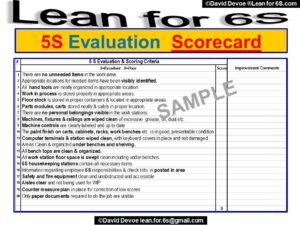
Lean TPS 5S Thinking is not housekeeping. It is a disciplined system that builds structure, visual control, and ownership at every level. Through 5S, teams learn to see waste, create flow, and sustain improvement. It is the first step that prepares people and processes for Kaizen and Jishuken.

Posts

In-depth writing on Lean TPS practice. These articles explore structured methods, case lessons, and leadership development through Standardized Work, Kaizen, Jishuken, and 5S Thinking.

Visual diagram showing leadership as the keystone connecting people, process, and technology within Lean TPS Thinking.

Leadership in Lean TPS: Harmonizing People, Process, and Technology

Lean TPS leadership is the balance between people, process, and technology. By aligning these three elements, leaders create systems that sustain improvement and respect human capability. Technology supports people, processes remain disciplined, and learning becomes continuous, reflecting the Toyota approach to operational excellence and leadership development.

Read More »
Funnel diagram showing Lean TPS learning stages from reading to participation, illustrating how action learning builds capability through structure and Jishuken.

How We Learn in Lean TPS

Many organizations think training means PowerPoints, lectures, and policies. The way people actually learn is very different. Reading gives little retention. Hearing adds a small amount. Pictures and videos help, but not enough. Real learning happens when people act, simulate, teach, and take ownership at the workplace. This is why

Read More »
Timeline of Jishuken history showing the development of TPS learning from 1970 under Mr. Ohno to its expansion in North America by 2010.

What I Learned from Ohno: The Jishuken Legacy

Jishuken began with Mr. Ohno’s belief that true improvement comes from learning at the Gemba. This timeline shows how Toyota spread that discipline across decades, connecting leadership development with hands-on problem solving.

Read More »
Lean TPS Information and Flow Chart showing the step-by-step process that transformed billing chaos into a controlled system through visual management and standardized work.

How Lean TPS Turns Chaos into Control

By applying Lean TPS system design, a chaotic billing process was transformed into a controlled flow with visibility, ownership, and accountability, recovering over two million dollars in trapped revenue.

Read More »
Standardized Work Audit Template used during Lean TPS Basic Training, showing Toyota’s method for verifying process discipline through fifteen audit questions focused on visibility, accuracy, takt time, and quality.

The Power of Lean TPS Standardized Work: A Toyota Story

The Standardized Work Audit Template is more than a form. It is a framework that makes problems visible and teaches leadership. This post explains how Toyota used fifteen simple questions to connect structure, learning, and respect in the daily work of improvement.

Read More »

Lean TPS Support and Capability Development

Lean TPS support is available for plant teams, regional operations, and leadership development. Support includes structured improvement, capability building, and systems-based problem solving grounded in Toyota methods.

Services include:

Continuous Improvement Facilitation
Structured guidance to stabilize flow, expose abnormalities, and strengthen daily management through Standardized Work.

Jishuken Leadership Development
Hands-on improvement cycles that build capability through participation, observation, and leadership accountability.

Lean TPS 5S Thinking and Workplace Organization
Establishing structure, visual control, and discipline to protect flow and prepare teams for Kaizen.

Standardized Work Design and Audit Support
Developing the best-known method, connecting people to process, and sustaining improvement through leader observation.

Jidoka and Abnormality Management
Making problems visible through Stop–Call–Wait, quality response routines, and structured root cause analysis.

Kaizen Facilitation
Practical improvement activities that eliminate waste, reduce variation, and support continuous flow.