Lean TPS Basic Thinking on Leadership Governance, Standardized Work, and Sustained Transformation
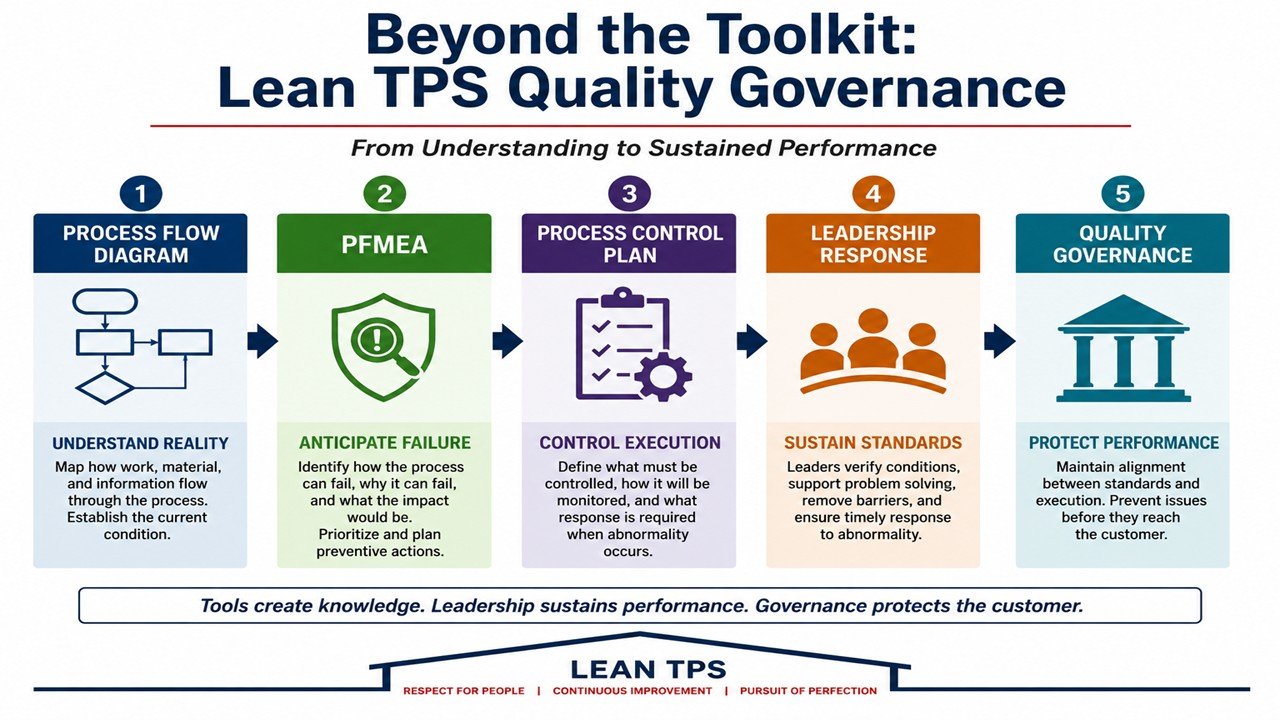
Lean TPS change governance defines how execution is controlled at the point of work. Change is not treated as an initiative. It is established as a governed condition. This determines whether transformation is sustained or lost.
Most organizations approach change as a sequence of activities. Plans are created, timelines are established, communication is increased, and projects are launched. Progress is tracked through milestones and task completion. Activity increases, but execution remains unchanged. Work continues under the same conditions that produced the original problems. Improvement becomes temporary and performance returns to its previous state.
The system has not changed. The conditions that define how work is performed remain uncontrolled. Responsibility is placed on individuals to maintain new behaviors without modifying the environment that governs those behaviors. Variation re-enters the process, standards degrade, and the change effort loses stability.
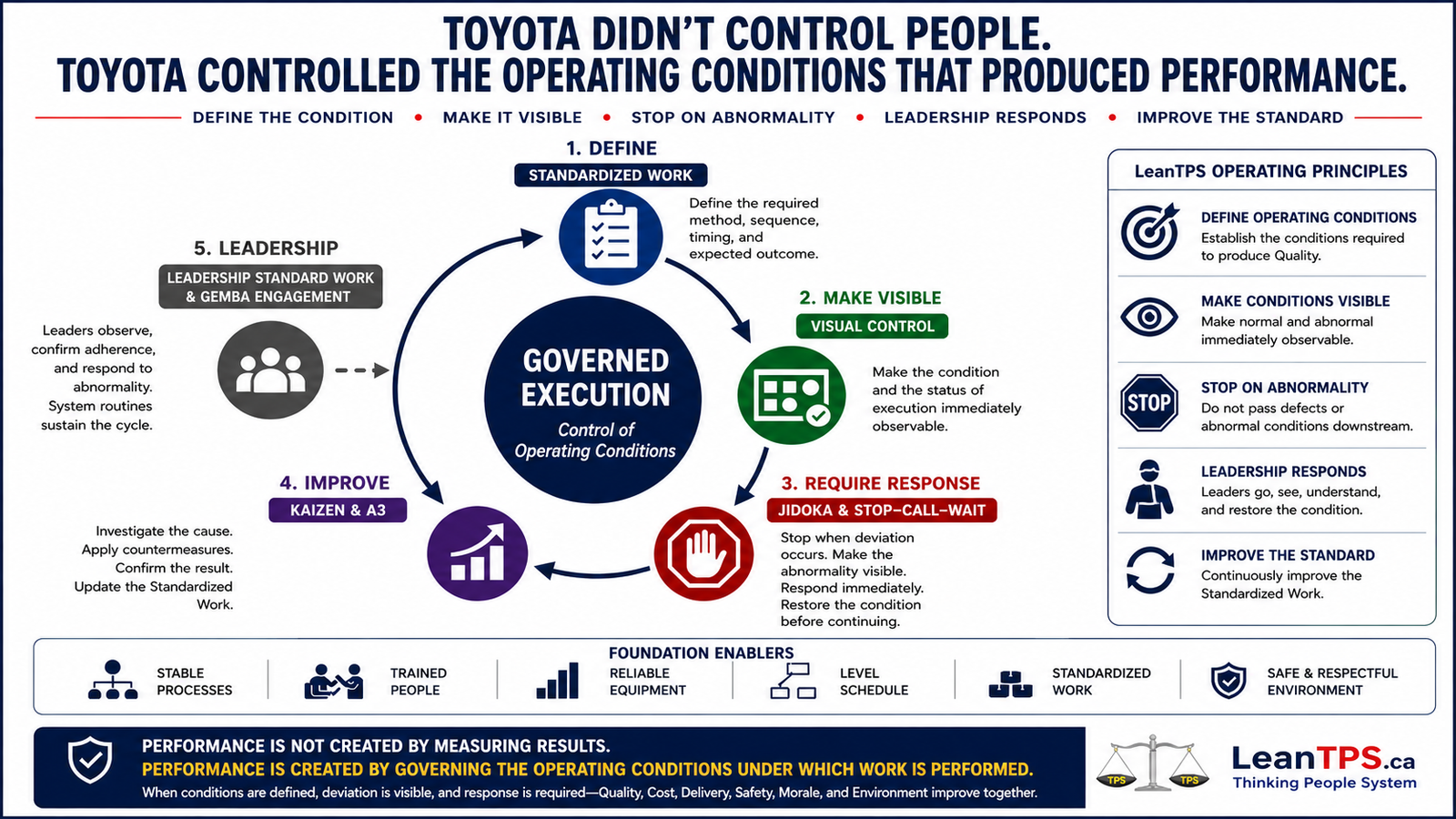
Lean TPS change governance defines change through execution. Conditions required to produce Quality are specified and enforced. The focus is on the condition under which work must be performed. Standardized Work defines method, sequence, timing, and expected outcome. Visual control makes the condition observable. Abnormality exposes deviation. Response is required before work continues. Improvement is incorporated into the condition to prevent recurrence.
Change is sustained through system design. Execution is controlled because deviation cannot continue without response. Stability is established and improvement accumulates without regression.
Leadership operates at the point of execution. Leaders define the condition, confirm that it is visible, respond immediately to abnormality, and ensure countermeasures are implemented and sustained. Leadership is directly connected to execution control.
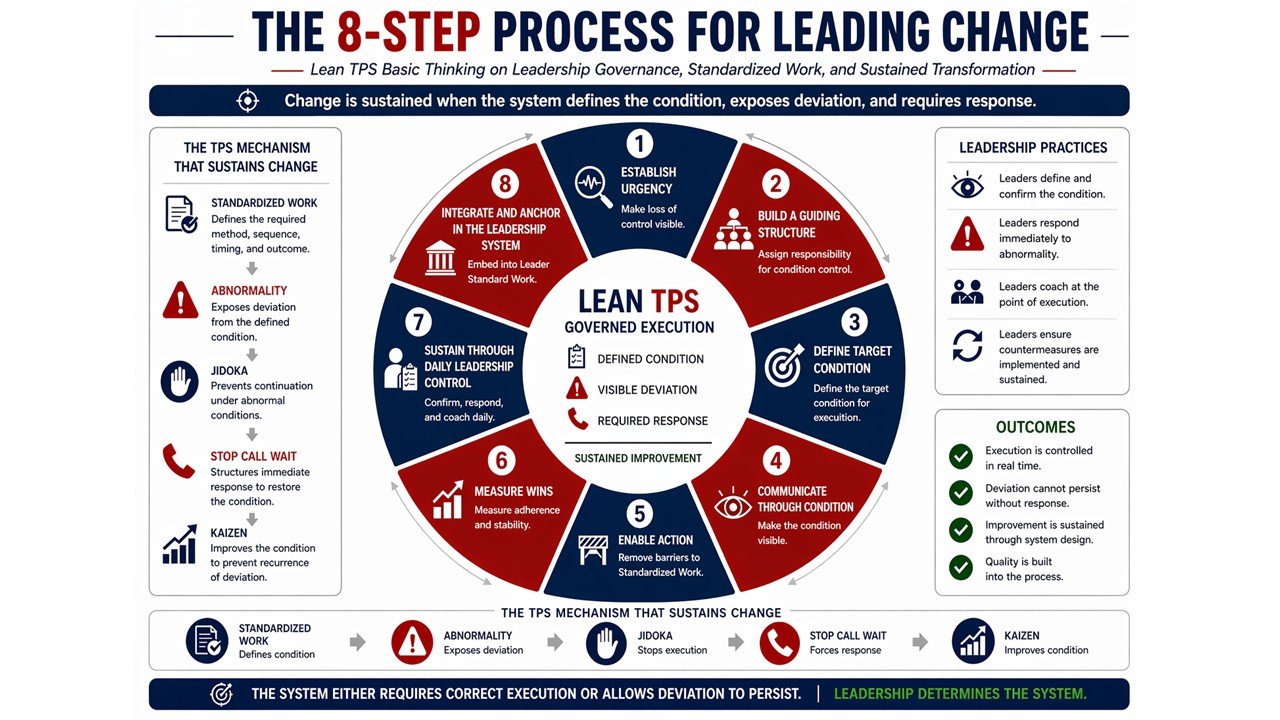
The 8-step process functions within this structure. It is not a model for managing initiatives. It establishes, maintains, and improves the conditions required for execution. Each step defines a requirement for leadership behavior that embeds change into the system.
Applied as activity, the process produces engagement without control. Applied as governance, it defines how work is performed, how deviation is managed, and how improvement is sustained.
Change is achieved when the system consistently maintains the conditions required to produce Quality.
1. Establish Urgency as a Defined Condition
Urgency in Lean TPS is not emotional. It is not created through messaging, pressure, or appeals for faster action. Urgency exists when the system cannot maintain the defined requirements for execution.
Most organizations communicate urgency through results. Declining performance, missed targets, and customer complaints are used to drive attention. This approach is reactive. Behavior is influenced after conditions have already deteriorated. Attention increases temporarily, but because conditions are not changed, performance returns to its previous state.
Urgency is defined by control of execution. When the system cannot consistently operate within the conditions required to produce Quality, urgency exists.
Uncontrolled execution defines risk. When Standardized Work is not followed, timing deviates from takt, abnormality is not visible, or response is delayed, the system is operating outside its defined condition. Defects, delays, and instability are expected outcomes under these conditions.
The first requirement is to define the gap between required and actual execution. Standardized Work defines the required condition. The current condition is observed at the point of execution. The difference between these states is the level of control.
The gap must be explicit and observable. Sequence, timing, method adherence, and outcome are evaluated against the defined standard. Deviation is observed as abnormality.
Data supports observation only when it is tied directly to execution. Output metrics without condition linkage do not establish urgency. Measures must reflect adherence to Standardized Work and Quality, including sequence adherence, cycle time variation relative to takt, frequency of abnormality, response time to deviation, and recurrence.
Inability to maintain the defined condition requires action. Leaders make the condition visible, define the gap, and anchor understanding in execution. Urgency is established through exposure of the system’s inability to maintain control.
2. Build a Guiding Structure, Not Just a Coalition
Sustainable change in Lean TPS is not led by a coalition. It is led through a defined governance structure. A coalition relies on alignment and influence. A governance structure defines responsibility, authority, and required response at the point of execution.
Many organizations form guiding coalitions to support change initiatives. Leaders and influencers coordinate activity, communicate direction, and remove barriers. Momentum can increase, but execution remains uncontrolled. Responsibility is distributed without ownership of conditions. Authority is based on position rather than obligation to act. Response to abnormality becomes inconsistent and control is not sustained.
Lean TPS establishes a guiding structure grounded in execution control. Roles are defined by responsibility for maintaining the condition required to produce Quality. Each role has a clear obligation to respond when that condition is not met.
Leadership responsibility is specific to condition maintenance. Leaders ensure that Standardized Work is defined, visible, and followed. When deviation occurs, they respond immediately to contain the condition, restore the defined state, and ensure the cause is addressed. This responsibility is direct and cannot be deferred. Responsibility is direct and cannot be deferred.
Authority is defined by responsibility for abnormality. The role responsible for a process is responsible for responding when that process deviates from its defined condition. Authority is not derived from hierarchy. It is derived from the obligation to act when abnormality occurs. Response is immediate and aligned with the point of execution.
Cross-functional alignment is established through flow and execution. Each function maintains conditions that support the overall process. Abnormality in one area affects upstream and downstream operations. Response is coordinated through the flow of work rather than organizational boundaries.
Abnormality drives interaction. When deviation occurs, the required roles engage immediately to restore the condition. Escalation through layers and reliance on informal communication are replaced by defined response.
The guiding structure operates daily. Roles, expectations, and responses are applied consistently. It is not temporary. It becomes the operating framework for managing the system.
Roles tied to response embed leadership in execution. Authority tied to abnormality creates consistent action. Alignment through flow creates inherent coordination.
Change is sustained through a system where responsibility, authority, and response are defined and enforced at the point of execution.
3. Define the Change as a Target Condition
In Lean TPS, change is defined as a target condition for execution. The objective is to establish the exact condition the system must achieve and maintain.
Most organizations define change through vision language. Direction is expressed in goals, outcomes, or cultural aspirations. Alignment may increase, but execution is not specified. The future state remains open to interpretation, execution varies, and improvement cannot be sustained.
Lean TPS defines the target condition through Standardized Work. The question is how work must be performed at the point of execution.
The target condition is defined by method, sequence, timing, and expected outcome. Method, sequence, timing, and expected outcome define how work must be performed to produce Quality. The condition is specific and observable, allowing direct comparison between actual execution and the defined requirement.
The target condition is measured at the level of execution. It is not expressed as output metrics alone. It is expressed through adherence to Standardized Work, cycle time stability relative to takt, visibility of abnormality, and consistency of response. These indicate whether the system can maintain control.
Takt, flow, and Quality are integrated within the target condition. Takt defines the pace of demand. Flow defines movement through the system. Quality defines the condition of the outcome. Execution is synchronized with demand, stable across processes, and capable of producing consistent results.
The condition is either achieved or not achieved. Assessment is based on execution, not perception.
Leadership defines this condition and ensures it is understood at all levels. The target condition becomes the reference for observation, measurement, and response. Without this definition, abnormality cannot be identified and control cannot be established.
Change becomes structured and repeatable. Deviation is visible. Response is directed toward restoring the condition. Improvement is validated by the system’s ability to maintain the condition.
Change is the defined state the system must achieve and sustain through controlled execution.
4. Communicate Through Condition, Not Messaging
In Lean TPS, communication is defined through the condition of the work. The system communicates through what is visible and how execution is performed, not through explanation or messaging.
Most organizations rely on communication to align people with change. Vision statements, presentations, meetings, and reports are used to convey direction. This assumes understanding leads to correct execution. Interpretation varies, execution becomes inconsistent, and the required condition is not maintained at the point of work.
Lean TPS communicates through condition. Visual management makes the defined condition visible and exposes deviation immediately. The state of the work shows whether execution is within the required condition.
Clarity is established at the point of execution. Standardized Work is displayed and accessible. Work areas define location and boundaries. Tools and materials have fixed positions. Indicators distinguish correct from incorrect conditions. Real-time signals identify abnormality. The condition of execution is visible at all times.
Communication is embedded in the system. Operators do not interpret instructions. The required condition is visible. Leaders do not request status. The condition is observed directly.
Leadership reinforces communication through observation and response. Execution is confirmed against the defined condition. Deviation is addressed immediately. This establishes expectation through action.
Learning occurs through execution. Operators perform work under defined conditions and respond to abnormality. Leaders coach at the point of execution using actual conditions. Alignment is created through experience rather than explanation.
Reliance on interpretation is removed. Language introduces variation. Condition defines what is correct and what is not.
Communication through condition creates consistent execution and enables immediate response. Deviation is visible and requires no explanation.
Alignment is maintained continuously because the system communicates in real time through how work is performed. Communication and control operate together at the point of execution.
5. Enable Action by Removing System Barriers
In Lean TPS, action is enabled by removing barriers that prevent execution within the defined condition. The objective is to ensure the system allows correct execution to occur consistently.
Most organizations attempt to enable action by granting authority, encouraging initiative, and promoting ownership. Engagement may increase, but the causes that prevent stable execution remain. When conditions are weak, individuals compensate. Methods are adjusted, standards are bypassed, and workarounds are created to maintain output. Variation increases and control is lost.
Action is defined as the ability to perform work according to Standardized Work without deviation. When the defined method cannot be executed, the system is not enabling action. It is forcing adaptation.
Barriers are identified at the point of execution. Observable conditions include missing or poorly positioned tools, inconsistent material supply, unclear or outdated standards, equipment instability, and interruptions to flow. Each barrier prevents execution from matching the defined method.
These barriers are structural and result from system design, not individual behavior. Correction at the individual level does not resolve the condition. The cause must be removed within the system.
Removing structural barriers restores the ability to execute within the defined condition. Changes may be required in layout, material flow, equipment reliability, standard clarity, or work sequencing. The objective is to eliminate the need for adjustment so the defined method becomes the only way work can proceed.
Capability must exist at the point of abnormality. Operators must be able to stop, call, and wait without hesitation. Leaders must respond immediately to restore the condition. Abnormality is contained before it propagates.
The system must support correct action and ensure response occurs in real time. Training, access to support, and defined responsibility are required.
Action is embedded in the system and becomes repeatable. It does not depend on initiative.
Enablement is achieved through system design. Action is the ability to execute within the defined condition.
6. Create Measurable Wins Through Condition Stability
In Lean TPS, short-term wins are defined by the system’s ability to maintain stable execution under the required condition. A win is evidence that control has been established.
Most organizations measure success through results such as increased throughput, reduced cost, or improved delivery. These outcomes do not confirm control. Results can improve through effort, prioritization, or workarounds while underlying conditions remain unstable.
A measurable win is defined by execution matching the required condition. The focus is not on results. The focus is whether execution consistently aligns with Standardized Work.
Measurement begins with adherence to Standardized Work. Method, sequence, and timing aligned to takt must be maintained. Deviation indicates loss of control. Consistent adherence demonstrates the system can operate as defined.
Reduction in abnormality is a second indicator. As conditions stabilize, the frequency and severity of deviation decrease. Abnormality becomes less frequent and more controlled, reflecting improved ability to maintain the defined condition.
Stability must be visible at the point of execution. Visual control allows immediate confirmation of whether work is within defined limits. Without visibility, stability cannot be verified and control cannot be sustained.
A short-term win is proof that the system can maintain execution within the defined condition.
Consistent condition stability produces improved results over time. Results are a consequence, not the measure. The primary measure is the system’s ability to sustain the condition required to produce Quality.
Wins confirm that execution is controlled and improvement is being sustained.
7. Sustain Through Daily Leadership Control
Sustainment in Lean TPS is achieved through daily leadership control. Conditions are confirmed, abnormality is addressed immediately, and execution is governed at the point of work.
Most organizations approach sustainment by encouraging consistency. Leaders reinforce behaviors and maintain attention on initiatives. This degrades over time because it depends on discipline without structure. As attention shifts, standards weaken, abnormality is tolerated, and the system returns to its previous state.
Lean TPS sustains through Leader Standard Work. Sustainment is defined as repeated confirmation of conditions and consistent response to deviation.
Daily confirmation is required. Leaders observe execution at the point of work and verify adherence to Standardized Work. Observation focuses on method, sequence, timing, and outcome.
Abnormality requires immediate response. Leaders act at the moment deviation occurs. The process is stopped if required, support is engaged, and the condition is restored before execution continues. Delayed response allows variation to accumulate and breaks control.
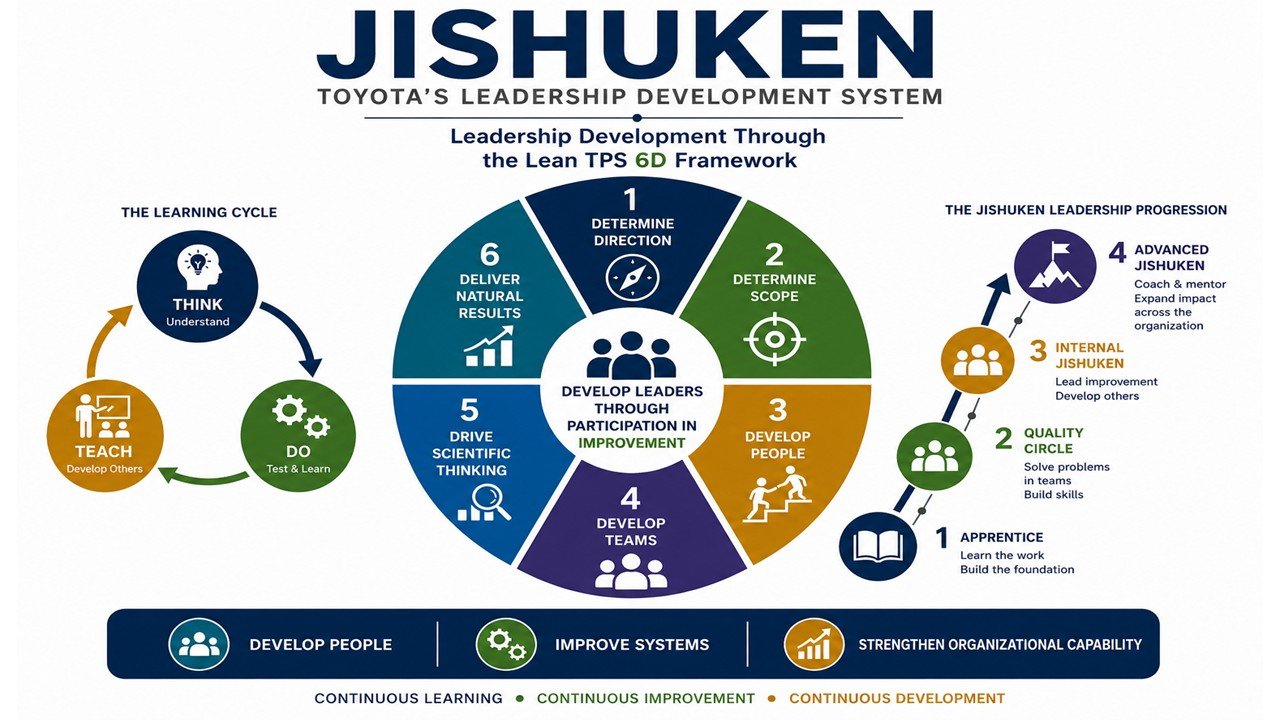
Coaching occurs at the point of execution. Development is tied to real-time work. Leaders guide correct execution and response to abnormality using actual conditions. Learning is directly connected to the process.
Sustainment does not depend on motivation. It depends on whether the system requires and reinforces correct behavior.
Leader Standard Work defines when and how leaders confirm conditions, respond to abnormality, and coach execution. This establishes a consistent pattern that maintains control.
Sustainment is the result of repeated control. Conditions are confirmed daily. Abnormality is addressed immediately. Response reinforces the system.
Repeated control stabilizes the process and prevents regression. Standards are maintained through active confirmation. Improvement is sustained because deviation cannot persist.
8. Integrate Into System-Level Standardization
In Lean TPS, culture is the result of system design. Behavior follows the conditions under which work is performed. When conditions are defined and enforced, execution is consistent. When they are not, variation emerges regardless of intent.
Most organizations attempt to sustain change through values. Expectations are communicated and reinforced. This relies on interpretation and personal commitment. Consistency is lost because the system does not require the behavior it promotes.
Lean TPS establishes culture through Standardized Work. Required behavior is embedded in method, sequence, timing, and expected outcome. Execution is defined at the point of work. Behavior is required, not chosen.
Policies, structure, and routines must align with the defined condition. Organizational systems must support the required method of execution. If policies permit deviation, if structure creates barriers, or if routines fail to reinforce the condition, change is not sustained. Alignment ensures all elements support the same operating condition.
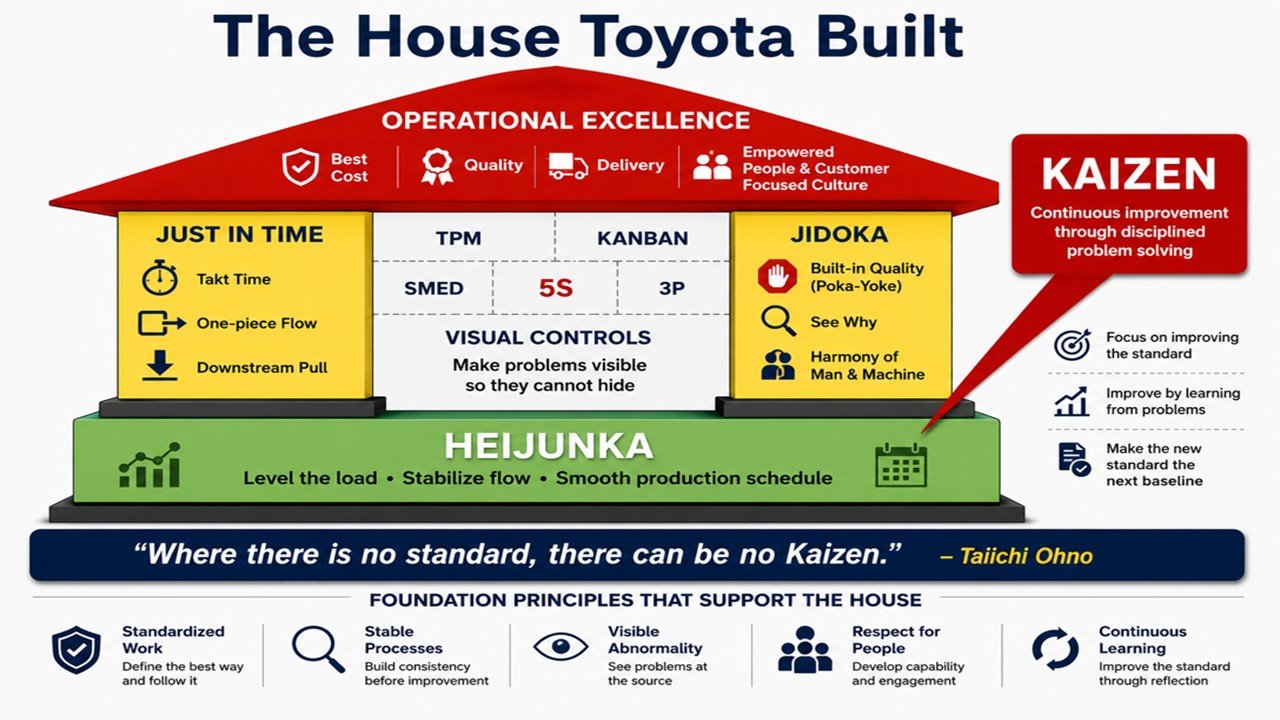
Deviation must be visible and cannot be absorbed. Visual control exposes abnormality. Jidoka enforces interruption. Stop Call Wait ensures response occurs before work continues. Deviation cannot persist without action.
Execution is constrained to the defined condition. Work does not proceed outside those limits. Constraint establishes control and stability and ensures the system operates as designed.
Change is sustained through these constraints. Required execution produces consistent behavior. Consistency becomes the shared expectation across the system.
Culture is the result of defined conditions, visible deviation, and required response.
When change is embedded in Standardized Work, aligned with organizational systems, and enforced through visible control, sustainment is built into the system.
Leadership System Integration
The 8-Step Process for Leading Change functions as a single system for execution control. Each step defines a requirement. Control exists only when these requirements operate together.
Most approaches treat steps as stages. Progress is measured by completion and movement through a sequence. Activity increases, but execution remains uncontrolled because the steps are not integrated into how work is performed.
Lean TPS integrates the steps through a defined control structure. Standardized Work establishes the required condition for execution. Method, sequence, timing, and expected outcome define how work must be performed.
Abnormality exposes deviation from that condition. Execution that does not match Standardized Work is made visible.
Jidoka enforces interruption. Execution does not continue under a broken condition.
Stop Call Wait structures response. The condition is contained, support is engaged, and execution resumes only after restoration.
Kaizen improves the condition. Causes are addressed and the defined method is updated to prevent recurrence.
These elements operate as a closed loop. The condition is defined, deviation is exposed, execution is stopped, response is structured, and the condition is improved.
Leadership operates within this loop. Leaders define the condition, confirm execution, respond to abnormality, and ensure improvement is sustained. Leadership behavior is integrated into execution control.
Change is embedded in how work is performed. The steps reinforce each other, creating a stable and repeatable system.
Execution is controlled in real time. Deviation cannot persist. Improvement is continuously integrated into the operating condition.
Executive Application Framework
The 8-Step Process for Leading Change must be applied at the level of execution. Understanding the steps is insufficient. Leaders apply them as operating requirements that define how the system functions daily.
Most executive teams manage change through plans, reviews, and reporting. Direction is set, progress is monitored, and results are evaluated. Oversight is maintained, but execution remains uncontrolled. Without defined conditions, visible deviation, and required response, improvement depends on effort rather than system capability.
Lean TPS converts change into execution through four leadership requirements: defining purpose through condition, aligning through responsibility for abnormality, measuring through visual control, and sustaining through leadership behavior.
Purpose is defined through condition. Leaders specify how work must be performed. Standardized Work defines method, sequence, timing, and expected outcome. The operating condition that produces Quality is established at the point of execution.
Alignment is achieved through responsibility for abnormality. Each role maintains the defined condition. When deviation occurs, the responsible role responds immediately. Alignment is created through action at the point of execution.
Measurement is conducted through visual control. The condition of execution is visible at all times. Adherence to Standardized Work, visibility of abnormality, and response time to deviation provide direct evidence of control. Metrics support observation and do not replace it.
Sustainment is achieved through leadership behavior. Leaders confirm conditions daily, respond immediately to abnormality, and coach at the point of execution. Consistent response maintains stability and reinforces the system.
Leadership shifts from oversight to direct engagement with execution. Control is established through defined conditions, visible deviation, and required response.
Change is embedded in how the system operates. Improvement is stable, repeatable, and sustained.
Closing Position
Most change models manage activity. Steps are defined, actions are assigned, and progress is tracked through completion. Activity increases, but control is not established. Execution continues under variable conditions and improvement depends on effort. When attention shifts, performance returns to its previous state because the system has not changed.
Lean TPS governs execution.
Change is established through defined conditions, visible deviation, and required response at the point of work. Standardized Work defines how execution must occur. Abnormality exposes deviation. Response is required before work continues.
Execution does not depend on interpretation or motivation. The system either requires correct execution or allows deviation to persist.
Change is sustained when the system defines the condition, exposes deviation, and requires response.