Example of Kaizen: Visibility, Access, and Small Improvements

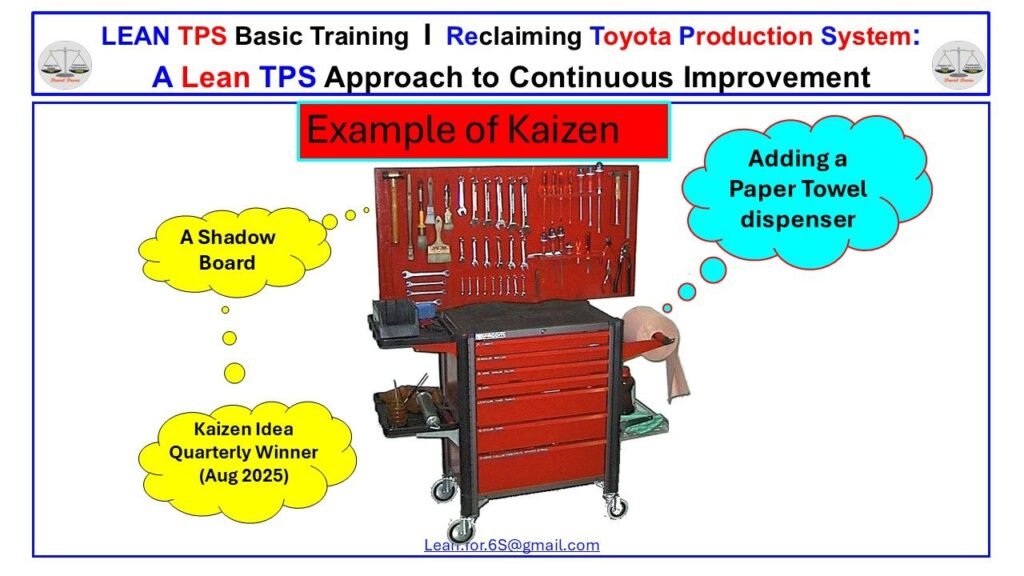
Kaizen workstation improvement showing a red tool cabinet with a shadow board and paper towel dispenser used in Lean TPS training.
Kaizen in Lean TPS is not about large projects. It is the daily improvement that removes waste and supports flow. This example shows how a simple shadow board and paper towel dispenser created better visibility, reduced motion, and improved stability in daily work.

A Lean TPS Approach to Continuous Improvement

Kaizen is not always a breakthrough idea. In the Toyota Production System, most improvements are small and practical. They remove waste, simplify daily work, and strengthen stability. These steady, structured improvements are what transform culture over time.

The example shown here demonstrates how visibility and access improve flow in everyday operations.
A simple workstation was redesigned using two small Kaizen ideas that made a lasting impact.


1. A Shadow Board for Tools

When tools are stored in drawers, time is lost opening, searching, and closing them. This breaks rhythm, interrupts focus, and hides problems.
By mounting the tools on a shadow board, each item became visible at a glance. Every tool had a defined location, and missing items could be seen immediately.
This small change reduced motion waste, improved availability, and made workplace organization self-sustaining. The shadow board became the standard.


2. Adding a Paper Towel Dispenser

Another small but effective improvement was adding a paper towel dispenser directly to the workstation. Cleanup was faster, motion was reduced, and interruptions were eliminated.
The team that proposed this idea won the Kaizen Idea of the Quarter because it addressed real waste in daily work. It did not require investment or approval meetings. It required observation and structured problem solving.


Why It Matters

This example illustrates what Lean TPS means by “continuous improvement.”
Kaizen is not a separate program or event. It is the daily act of identifying and removing waste to support flow.
At Toyota, Kaizen sits at the foundation of the Lean TPS house alongside Standardized Work and 5S Thinking. Together they create the base that supports the pillars of Just-in-Time and Jidoka. Without this base, the roof of quality, cost, and delivery cannot hold.

Each small improvement builds capability.
A shadow board is not just organization. It is part of takt time and visual control.
A paper towel dispenser is not just convenience. It eliminates motion waste and supports Standardized Work.
Each idea, when done with structure and confirmation, strengthens the system.


Leadership Reflection

True Kaizen is continuous improvement by design.
It is not a set of projects or isolated events. It is the daily learning that develops people and makes improvement sustainable.
The leaders who practice Kaizen Thinking connect every change back to system stability and flow. That connection is what makes Lean TPS different from ordinary efficiency programs.
Kaizen strengthens both the process and the people who improve it.
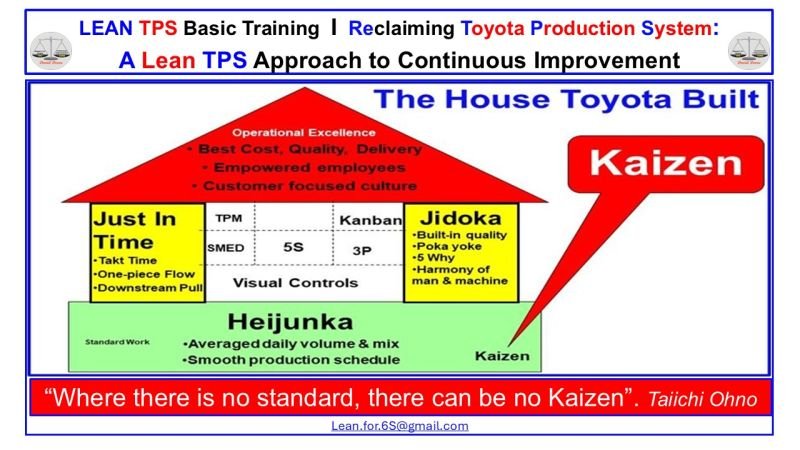
Lean TPS House diagram showing Just In Time, Jidoka, Heijunka, Standardized Work, and Kaizen positioned within the Toyota Production System architecture
This Lean TPS Basic Training visual explains how Kaizen operates within the governed architecture of the Toyota Production System. Just In Time and Jidoka function as structural pillars, Heijunka and Standardized Work provide stability, and Kaizen strengthens the system only when standards and control are in place. The image reinforces
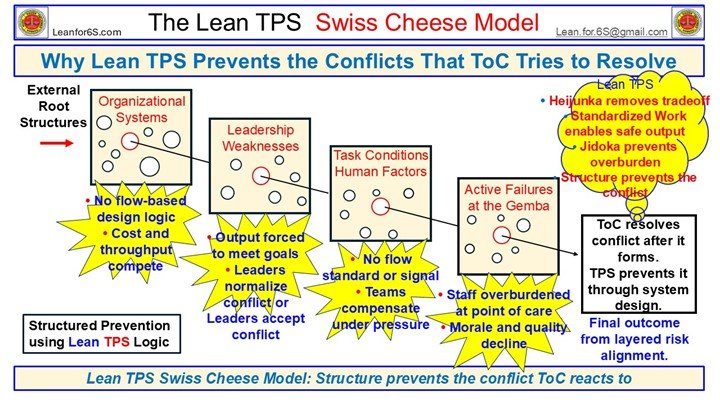
Lean TPS Swiss Cheese Model showing how governance failures propagate from organizational systems to gemba outcomes, and how TPS prevents conflicts that Theory of Constraints resolves downstream.
Theory of Constraints manages conflict after instability forms. Lean TPS prevents conflict through governance of demand, capacity, and Quality before execution begins.
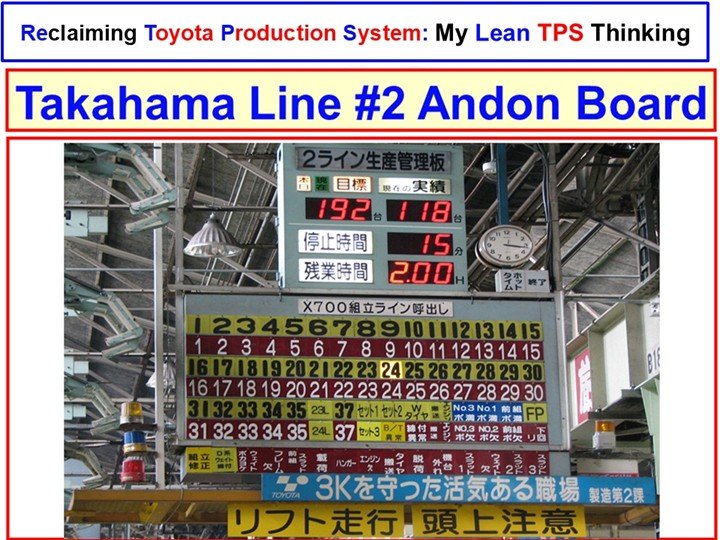
Takahama Line 2 Andon board showing real time production status and Quality control in the Toyota Production System
Dashboards and scorecards increase visibility, but they do not govern work. In Lean TPS, Andon exists to control abnormality in real time by enforcing stop authority, response timing, and leadership obligation to protect Quality.
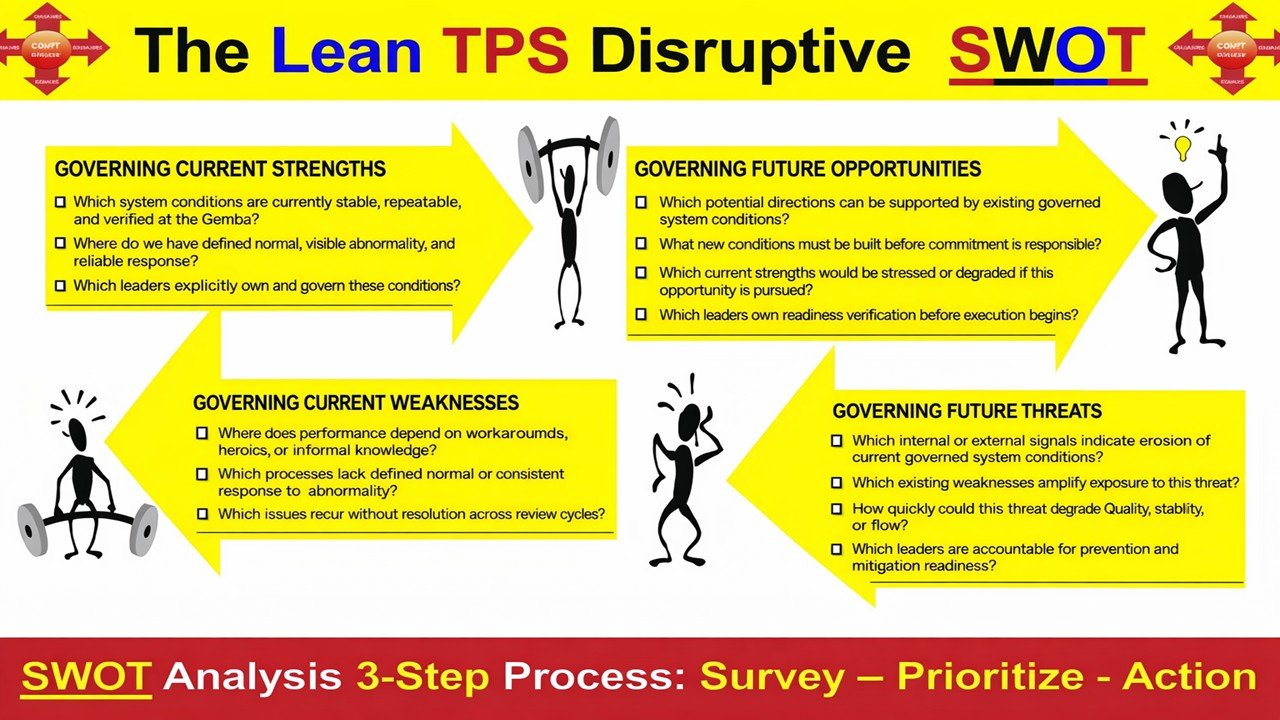
Lean TPS Disruptive SWOT transforms traditional SWOT from a static listing exercise into a governed leadership system. Through Survey, Prioritize, and Action, it aligns strategic direction with Quality, system stability, and explicit leadership obligation within a Lean TPS governance framework.
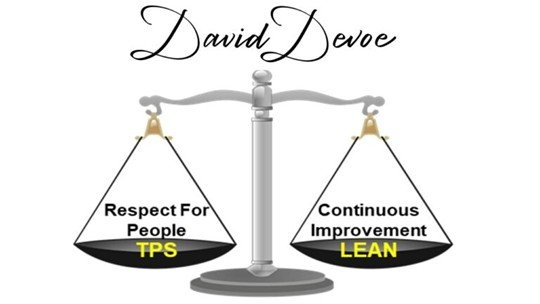
Balance scale showing Respect for People and Continuous Improvement grounded in Quality governance within Lean TPS.
In Lean TPS, Respect for People and Continuous Improvement are not independent goals. Both emerge from Quality governance, where leaders define normal work, make abnormality visible, and respond to protect system stability.
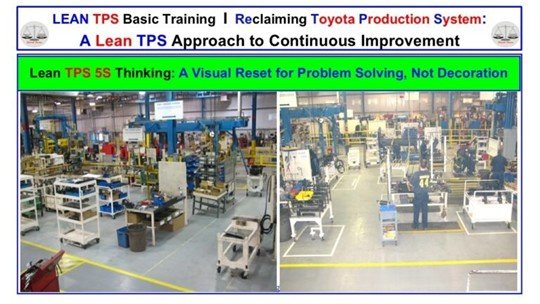
Lean TPS shop floor before and after 5S Thinking showing visual stability that enables problem detection and problem solving
5S Thinking is not about making the workplace look clean or impressive. In Lean TPS, it functions as a visual reset that restores the ability to see normal versus abnormal conditions. When the environment is stabilized, problems surface quickly, Quality risks are exposed earlier, and problem solving becomes possible at