When Toyota begins improvement, it starts with people, not projects. The Toyota Production System (TPS) was never designed as a toolbox or efficiency program. It was designed as a management system to build capability through learning. The foundation of that learning is what I call Lean TPS Basic Thinking.
From Loom to Logistics: The Roots of TPS
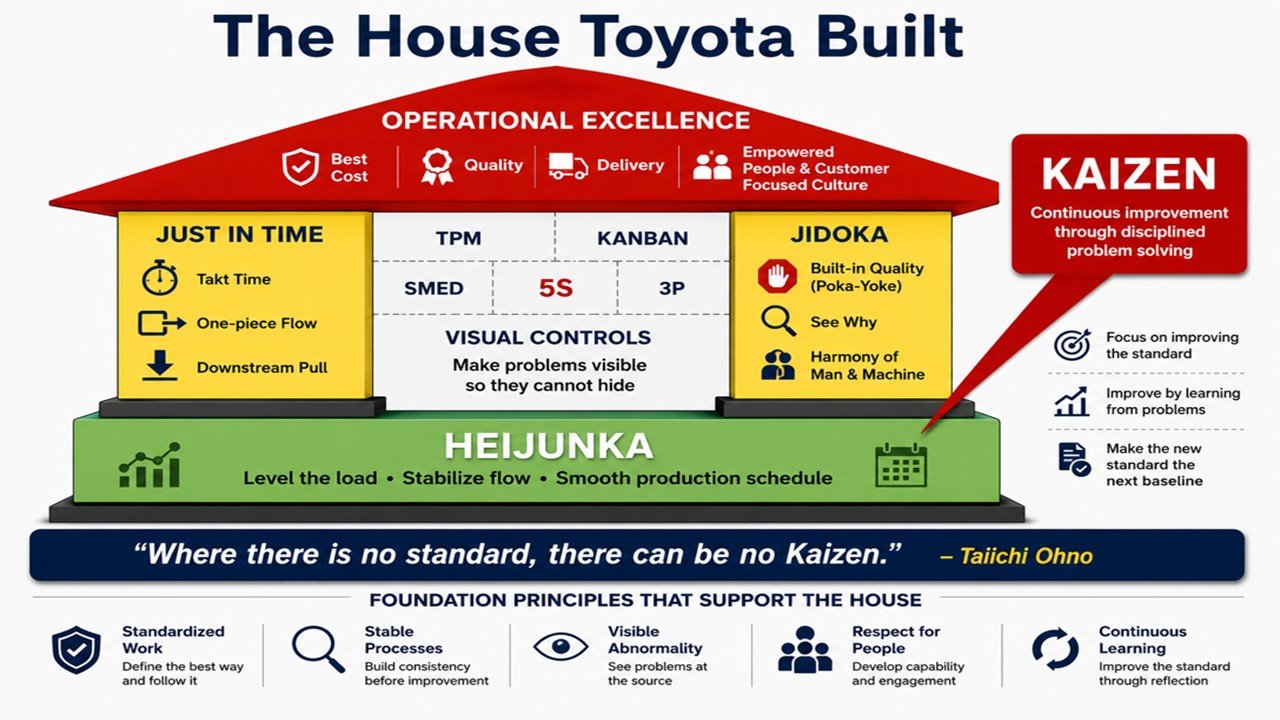
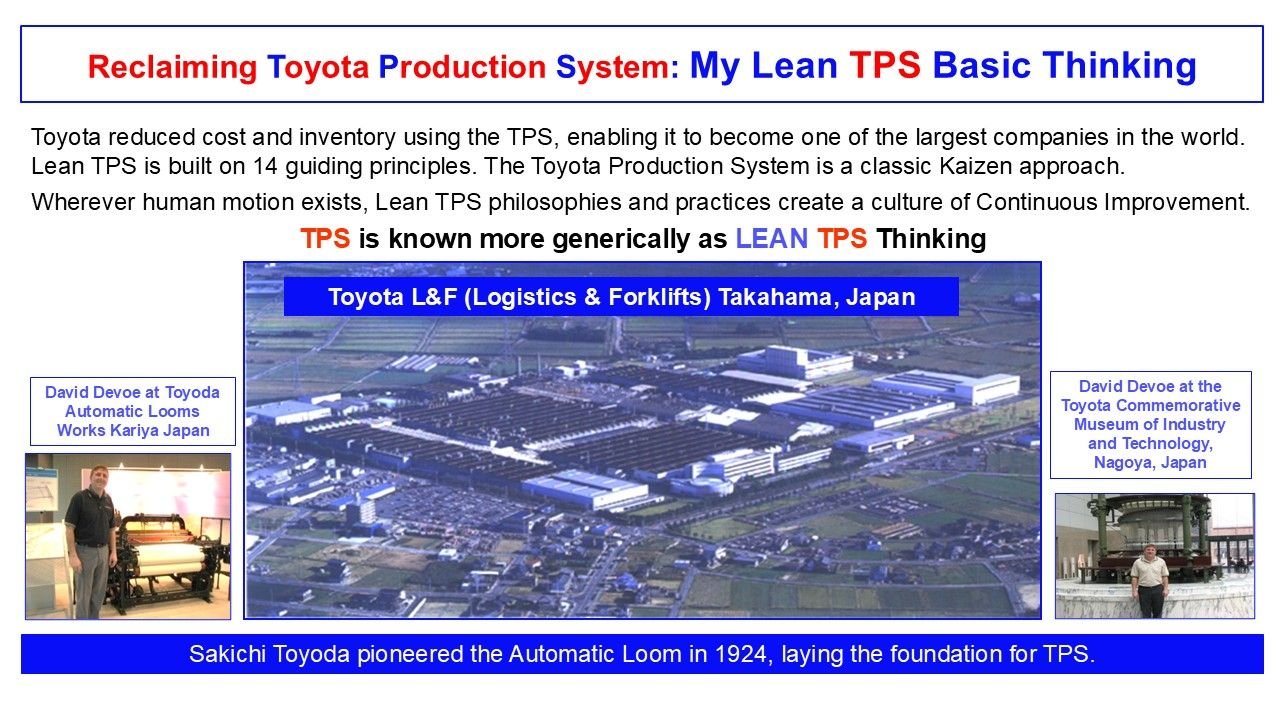
Toyota’s origins trace back to Sakichi Toyoda’s invention of the automatic loom in 1924. The loom represented more than innovation. It was a principle in motion — stop the process when an abnormality occurs, correct the problem, and prevent recurrence. That single principle became Jidoka, one of the two pillars of TPS.
At Toyota L&F (Logistics & Forklifts) in Takahama, Japan, I saw that same principle alive in every department. It was visible in production flow, quality systems, and leadership behavior. Nothing was hidden. Problems were surfaced immediately, and countermeasures were confirmed at the Gemba.
This experience showed me that TPS is not learned in manuals or classrooms. It is learned by doing, reflecting, and improving in real time. Wherever human motion exists, Lean TPS philosophies create a culture of continuous improvement.
My TPS Journey: From Raymond to Toyota L&F
When Toyota acquired BT Raymond, I was a Supervisor working across Weld, Paint, Assembly, and Quality Engineering. These departments became my training ground for understanding variation and flow. Later, I was selected to participate in an intensive Kaizen development program at Toyota L&F in Takahama.
For three months, I trained under Toyota’s TPS sensei — men who had worked directly with the systems developed under Taiichi Ohno. Their teaching was practical and relentless. Every improvement had to be tested at the Gemba and confirmed through data.
What stood out most was how leaders used time and rhythm to develop people. Each day began with reflection, continued with observation, and ended with confirmation. There was no shortcut. The purpose was not to achieve results quickly, but to develop the discipline that made results sustainable.
Training in Action: The Eight-Module TPS Program
When I returned to Canada, I applied what I had learned by developing a Basic TPS training structure. The program was built around eight modules that linked philosophy to daily work:
- 5S Thinking and Workplace Organization
- Standardized Work
- Just in Time (JIT)
- Jidoka (Built-in Quality)
- Kaizen and Continuous Improvement
- Muda, Mura, Muri (The Three Wastes)
- Visual Management and Andon Systems
- Jishuken – Leadership Study and Improvement
The purpose was not to deliver information but to create shared capability. Each module followed a consistent pattern: classroom explanation, Gemba observation, and team application. Training did not end when the slides finished. It continued until leaders demonstrated understanding through action.
Standardized Work as the Foundation
At Toyota, Standardized Work is not paperwork. It is the discipline that allows improvement to occur. The system is built on three elements: takt time, work sequence, and standard work-in-process. When visualized, these elements expose imbalance and waste.
We used Standardized Work Combination Tables and Charts to capture operator knowledge and make it visible. Each line showed value-added motion, waiting, walking, and incidental activities. Once the data was plotted, problems could be seen instantly.
Through this process, operators became teachers. They explained why steps were performed in a certain way, and their input guided every improvement. The Standardized Work documentation was not a form; it was a learning dialogue between operators and leaders.
Jishuken: The Leadership Study Group
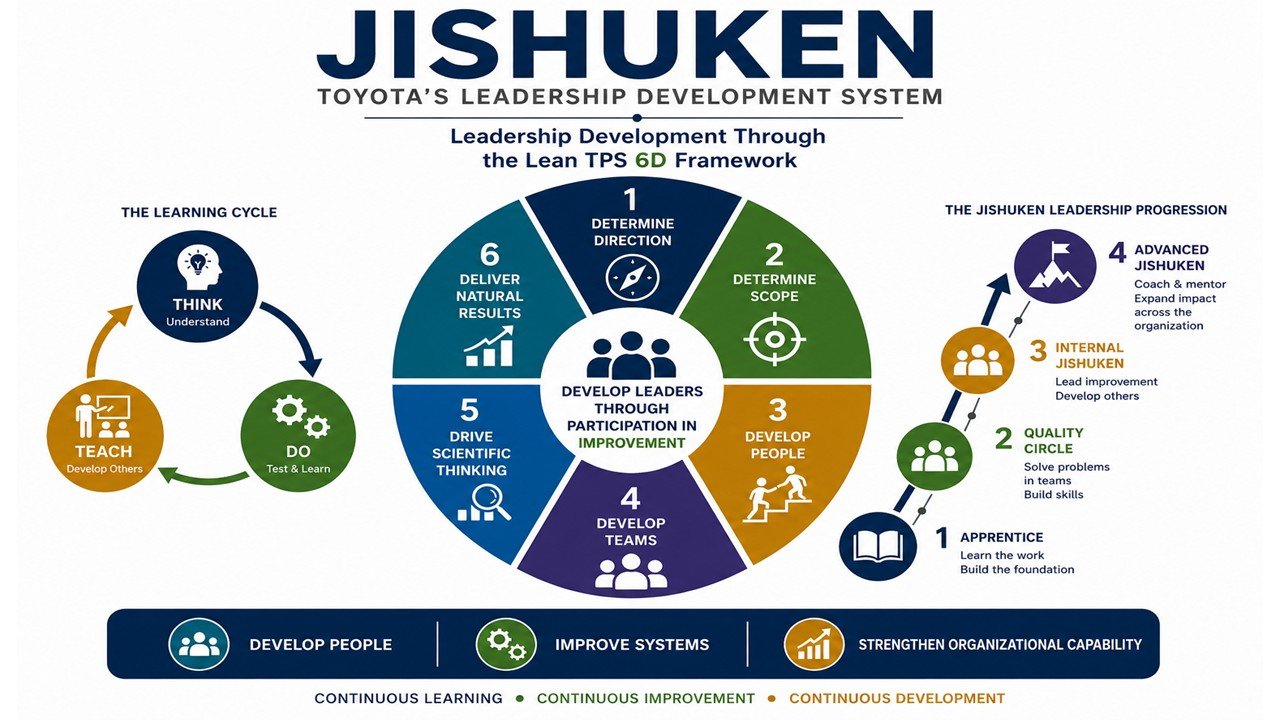
Jishuken means “self-motivated study.” At Toyota, it is the method used to develop leadership capability through hands-on improvement. When we introduced Jishuken at BT Raymond, leaders left their offices and joined operators to study real problems. They measured, analyzed, and tested countermeasures side by side.
Each Jishuken followed a rhythm: clarify the objective, analyze the condition, propose countermeasures, verify results, and reflect. The goal was not to achieve a number. The goal was to develop leaders who could see, think, and act scientifically.
As Mr. Sadao Nomura, Toyota’s Senior Advisor, often reminded us, “Improvement without learning is not improvement.” Jishuken made learning visible. It became the center of how leadership developed understanding of flow, quality, and human motion.
Stop Call Wait: Leadership Accountability
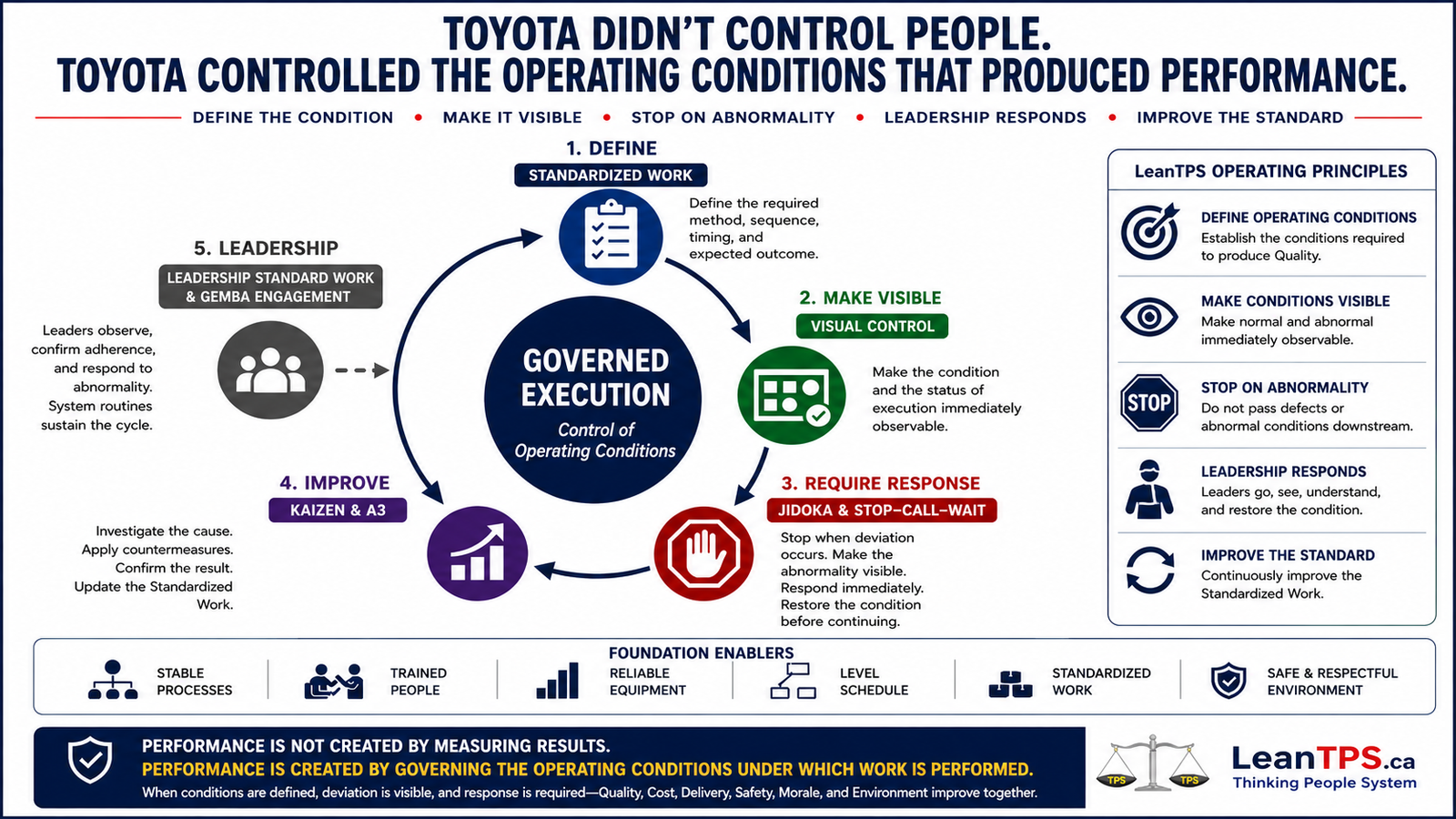
One of the most defining experiences in my TPS journey was seeing the Stop Call Wait system in operation. When an operator detected an abnormality, they stopped the process, called for help, and waited for a response. The leader’s role was to respond immediately, confirm the cause, and restore flow.
This system changed the meaning of leadership. Responsibility no longer lived in reports or meetings. It lived at the Gemba. Operators gained confidence because they knew leaders would stand with them, not above them. Quality was not inspected in; it was built into the process through mutual trust and structured response.
TPS as a Management System
At Toyota BT Raymond, the TPS Department did not own improvement. It served as a bridge to teach leaders until the system became theirs. Once leaders managed through TPS daily, the department’s purpose was complete.
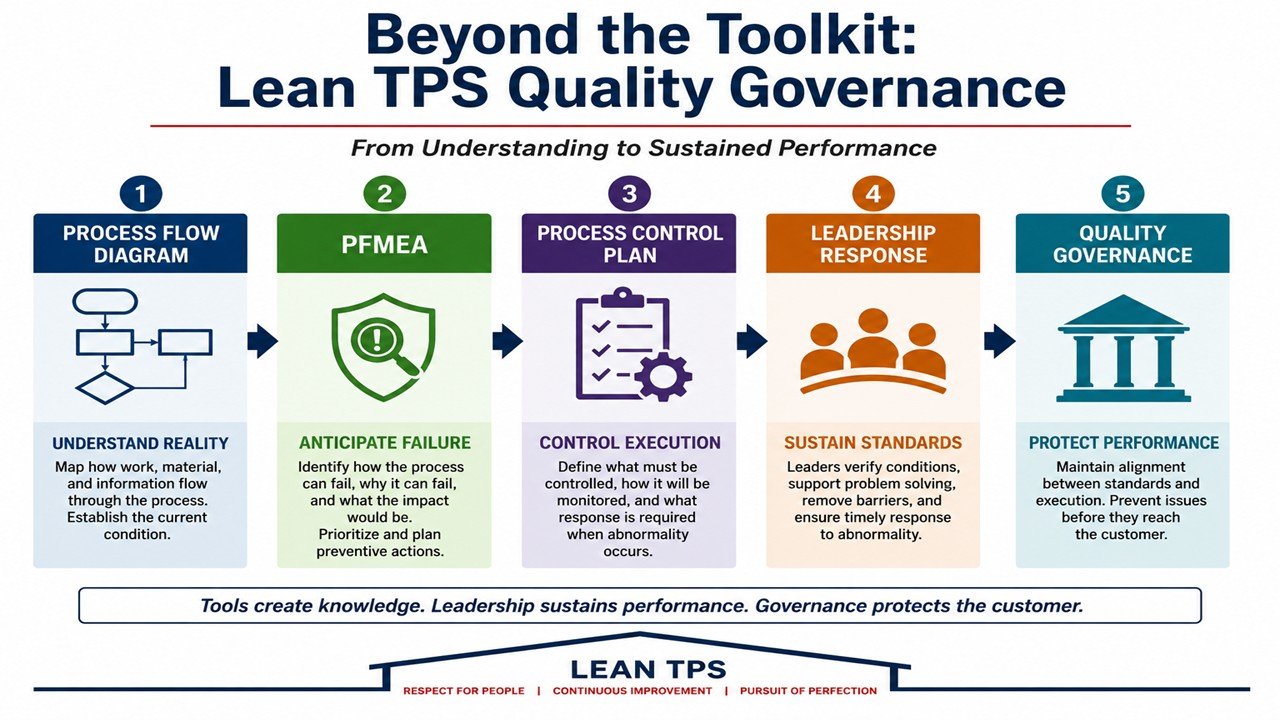
This is what distinguishes TPS from most Lean programs. It is not a function or a department. It is a management system that integrates leadership behavior, problem-solving discipline, and team learning. Every visual control, audit, and reflection meeting exists to make problems visible so people can respond and learn.
Respect for People and Continuous Improvement
Every TPS principle returns to one central idea: respect for people. Respect is not politeness. It is the belief that everyone has the ability to think, solve problems, and improve their work. Continuous improvement depends on that respect.
The leaders who taught me at Toyota did not demand compliance. They built understanding. They asked questions that led to discovery. They knew that once people understood why, the how would follow naturally.
Through Lean TPS Basic Thinking, I learned that leadership is measured not by how many problems you solve, but by how many people you develop who can solve them.
Carrying the Lessons Forward
The lessons from Toyota L&F continue to guide my work today. Improvement begins with clarity of purpose. Problems must be made visible. Leaders must stand accountable where the work is done. Standardized Work provides the structure. Jishuken provides the reflection.
These principles remain the foundation of Lean TPS Basic Thinking. They are not tools to deploy. They are disciplines to live.
Wherever TPS takes root from loom manufacturing in Kariya to forklift production in Takahama the pattern is the same. Respect for people, continuous improvement, and leadership at the Gemba. That is how Toyota taught me Lean TPS, and it remains the system I continue to teach.