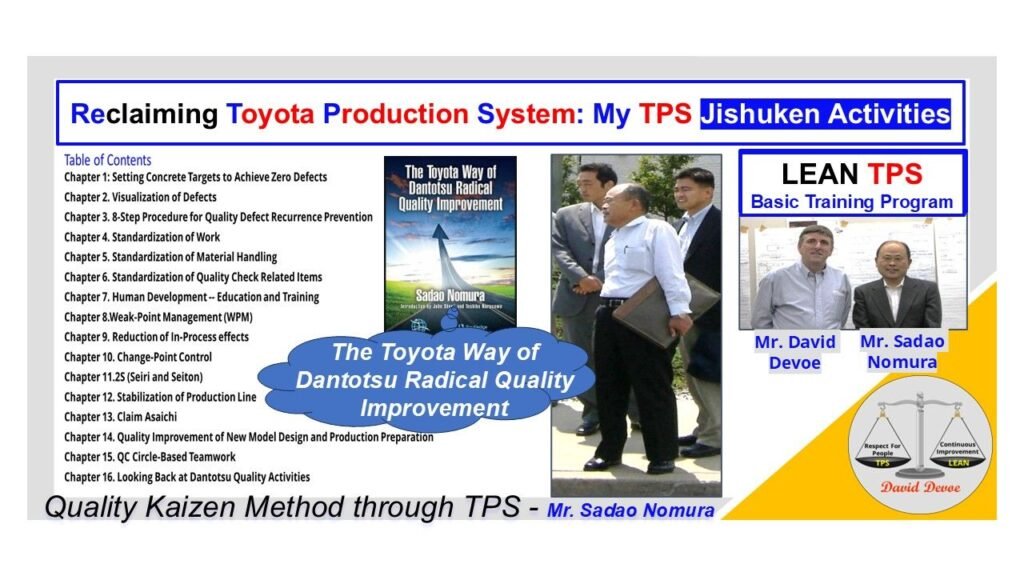
Dantotsu Quality: What I Learned from Mr. Sadao Nomura About TPS

David Devoe with Mr. Sadao “Sam” Nomura during a Jishuken activity at BT Raymond, showing the legacy of Dantotsu Quality and Toyota Production System leadership.
Dantotsu Quality is the living expression of TPS discipline. Mr. Nomura taught that zero defects come from leadership accountability, visible problems, and the courage to respond immediately.

When Mr. Sadao “Sam” Nomura visited our facilities, he made one thing clear. Quality could never be managed as a department. It had to be designed into every activity of the Toyota Production System. At Toyota, quality was not inspection. It was leadership discipline.

Mr. Nomura taught that defects could not hide in computers or be left for end-of-line correction. They had to be seen, written, and solved in real time. He expected control boards to move from daily to hourly checks. Leaders were to stand at the Gemba, confirm conditions with their own eyes, and take immediate action. He called this Genchi Genbutsu applied to quality.

He was precise about flow. Rework was never to be mixed with normal production. Hospital areas were to be separate and controlled, because once defects entered the main line, flow collapsed. Supplier issues were treated with the same urgency. The worst thirty suppliers were ranked, visited, and coached directly. His target was not fewer defects. It was zero.

Nomura connected quality directly to Standardized Work and Heijunka. Without stability and level loading, he said, problems could not appear in time to be solved. Standardized Work was not paperwork but the method to balance Just in Time and Jidoka. It was how Toyota sustained rhythm without fear.

His most powerful lesson was that quality improvement was not about tools or systems. It was about leadership accountability. Every problem had an owner. Every countermeasure had a time limit. Immediate, one-day, one-week, or one-month response. Anything slower was failure.

Years later, when Mr. Nomura published The Toyota Way of Dantotsu Radical Quality Improvement, it confirmed everything he had already taught. The same structure, the same rhythm, and the same expectation of zero defects. Dantotsu was not a slogan. It meant radical quality improvement lived through daily discipline.

He showed that Dantotsu Quality is not separate from TPS. It is TPS applied with complete respect for people. It is the courage to confront every defect, the structure to prevent recurrence, and the humility to learn from each problem.

That is what I learned from Mr. Nomura, and it remains the standard I carry forward in my Lean TPS work today.
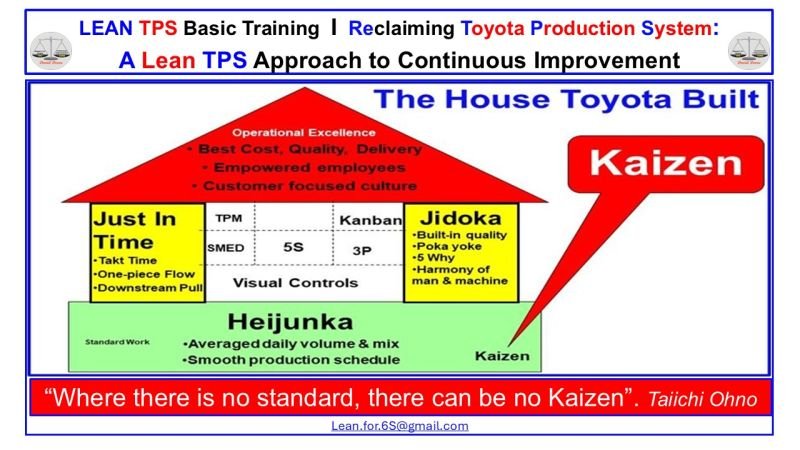
Lean TPS House diagram showing Just In Time, Jidoka, Heijunka, Standardized Work, and Kaizen positioned within the Toyota Production System architecture
This Lean TPS Basic Training visual explains how Kaizen operates within the governed architecture of the Toyota Production System. Just In Time and Jidoka function as structural pillars, Heijunka and Standardized Work provide stability, and Kaizen strengthens the system only when standards and control are in place. The image reinforces
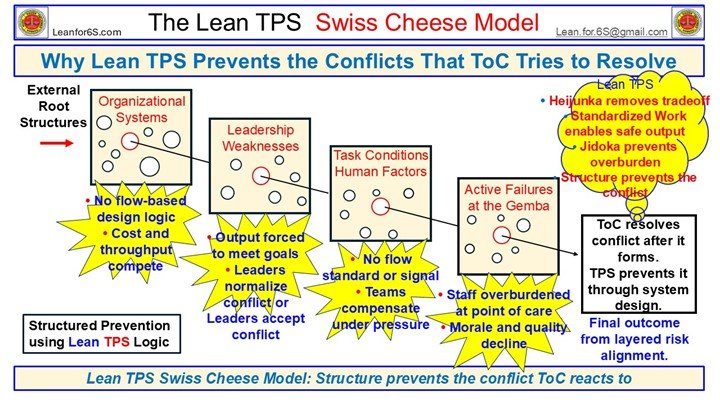
Lean TPS Swiss Cheese Model showing how governance failures propagate from organizational systems to gemba outcomes, and how TPS prevents conflicts that Theory of Constraints resolves downstream.
Theory of Constraints manages conflict after instability forms. Lean TPS prevents conflict through governance of demand, capacity, and Quality before execution begins.
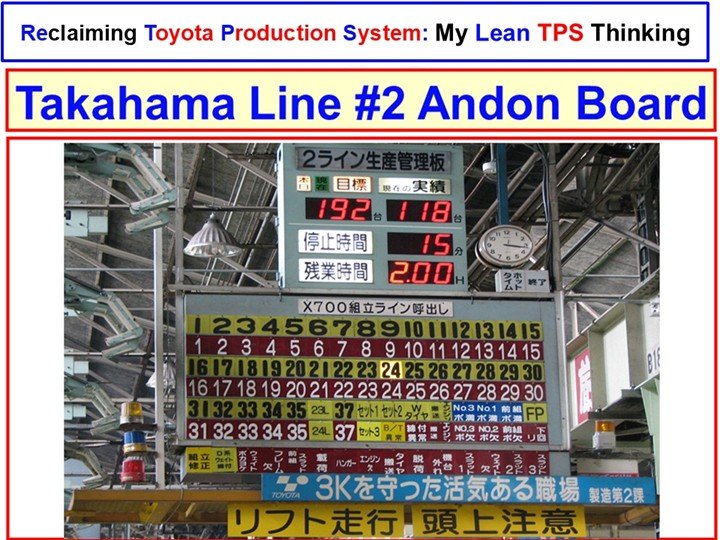
Takahama Line 2 Andon board showing real time production status and Quality control in the Toyota Production System
Dashboards and scorecards increase visibility, but they do not govern work. In Lean TPS, Andon exists to control abnormality in real time by enforcing stop authority, response timing, and leadership obligation to protect Quality.
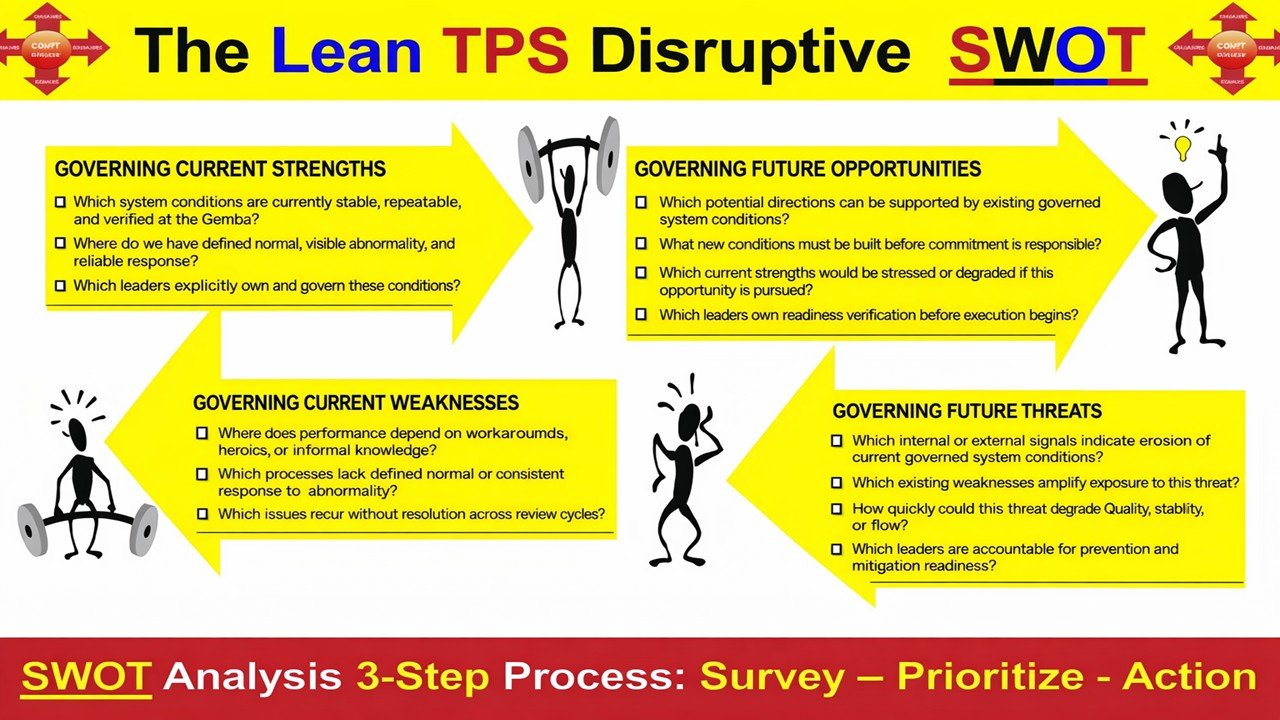
Lean TPS Disruptive SWOT transforms traditional SWOT from a static listing exercise into a governed leadership system. Through Survey, Prioritize, and Action, it aligns strategic direction with Quality, system stability, and explicit leadership obligation within a Lean TPS governance framework.
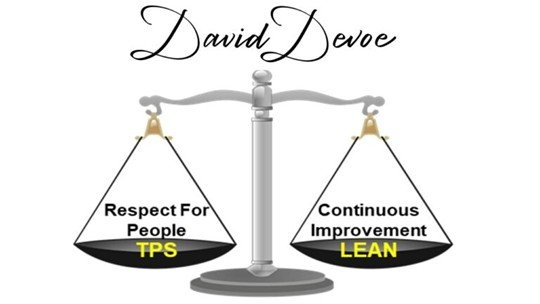
Balance scale showing Respect for People and Continuous Improvement grounded in Quality governance within Lean TPS.
In Lean TPS, Respect for People and Continuous Improvement are not independent goals. Both emerge from Quality governance, where leaders define normal work, make abnormality visible, and respond to protect system stability.
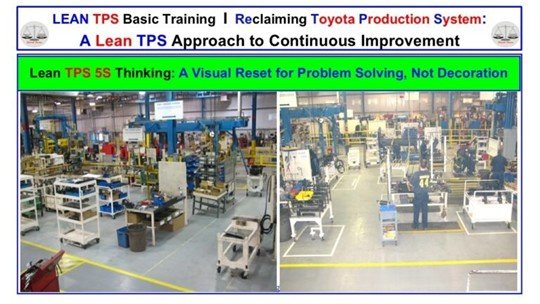
Lean TPS shop floor before and after 5S Thinking showing visual stability that enables problem detection and problem solving
5S Thinking is not about making the workplace look clean or impressive. In Lean TPS, it functions as a visual reset that restores the ability to see normal versus abnormal conditions. When the environment is stabilized, problems surface quickly, Quality risks are exposed earlier, and problem solving becomes possible at