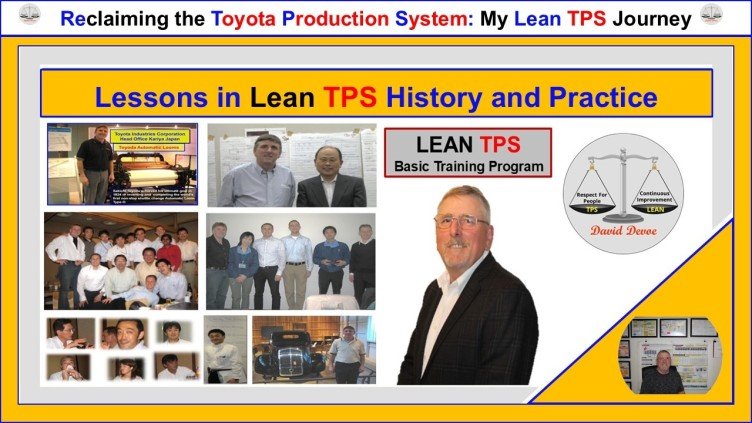
My journey with the Toyota Production System began at Raymond Industrial Equipment in Brantford, Ontario. Those early years shaped my understanding of how discipline, structure, and leadership accountability create stability and continuous improvement. Later, through Toyota-led Jishuken activities across North America, I learned to see waste, design flow, and build systems that connect people and process. These experiences defined what I now call Lean TPS, the Thinking People System.
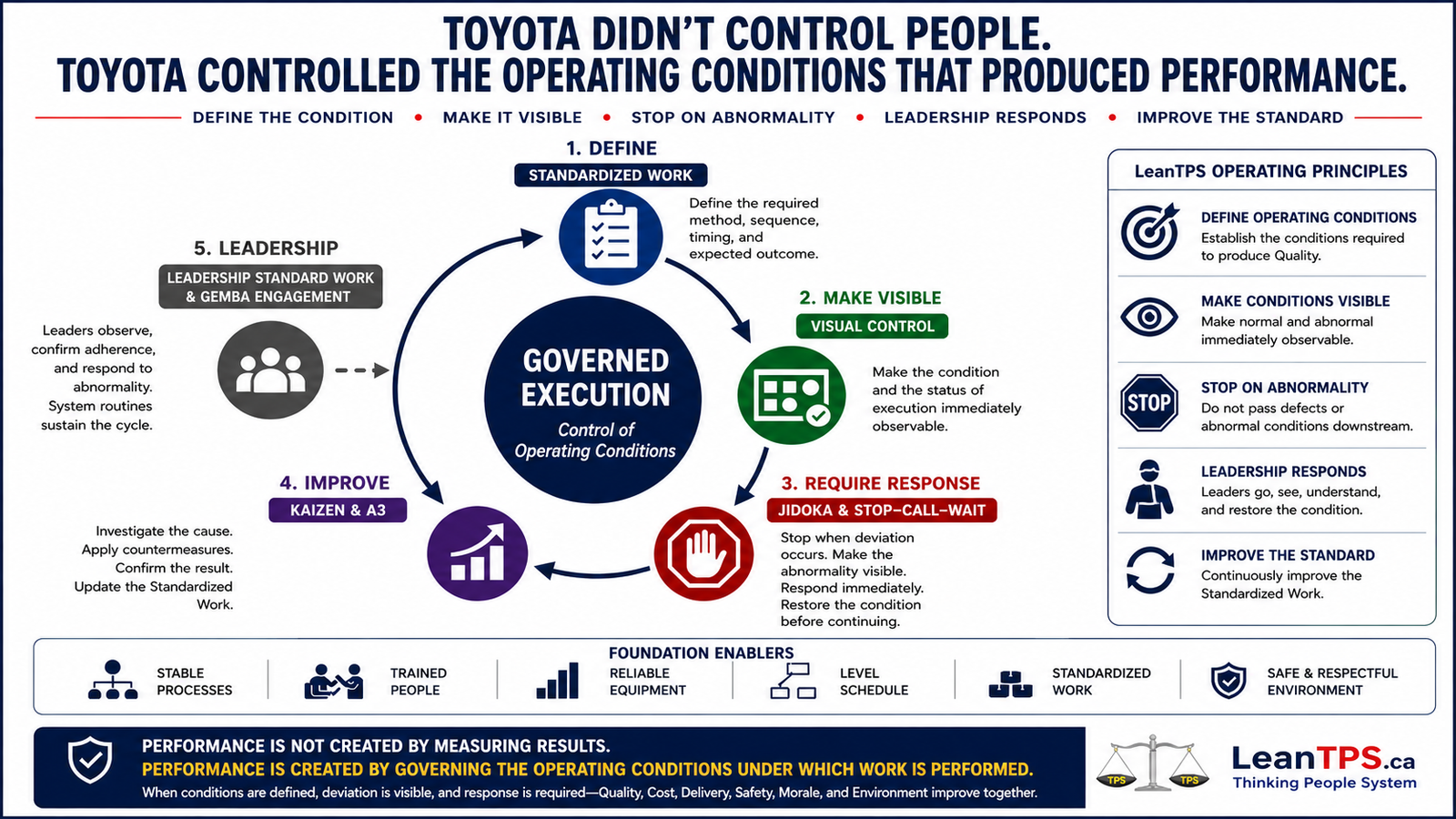
At Raymond, Standardized Work, Takt Time, and the habit of Genchi Genbutsu were not abstract ideas. They were daily routines that built stability. Leaders were expected to go and see, support problem solving, and develop people through structured practice. This was not about awareness; it was about ability. The two pillars of TPS, Continuous Improvement and Respect for People, were made visible through action. Everyone was responsible for seeing problems and taking part in improvement.
In Japan, my understanding deepened. Training began with observation at the Gemba. We studied time, motion, and balance, learning to separate fact from opinion. Tools such as the Yamazumi Board and Standardized Work Combination Table were used to make time visible and uncover waste. Respect for people meant giving members authority to stop processes, correct issues, and take part in Kaizen. Leaders were trained to teach through doing, not by lecture. The lessons were simple but powerful: stability first, flow second, and improvement always.
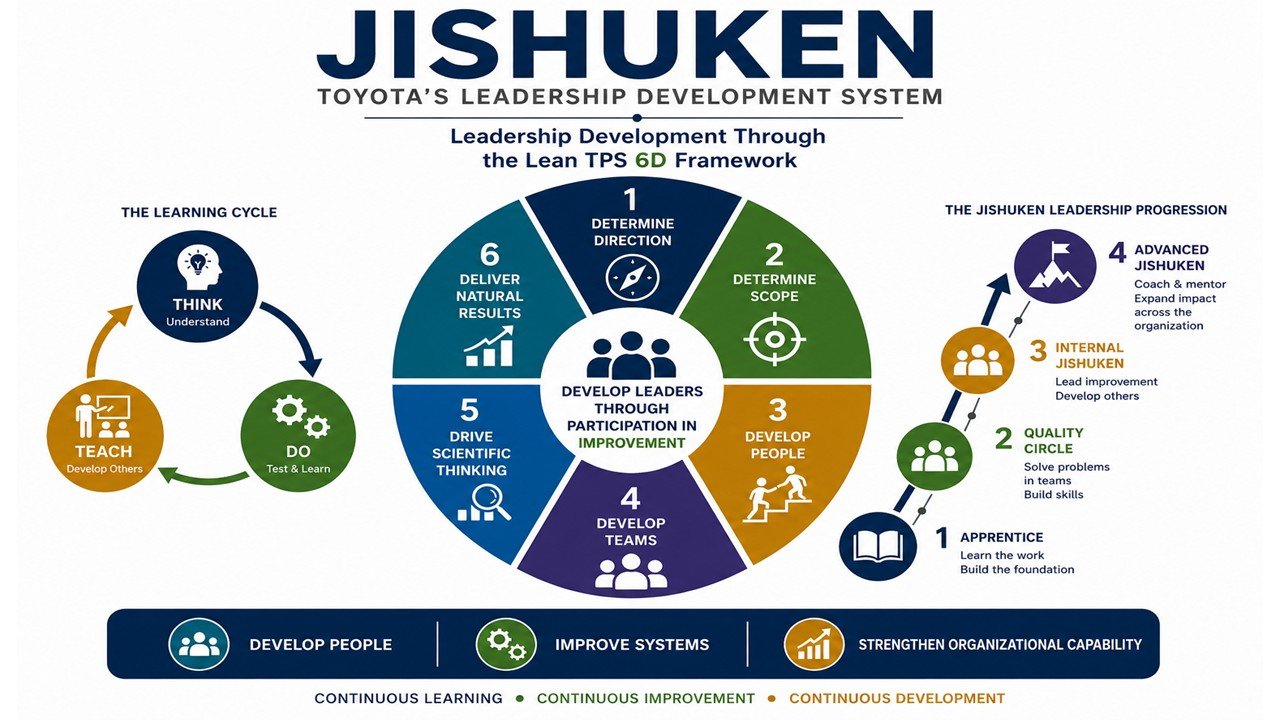
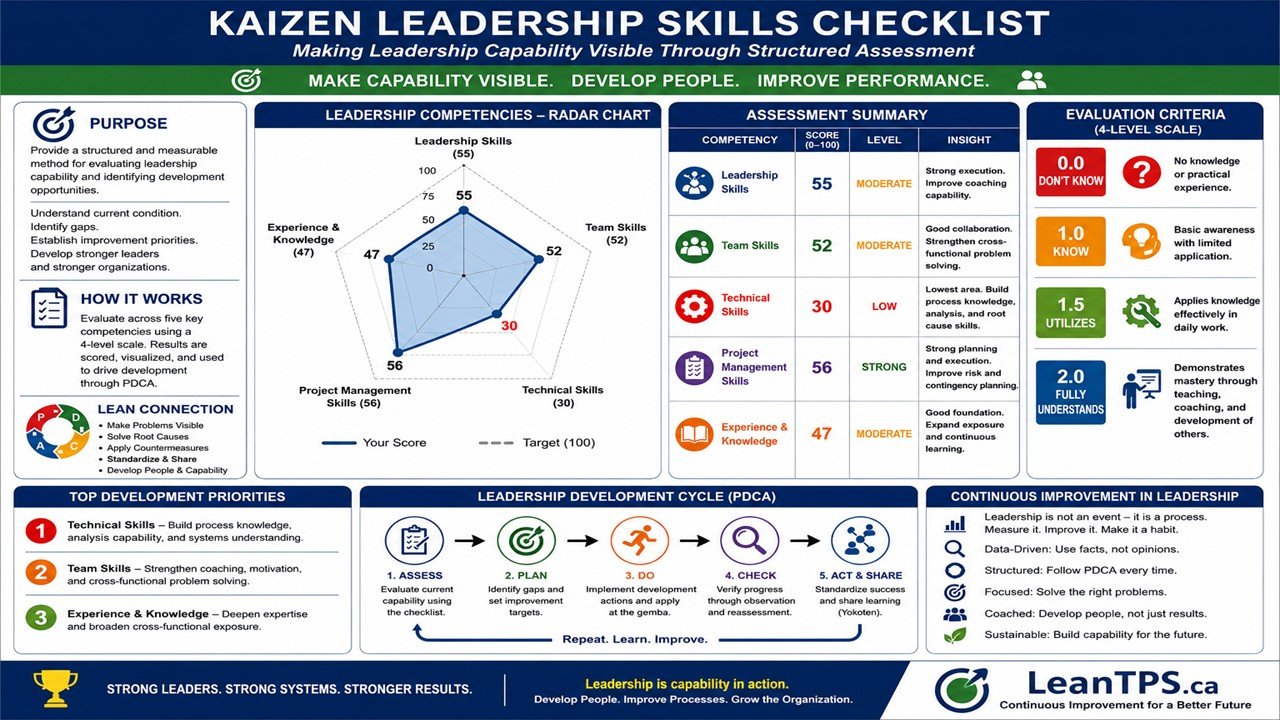
Jishuken, Toyota’s method for leadership development through self-initiated study, was where these lessons became real. In North America, I joined cross-functional teams that studied actual processes, identified gaps, and tested countermeasures. The work was hands-on. Each study deepened capability and strengthened the ability to sustain improvement. Jishuken turned problem solving into leadership training and taught us that stability and respect cannot be separated. When leaders engage directly, problems surface, and improvement becomes natural.
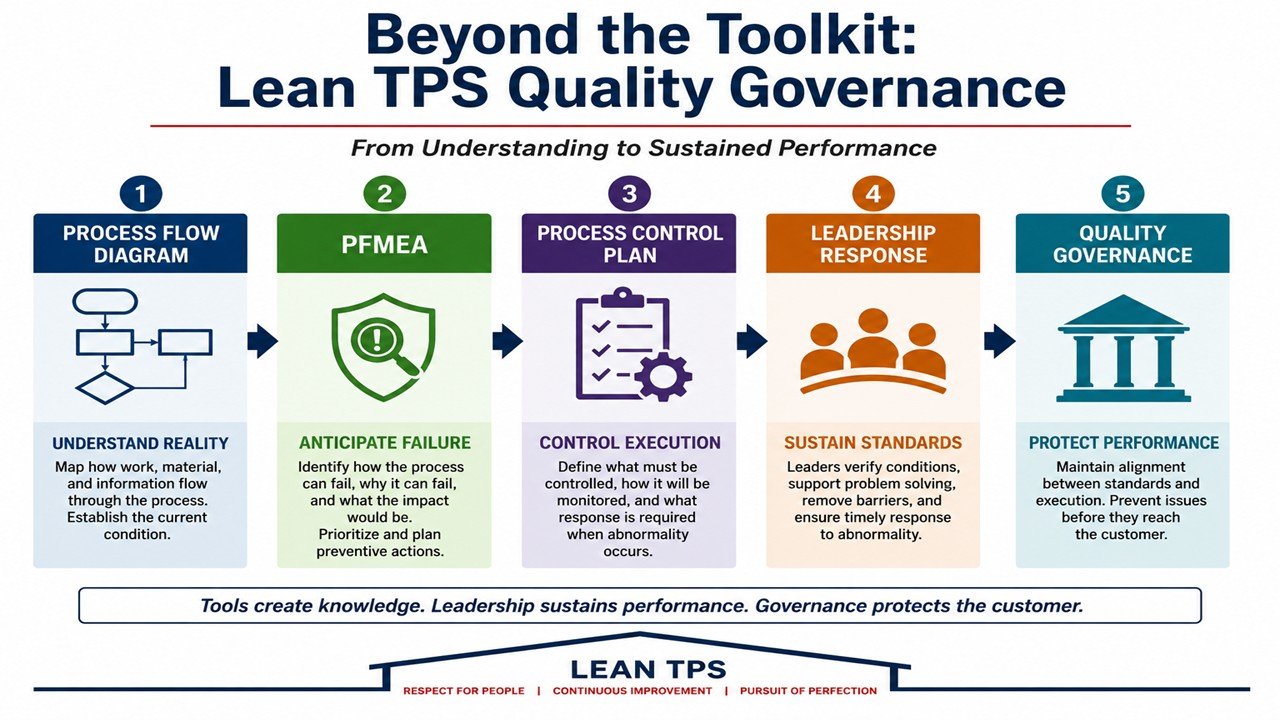
When Toyota idled the Brantford facility in 2010, it marked a turning point in my career. I chose to dedicate myself to teaching and carrying forward the discipline of Lean TPS. Across industries such as aerospace, construction, and medical devices, I have seen the same truth: Lean TPS succeeds when leaders accept responsibility for structure and stability. Without leadership, 5S becomes cleaning, Standardized Work becomes paperwork, and A3 becomes reporting. With leadership, they become tools for learning, coaching, and building capable teams.
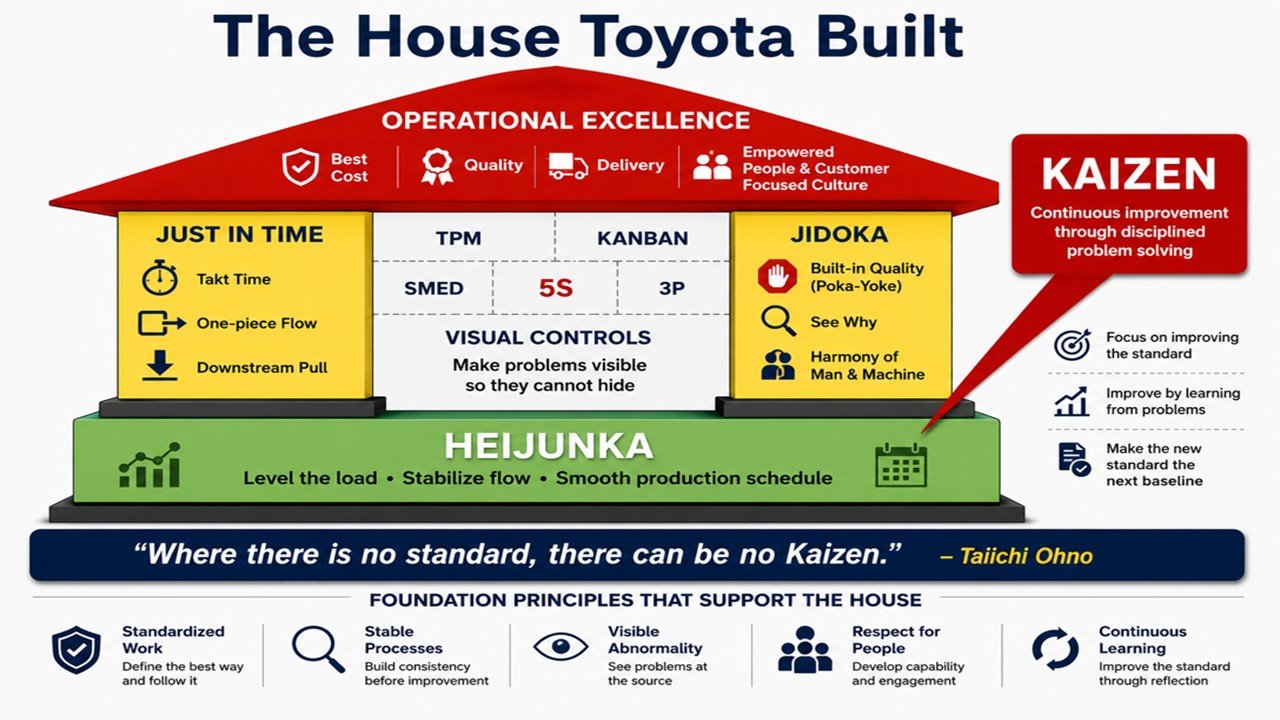
The Toyota Production System has survived war, economic collapse, automation, and a global pandemic because its principles do not change. Continuous Improvement and Respect for People are not optional values. They are the system. They define how work is done, how people learn, and how organizations sustain excellence.
Lean TPS is not about copying Toyota’s tools. It is about understanding why the system works and applying that thinking with integrity. The goal is not perfection but progress, built every day by people who learn and lead at the same time.