We all do it. We see a picture, hear a story, or get a snapshot of a problem and start to fill in the blanks. We jump into problem solving before we fully understand what is happening. That is human nature.
But in Lean TPS, this is where we pause. We stop to see the full picture.
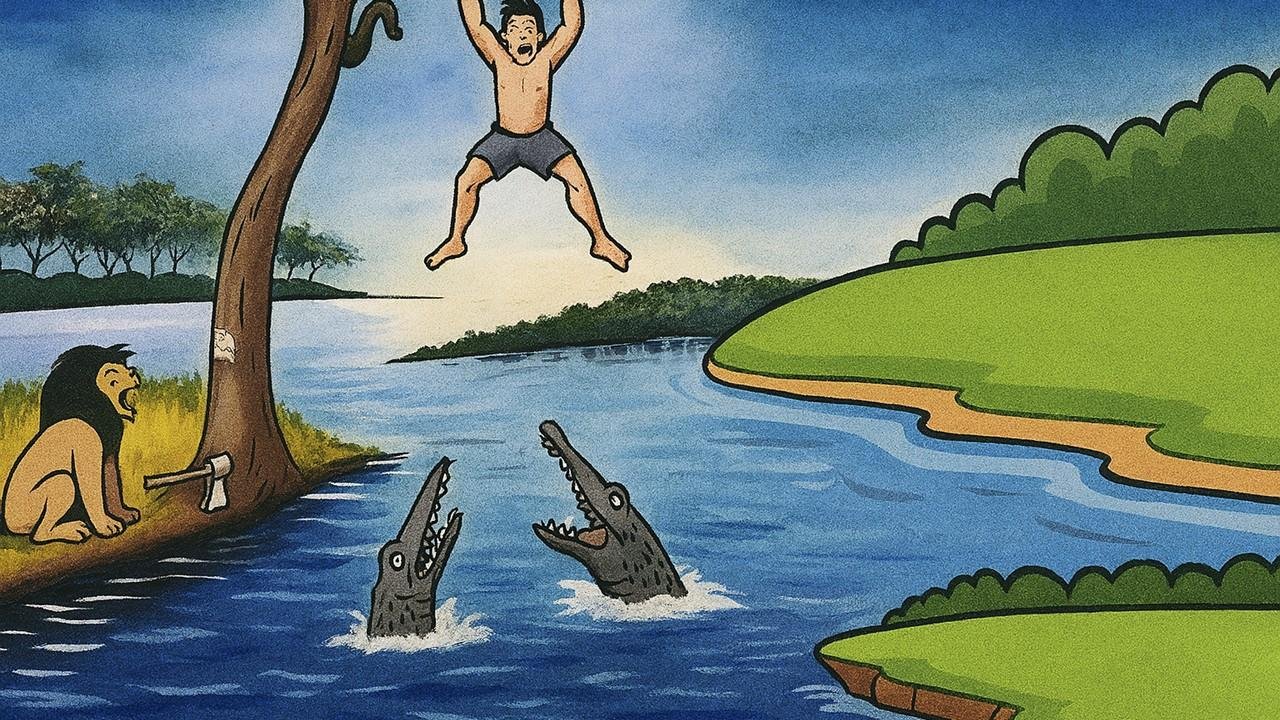
The image above is simple but powerful. A man hangs from a tree above two crocodiles while a lion waits on the bank. The tree has been notched with an axe, and the axe lies beside it. At first glance, it looks like a story of danger. But when we look deeper, something changes.
The man is not simply trying to survive. He might be trying to drop the tree as a bridge to reach the island across the water. His goal may not be escape from danger, but escape from the entire situation. The problem is that the island, the real objective, is outside the frame. Because we cannot see it, we focus on the immediate threats instead of the larger purpose.
This is exactly how organizations often behave. Leaders react to visible problems without seeing the system around them. They respond to the noise in front of them and miss the design that created it. Each function takes ownership of its own piece. Each department fights its own battle. But when we step back, we see that these isolated actions collide.
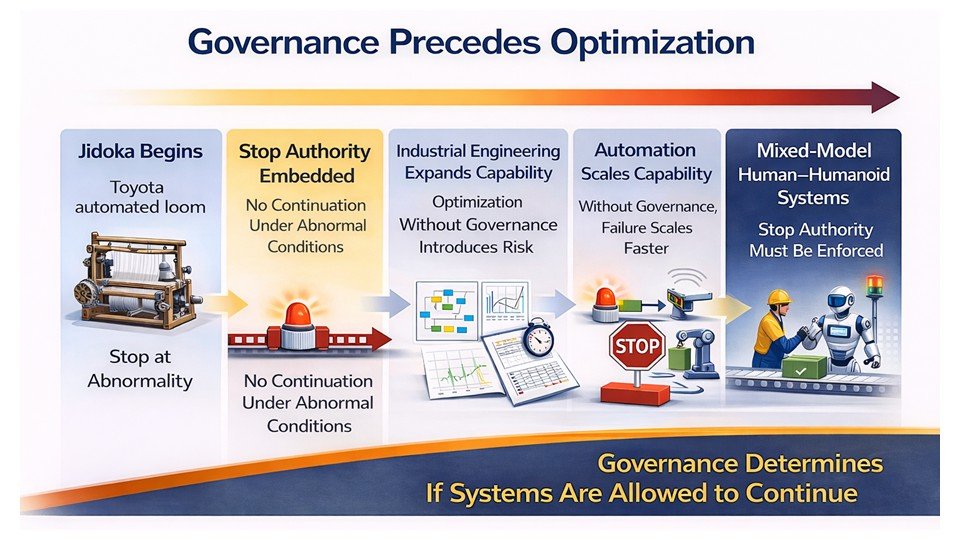
Lean TPS teaches us to look beyond the local problem. Before we act, we must clarify the goal, understand the purpose, and visualize the entire flow of people, information, and materials. Without that shared understanding, improvement turns into firefighting.
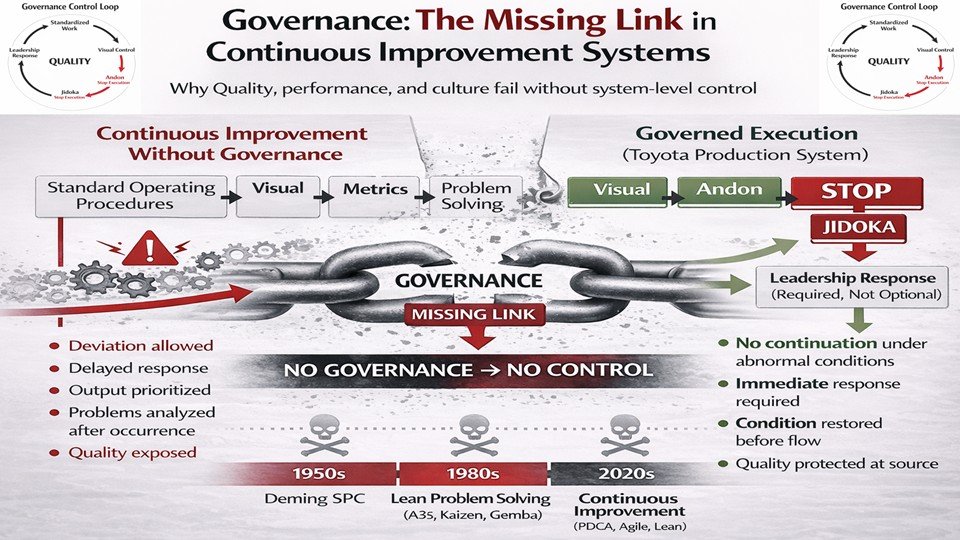
In my Lean TPS work, I have seen this pattern repeatedly. A maintenance issue is solved locally, but it reappears because upstream planning never changed. A quality team adds inspections, but no one studies the root cause in production design. Leadership implements new metrics, but they conflict with operator goals. Everyone is acting with good intention, yet the results degrade over time.
The reason is not poor effort. It is missing structure.
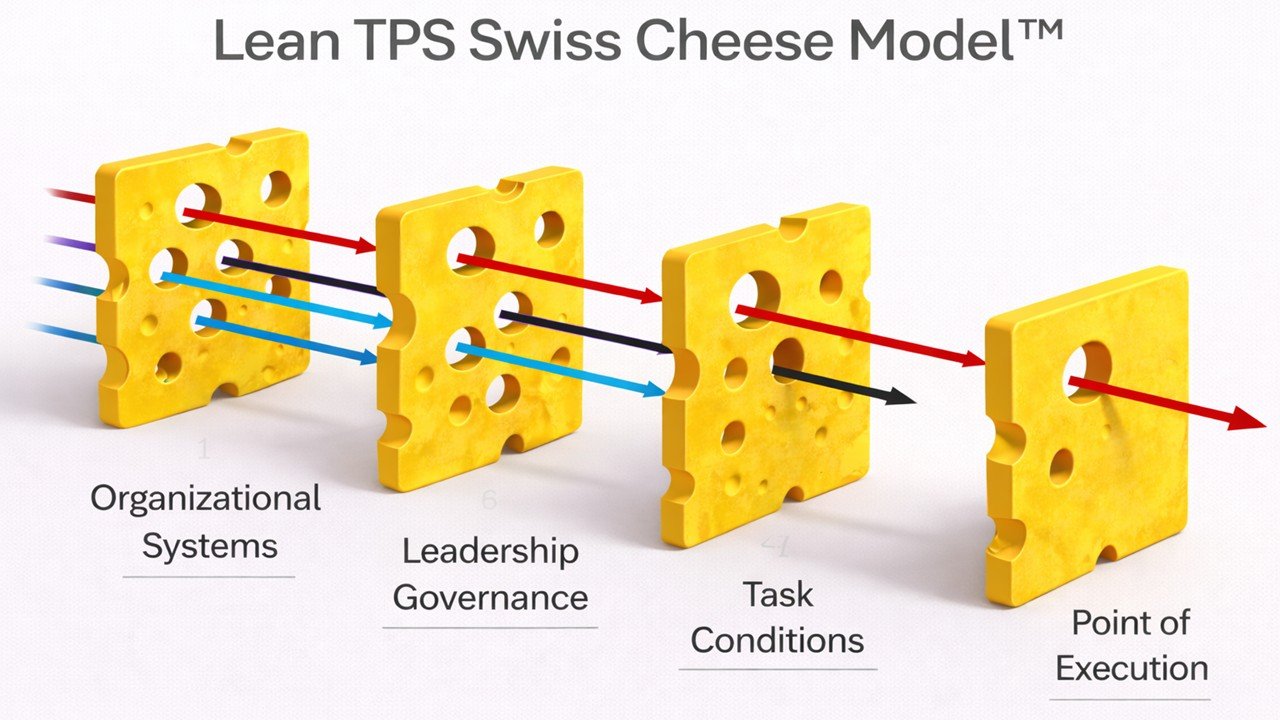
When each layer of the organization acts independently, risk aligns. This is what my Lean TPS Swiss Cheese Model explains. Small gaps in communication, leadership, or process combine into large failures. None of these gaps are intentional. They exist because people cannot see the whole picture.
The Lean TPS way is to prevent that alignment by seeing the full system. We call this Genchi Genbutsu: go and see for yourself. Go to the source, observe the facts, and look for how the system behaves. Ask what connects one part to another. Clarify what purpose each step serves.
When leaders see together, they act together. When teams share purpose, they solve problems that stay solved.
The man in the tree is not trapped by the animals. He is trapped by limited vision. The same is true in many organizations. The danger is not what we see but what we fail to see.
The goal of Lean TPS is to build learning organizations that can see the full picture, align purpose, and act with shared intent. Continuous improvement begins when everyone sees the same system.
If your team is solving isolated problems but not improving results, it may be time to step back and look again. The answer is not another tool. It is clarity. And that clarity begins when we see the whole picture.